
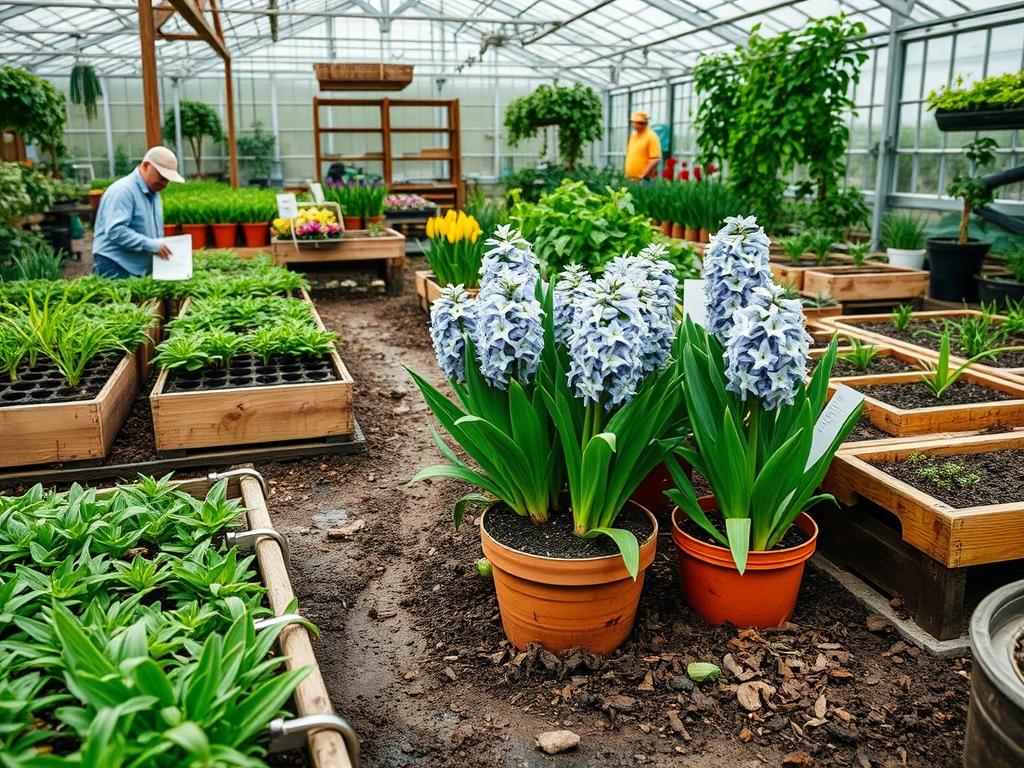
Creating a high impact landscape requires more than just an aesthetic eye for color. It demands an understanding of the relationship between soil structure and floral performance. For many property owners, the arrival of spring is signaled by the intense fragrance and architectural form of hyacinths. These bulbs, however, are notoriously sensitive to their environment. Achieving a professional grade display requires careful consideration of the site topography, drainage capacity, and the specific chemical composition of the substrate. When we discuss the best soil for hyacinths, we are moving beyond basic dirt. We are looking for a medium that facilitates rapid root development during the cold months while preventing the stagnation of water that leads to bulb rot. A successful planting strategy integrates these bulbs into the broader landscape to enhance curb appeal and define the transition from winter dormancy to spring vitality.
The primary landscape challenge with hyacinths is their life cycle. Because they bloom early and then recede, they must be situated where their fading foliage will not detract from the summer garden. From a consultant’s perspective, this means planning for succession. We must treat the soil as a long term asset that supports both the hyacinths and the groundcovers or perennials that will follow them. Proper soil preparation ensures that the bulbs return for several seasons with consistent bloom density. Without the right balance of porosity and nutrients, the flower spikes often become smaller and less fragrant each year. By prioritizing soil quality and drainage, we create an outdoor environment that functions efficiently and provides a high sensory return on investment.
Landscape Design Principles
In professional landscape architecture, we use hyacinths to establish early season focal points. Symmetry is an essential tool here. Placing these bulbs in identical containers flanking an entryway or in geometric patterns along a primary walkway creates a sense of order and intentionality. Because hyacinths are relatively short, ranging from 8 to 12 inches, they serve as the foreground layer in a multi tiered plant bed. We often use them to define the edges of “garden rooms” where their scent can be trapped by nearby walls or hedges, maximizing the fragrance for visitors.
Elevation layers are equally important. Planting hyacinths on a slight incline or within a raised stone planter ensures that the blooms are closer to the viewer’s nose, emphasizing their olfactory value. This elevation also assists with the most critical technical requirement: drainage. Hyacinth bulbs are highly susceptible to “wet feet.” Designing the landscape with a clear subgrade slope prevents water from pooling around the basal plate of the bulb. Similarly, we integrate these bulbs near walkways where the soil has been structurally reinforced to prevent compaction, which can stunt root growth. Visual balance is achieved by pairing the dense, heavy spikes of hyacinths with the airy, light texture of emerging ornamental grasses or the delicate foliage of bleeding hearts.
| Plant Type | Sun Exposure | Soil Needs | Water Demand | Growth Speed | Maintenance Level |
| :— | :— | :— | :— | :— | :— |
| Hyacinthus orientalis | Full Sun to Part Shade | Loamy, Well-drained | Moderate | Medium | Low |
| Narcissus (Daffodil) | Full Sun | Average to Rich | Moderate | Fast | Very Low |
| Tulipa (Tulip) | Full Sun | Sandy Loam | Moderate | Medium | Moderate |
| Muscari (Grape Hyacinth) | Full Sun to Part Shade | Any Well-drained | Low | Fast | Very Low |
| Viola (Pansies) | Part Sun | Moist, Organic | Moderate | Fast | Low |
| Buxus (Boxwood) | Full Sun to Part Shade | Chalky to Loamy | Moderate | Slow | Medium |
Implementation Strategy
The process begins with a comprehensive site analysis. Before a single bulb is placed, we must evaluate the grading of the garden bed. The best soil for hyacinths is a sandy loam enriched with organic matter. If the existing site consists of heavy clay, we must excavate the area to a depth of at least 12 inches and incorporate significant amounts of coarse sand and compost. This modification changes the soil texture to allow for better oxygen exchange and water movement.
Once the soil is prepared, we establish the layout. For a naturalistic look, we employ a “drift” pattern, where bulbs are scattered in elongated groups rather than straight lines. For formal gardens, a grid pattern with 4 to 6 inch spacing is standard. Each bulb should be planted at a depth of 6 to 8 inches, measured from the base of the bulb to the soil surface. Before backfilling, a high phosphorus fertilizer or bone meal should be integrated into the bottom of the planting hole to encourage strong root systems.
After planting, we apply a layer of hardwood mulch or pine bark to a depth of 2 inches. This serves multiple purposes: it regulates soil temperature during the “freeze thaw” cycles of late winter, suppresses weed growth, and maintains an aesthetic consistency across the landscape. We also consider the irrigation plan at this stage. While hyacinths need moisture to grow, they require very little during their dormant summer period. We often place them in zones that can be excluded from high frequency summer irrigation to prevent the bulbs from rotting in the heat.
Common Landscaping Failures
The most frequent mistake in hyacinth cultivation is neglecting the soil’s physical structure. Soil compaction acts as a physical barrier to the delicate roots. When heavy machinery or frequent foot traffic compresses the earth, the bulbs sit in a low oxygen environment that promotes fungal pathogens. Another frequent failure is improper drainage planning. If the planting bed is located at the base of a downspout or in a natural depression without a French drain or similar mitigation, the bulbs will likely fail after the first season.
Root overcrowding also diminishes the quality of the display. While a dense planting looks impressive in year one, the bulbs will eventually compete for the same limited pool of micronutrients. Professional landscapers avoid this by planning for bulb division every three to four years. Additionally, many property owners fail to account for the “nutritional depletion” that occurs in sandy soils. Because sandy soil drains so quickly, it can leach away the essential minerals hyacinths need for fragrance production. In these cases, consistent top dressing with organic compost is necessary to maintain the soil’s cation exchange capacity.
Seasonal Maintenance
Landscape management is a year round commitment. In the spring, maintenance involves deadheading spent blooms. We remove the flower stalk once the bells have faded, but we never cut back the green foliage. The leaves must remain until they have turned completely yellow, as they are actively photosynthesizing and storing energy in the bulb for next year’s growth. During this time, a light application of a balanced granular fertilizer can be beneficial.
In the summer, the hyacinths are dormant. The challenge here is aesthetic. We often overplant the area with shallow rooted annuals or perennials that cover the gaps left by the receding bulbs. Maintenance teams must be careful not to dig into the dormant bulbs while planting summer varieties. In autumn, we refresh the mulch layers and perform any necessary thinning or replanting. This is also the time to check the soil pH, aiming for a range between 6.0 and 7.0. If the soil has become too acidic, we apply garden lime; if it is too alkaline, we use sulfur or peat moss to adjust the balance. Winter maintenance is minimal, focusing primarily on ensuring that the mulch remains in place to protect the bulbs from extreme temperature fluctuations.
Professional Landscaping FAQ
What is the single most important factor for hyacinth fragrance?
Soil drainage is paramount. If the bulbs are even slightly waterlogged, the physiological stress reduces the concentration of aromatic compounds. High organic matter content in the soil also provides the nutrients necessary for intense scent production.
How do I fix heavy clay soil for hyacinths?
Excavate the planting area and mix in 40 percent coarse grit or sand and 20 percent organic compost. This creates the macropores necessary for drainage. Avoid simply adding sand to clay without organic matter, as this can create a concrete-like consistency.
Can I grow hyacinths in permanent outdoor containers?
Yes, provided the containers have excellent drainage holes. Use a high quality soilless potting mix amended with extra perlite. Ensure the containers are large enough to prevent the soil from freezing solid and thawing rapidly, which damages bulb tissue.
Why did my hyacinths stop blooming after two years?
This is often due to nutrient depletion or the soil becoming too compacted. If the leaves are healthy but flowers are absent, the bulb lacks the energy reserves. Top dress with bulb booster fertilizer in the autumn to remediate the soil.
Do hyacinths require a specific soil pH?
They perform best in a slightly acidic to neutral range of 6.0 to 7.0. If the soil is outside this range, the plant cannot efficiently uptake phosphorus and potassium, leading to weak stems and diminished fragrance. Always test soil before making major amendments.