
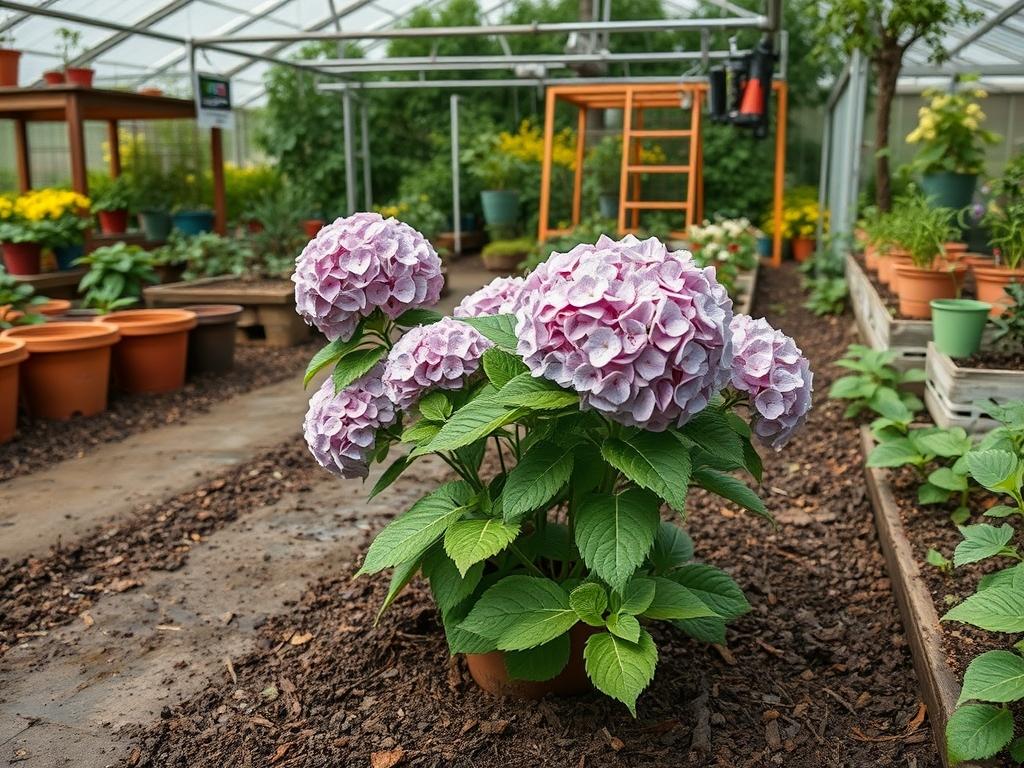
The transition from a standard backyard to a curated outdoor environment often relies on the strategic use of color palettes that harmonize with the architectural style of the home. As a landscape architect, I view the garden not merely as a collection of plants, but as a living system where chemistry meets design. One of the most effective ways to manipulate this visual narrative is through the masterful application of Hydrangea Soil pH Hacks. By understanding the metabolic relationship between the Hydrangea macrophylla and the mineral composition of its substrate, a designer can dictate whether a focal point glows with a cool cerulean blue or a vibrant, warm pink. This level of control is essential for achieving curb appeal that feels intentional and sophisticated. Beyond aesthetics, managing soil alkalinity or acidity ensures the long term health of the specimen, preventing chlorosis and ensuring the plant functions as a high performing ornamental anchor within the broader landscape plan.
Landscape Design Principles
Successful landscape design requires a delicate balance between symmetry and the natural organic flow of the environment. When planning a space that utilizes hydrangeas, focal points must be established where the eye is naturally drawn, such as the terminus of a stone walkway or the center of a foundation planting. We utilize elevation layers to create depth. This involves placing larger Oakleaf hydrangeas toward the rear of a bed to provide height and structure, while shorter, color-shifting Bigleaf hydrangeas occupy the mid-layer for maximum visual impact.
Symmetry can be achieved through mirrored plantings on either side of an entryway, though modern professional designs often favor a “balanced asymmetry.” This involves using different plant species that possess similar visual weights. For instance, the heavy, rounded form of a pink hydrangea on the left can be balanced by the vertical texture of Ornamental grasses on the right. Throughout this process, irrigation planning is paramount. Hydrangeas have high transpiration rates and require consistent moisture. We integrate sub-surface drip irrigation systems early in the design phase to deliver water directly to the root zone, which minimizes evaporation and prevents fungal diseases on the foliage.
Walkways should be designed to facilitate intuitive movement through the outdoor living space. These paths often serve as the dividing line between different soil microclimates. By using Steel edging or Concrete pavers, a landscaper can create a physical barrier that allows for a pH of 5.5 on one side for blue blooms and a pH of 6.2 on the other for pink blooms. This technical segregation allows for a diverse color story within a single, unified view.
Plant and Material Selection
Selecting the right cultivars and supporting materials is the foundation of any professional grade installation. The table below outlines the specifications for common selections used in high-end residential projects.
| Plant Type | Sun Exposure | Soil Needs | Water Demand | Growth Speed | Maintenance Level |
| :— | :— | :— | :— | :— | :— |
| Bigleaf Hydrangea | Partial Shade | Loamy, pH-Specific | High | Moderate | Medium |
| Panicle Hydrangea | Full Sun | Neutral, Well-Drained | Moderate | Fast | Low |
| Climbing Hydrangea | Shade/Part Sun | Rich, Moist | Moderate | Slow-Start | Low |
| Japanese Forest Grass | Full Shade | Humus-Rich | High | Moderate | Low |
| Boxwood (Structure) | Sun to Shade | Well-Drained | Moderate | Slow | High |
To facilitate the Hydrangea Soil pH Hacks, specific materials must be kept on site. For blue coloration, Aluminum sulfate is the industry standard for rapid acidification. For a slower, more sustainable pH drop, Elemental sulfur is preferred. Conversely, to achieve pink hues, Dolomitic lime or Garden lime is used to raise the pH. These amendments should be paired with a high-quality Organic mulch, such as Pine bark nuggets, which help retain moisture and gradually contribute organic matter to the soil profile.
Implementation Strategy
The implementation of a professional garden layout begins with precise site preparation. We start by grading the area to ensure that water moves away from the home foundation while maintaining a level planting plane for the shrubs. Once the grading is set, we use a pH test kit or a digital Soil probe to establish a baseline reading. This is the first step in applying our Hydrangea Soil pH Hacks.
For those desiring a blue garden, we incorporate Peat moss and Aluminum sulfate into the planting hole, which should be twice as wide as the root ball. The aluminum is the actual pigment-shifting agent, but it only becomes mobile and available to the plant in acidic conditions. We aim for a pH range of 5.2 to 5.5 for the deepest blues. If the goal is a rosy pink, we omit the aluminum and mix Agricultural lime into the soil to bring the pH up to 6.0 or 6.5. This prevents the plant from absorbing any naturally occurring aluminum in the soil.
After the plants are positioned, we install 3 inches of Cedar mulch or Hardwood mulch to regulate soil temperature. Edging is then installed to define the beds against the lawn. We prefer Aluminum landscape edging for its sleek profile and durability. Finally, the irrigation system is calibrated. For hydrangeas, we recommend a schedule that delivers approximately 1 inch of water per week, adjusted for local rainfall and seasonal heat.
Common Landscaping Failures
The most frequent failure in hydrangea management is poor drainage. Even if the pH is perfectly tuned, a plant sitting in stagnant water will experience root rot and vascular collapse. Proper soil aeration and the addition of Perlite or Coarse sand can mitigate heavy clay issues. Another common error is root overcrowding. Many homeowners underestimate the mature spread of a Hydrangea macrophylla, which can reach 5 feet in diameter. Without proper spacing, airflow is restricted, leading to powdery mildew and stunted growth.
Soil compaction is another silent killer of landscape aesthetics. Heavy foot traffic or construction equipment can compress the soil, destroying the pore spaces required for oxygen and water infiltration. Professionals use a Garden fork to loosen compacted areas before planting. Additionally, many beginners apply Hydrangea Soil pH Hacks incorrectly by using high-phosphorus fertilizers. High phosphorus levels can bind aluminum in the soil, making it unavailable to the plant. This results in muddy purple flowers instead of the crisp, clear blue that was intended. Always use a balanced, slow-release fertilizer with a low middle number to avoid this chemical interference.
Seasonal Maintenance
Seasonal management ensures that the investment in your landscape remains vibrant year-round. In the spring, the focus is on reactivation. This is the ideal time to apply your first round of pH amendments. As the new growth emerges, we apply Acidifying fertilizer for blue plants or Limestone for pink ones. Pruning should be handled with care; for many varieties, cutting at the wrong time will remove the flower buds for the coming season.
During the summer, the priority shifts to hydration. High temperatures cause hydrangea leaves to wilt as a defense mechanism. While some wilting is normal in the afternoon heat, consistent drooping indicates a need for deeper irrigation. We monitor the Mulch depth and replenish it if it has thinned, as this layer is critical for protecting the shallow root systems from the sun.
In the autumn, we prepare the plants for dormancy. We stop fertilizing entirely to prevent soft, new growth that would be damaged by frost. This is also the time to clean up fallen leaves around the base of the plant to prevent pathogens from overwintering. For winter protection in colder hardiness zones, we recommend wrapping the shrubs in Burlap or creating a temporary cage filled with Dried leaves. This protects the terminal buds, which hold the following year’s blooms, from desiccating winter winds and Extreme temperature fluctuations.
Professional Landscaping FAQ
How long does it take for pH hacks to change color?
Color transformation is a gradual chemical process. Depending on the initial soil composition, it typically takes one full growing season of consistent amendments to see a significant shift in bloom pigment.
Can I change the color of white hydrangeas?
No. White varieties, such as the Hydrangea arborescens or ‘Annabelle’, do not contain the pigments necessary for color shifting. Their color is genetically fixed and remains unaffected by the soil’s pH levels or aluminum content.
What is the best tool for checking soil pH?
For professional results, use a high-quality digital pH meter with a metal probe. Alternatively, sending a soil sample to a local university extension office provides the most accurate laboratory analysis of minerals and acidity.
Is coffee ground a reliable pH hack for blue hydrangeas?
While coffee grounds are slightly acidic, they are not a concentrated enough amendment to cause a dramatic color shift. They are better used as an organic soil conditioner rather than a primary tool for pH manipulation.
Why did my blue hydrangea turn purple?
A purple hue usually indicates a transitional pH level typically between 5.8 and 6.0. To achieve a true blue, you must further lower the pH and ensure there is sufficient Aluminum sulfate available in the soil.