
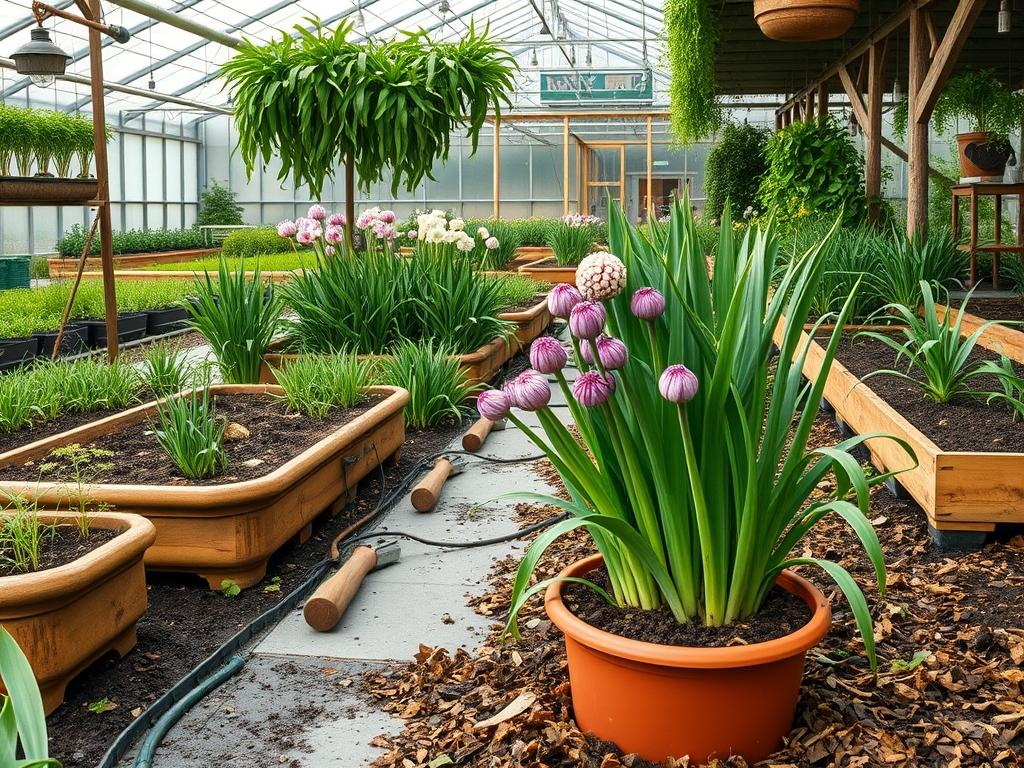
Successful landscape architecture relies on the invisible infrastructure beneath the surface as much as the aesthetic arrangement of plants above it. When designing a garden meant to showcase large, architectural blooms, the foundation of your success is the subterranean environment. For species like Allium giganteum or the heavy-headed Peony, the soil must serve as both a high-capacity pantry and a high-efficiency drainage system. This balance is difficult to achieve in standard residential plots where construction often leaves behind compacted clay or nutrient-depleted fill dirt. To create professional-grade curb appeal and long-term outdoor functionality, a landscape architect must treat the soil as a custom-engineered substrate.
The best soil for alliums is not a single off the shelf product but a deliberate blend of minerals and organic matter designed to prevent moisture from lingering around the bulb. Geophytes, which include alliums and other large-flowered bulbs, carry their own energy reserves. However, they are highly susceptible to fungal rot if the hydraulic conductivity of the soil is poor. In a professional landscape, we aim for a soil structure that facilitates rapid gas exchange and immediate water percolation. This ensures that the massive flower heads, often reaching heights of 3 to 4 feet, have the structural support and nutritional backing to stand tall against wind and rain without the need for unsightly staking.
Landscape Design Principles
When integrating large blooms into a professional landscape, symmetry and focal points dictate where the soil preparation must be most intensive. Alliums, with their distinct orb shapes, act as living sculptures. They provide vertical interest that breaks up the horizontal planes of a traditional garden bed. Placing these specimens requires an understanding of elevation layers. We typically position large alliums in the midground, where their stalks are masked by the emerging foliage of perennials like Salvia or Catmint, while their blooms hover above the secondary layer.
Visual balance is achieved by repeating these shapes across the landscape. However, this repetition fails if the soil quality varies across the site. A landscape architect must plan for uniform soil modification to ensure that all plants reach the same height and bloom density. This prevents a “staircase effect” where one side of the walkway features robust blooms while the other side struggles due to localized soil compaction. Additionally, irrigation planning must account for the specific needs of these bulbs; they require moisture during their spring growth phase but demand a dry “rest” period during their summer dormancy.
Elevation and grading play a critical role in this design. By creating slight berms or raised planting pockets, we can naturally guide excess water away from the bulb crowns. This topographical variation adds visual interest to the backyard layout and provides the necessary vertical clearance for healthy root development. A well-placed retaining wall or a series of stone tiers can also provide the perfect environment for these plants, as the elevated soil behind a wall typically drains faster than flat ground.
Plant and Material Selection
The following table outlines the requirements for alliums and their common landscape companions to help you coordinate your soil and site planning.
| Plant Type | Sun Exposure | Soil Needs | Water Demand | Growth Speed | Maintenance |
| :— | :— | :— | :— | :— | :— |
| Allium Giganteum | Full Sun | Gritty, Sandy Loam | Low to Medium | Fast (Spring) | Low |
| Peony (Herbaceous) | Full to Part Sun | Rich, Heavy Loam | Medium | Moderate | Medium |
| Lavender | Full Sun | Lean, Alkaline Sand | Very Low | Moderate | Medium |
| Russian Sage | Full Sun | Poor to Average | Very Low | Fast | Low |
| Foxglove | Part Shade | Moist, Humus-Rich | Medium to High | Fast | Medium |
Implementation Strategy
Developing the best soil for alliums starts with the grading of the site. Before any bulbs are placed, the area should be cleared of debris and the existing dirt tested for its pH and drainage capacity. If you are working with heavy clay, the most effective strategy is to excavate the planting area to a depth of at least 12 inches. This allows for a complete replacement or heavy amendment of the native soil.
The ideal mixture for large-scale blooms consists of 40 percent coarse sand or fine gravel, 40 percent high-quality compost, and 20 percent native topsoil. This blend creates a “loamy” texture that allows roots to penetrate easily while ensuring that water moves through the root zone at a rate of approximately 1 to 2 inches per hour. When backfilling the excavated area, we often incorporate bone meal or a high-phosphorus bulb starter at the base of the planting hole. This provides the long-term mineral support needed for large floral structures.
Once the soil is prepared, spacing is the next priority. For large allium varieties, a distance of 8 to 12 inches between bulbs is standard to prevent nutrient competition. The bulbs should be set at a depth of about three times their diameter. After the bulbs are situated, a layer of 2 inches of organic mulch, such as shredded hardwood or pine bark, should be applied. This mulch suppresses weeds and moderates soil temperature, but it must be kept away from the direct center of the bulb crown to prevent moisture retention against the stem.
Hardscaping elements, such as walkways and edging, should be installed prior to the final soil amendment. This prevents heavy machinery or foot traffic from compacting the newly aerated soil. Using steel or stone edging also serves a functional purpose; it creates a clean barrier that prevents aggressive turf grass from encroaching on the specialized bulb beds.
Common Landscaping Failures
The most frequent mistake in garden planning is the creation of a “bathtub effect.” This occurs when a hole is dug in heavy clay and filled with loose, high-quality soil. When it rains, the clay acts as a waterproof basin, and the loose soil fills with water, effectively drowning the bulbs. To avoid this, professionals ensure that the entire bed is amended or that drainage tiles are installed to lead water away from the site.
Soil compaction is another silent killer of large blooms. During the construction of a backyard patio or deck, heavy equipment often crushes the air pockets in the surrounding soil. Planting alliums in this “dead” soil results in stunted growth and small, lackluster flowers. Always use a broadfork or mechanical tiller to loosen the ground before adding amendments.
Improper irrigation leads to significant loss in bulb-centric landscapes. Many homeowners use automated spray heads that run on the same schedule for turf and flower beds. This leads to overwatering, especially in late summer when alliums are dormant and prefer dry conditions. For the best results, alliums should be on a separate irrigation zone or hand-watered during their active growth window only.
Seasonal Maintenance
Spring management focuses on the emergence of foliage. As the green tips appear, a light application of a balanced, water-soluble fertilizer can boost the size of the eventual bloom. During this time, check for any mulch that may have washed over the crowns during winter storms.
Summer maintenance involves the handling of fading foliage. A common error is cutting back the green leaves as soon as the flower dies. In professional landscaping, we allow the foliage to turn completely yellow before removal. This is because the leaves continue to photosynthesize, sending energy back down into the bulb for the following year. If the yellowing leaves are unsightly, we plant “interplantings” like Hostas or Daylilies to hide the declining stalks.
Autumn is the primary season for landscape expansion. This is the time to divide overcrowded bulbs and refresh the soil with a top-dressing of compost. If the soil has settled significantly over the year, adding a small amount of new loam can maintain the proper planting depth.
Winter care is largely passive. In colder climates, a thicker layer of mulch, perhaps 3 to 4 inches, can be applied after the first hard frost to prevent the “heaving” of bulbs caused by the freeze-thaw cycle. This mulch should be thinned back in early spring to allow the ground to warm up.
Professional Landscaping FAQ
What is the best soil for alliums in clay-heavy regions?
Heavy clay must be amended with 50 percent coarse grit and organic compost. This increases the porosity and prevents water from pooling around the bulb. Creating raised beds is often the most effective way to manage clay soil challenges.
Can I use standard potting mix for large allium blooms?
Standard potting mix is often too light and contains too much peat moss for large bulbs. It retains excessive moisture and lacks the mineral density required to support tall, heavy stalks. A dedicated garden loam is a far superior choice.
How deep should the soil be for large-flowered bulbs?
A minimum depth of 12 inches of workable, high-quality soil is recommended. This allows for deep root penetration and provides the structural stability needed so that large blooms do not tip over during spring thunderstorms.
Is fertilization necessary for the best soil for alliums?
Alliums are efficient feeders but benefit from high-phosphorus amendments like bone meal during the planting phase. A balanced fertilizer can be applied in early spring as leaves emerge, but avoid high-nitrogen mixes which promote foliage over flowers.
How does soil pH affect allium growth and color?
Alliums prefer a neutral to slightly acidic pH, ideally between 6.0 and 7.0. If the soil is too acidic, they may struggle to uptake nutrients. In very alkaline soils, adding elemental sulfur can help balance the environment for optimal blooming.