
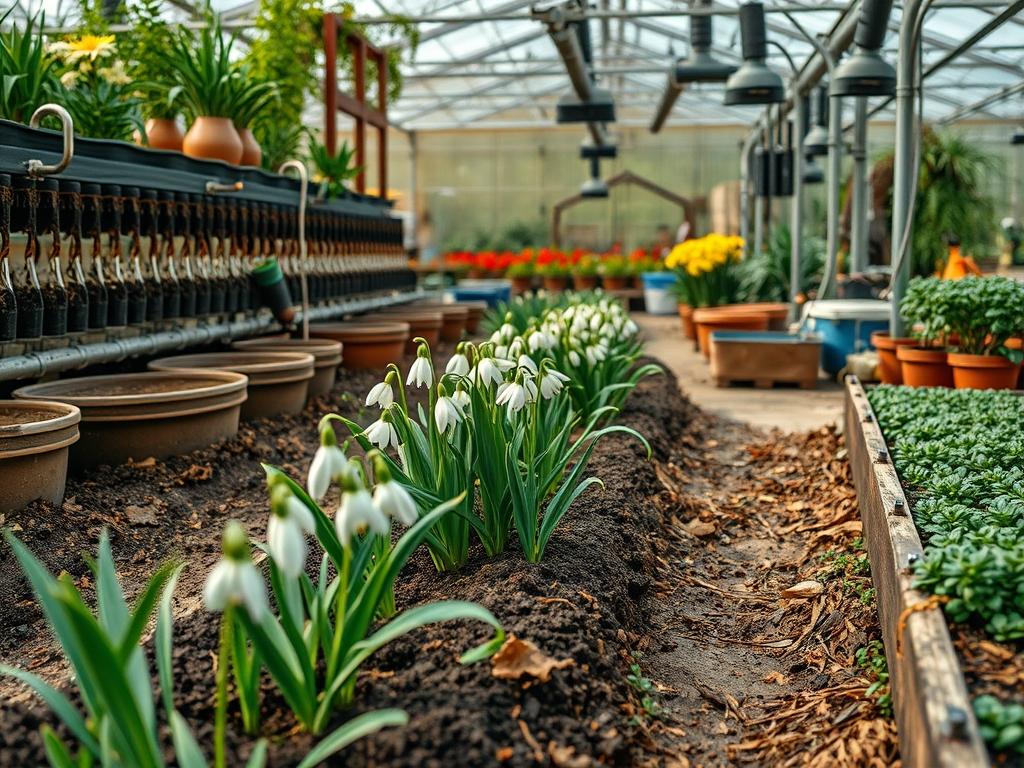
Creating a vibrant, early spring landscape requires more than simply placing bulbs in the ground and hoping for the best. For the professional landscape architect, the challenge of establishing Galanthus, commonly known as snowdrops, within a shady lawn environment is a masterclass in soil physics and microclimate management. These resilient harbingers of spring offer the first significant boost to a property’s curb appeal, often blooming while the rest of the garden remains locked in winter dormancy. However, success is entirely dependent on meticulous Snowdrop Soil Prep. When integrated correctly, these plants define the transition from hardscape to softscape, providing a delicate texture that softens the edges of retaining walls and flagstone paths. To achieve a naturalized look that appears effortless, one must understand the intersection of drainage, soil structure, and the physiological needs of the bulb.
The primary hurdle in shady lawns is often the lack of evaporation and the presence of compacted soil. Grass under towering oaks or maples often competes for nutrients and water, leaving the soil depleted and tight. If the soil is too dense, the delicate roots of the snowdrop cannot penetrate the surface, leading to stunted growth or bulb rot. A professional approach involves a multi stage strategy that begins with assessing the existing soil profile. We are looking for a friable, loam based structure that can retain moisture without becoming stagnant. By focusing on the subterranean environment months before the first bloom, we ensure that the outdoor living space becomes a functional, multi seasonal asset for the homeowner.
Landscape Design Principles
Effective landscaping requires a balance of symmetry and organic flow. When planning for snowdrops in a shady lawn, we treat the ground plane as a canvas where visual weight is distributed through “drifts” rather than stiff, geometric rows. By mimicking the way bulbs would naturally spread in a woodland setting, we create a focal point that draws the eye during the bleakest months of the year. This involves using the existing topography, such as gentle slopes or the base of mature deciduous trees, to anchor the plantings.
Elevation layers are critical in this design phase. Because snowdrops are diminutive, usually reaching only 4 to 6 inches in height, they should be positioned in the foreground of a viewing station, such as near a porch or along the primary entry walkway. We often use interstitial spaces between larger perennials or under-planting beneath summer flowering shrubs like Hydrangea macrophylla. This layered approach ensures that once the snowdrop foliage yellows and retreats in late spring, the secondary layer of vegetation rises to cover the gap. Furthermore, irrigation planning must account for the dormant period. While the lawn may require heavy watering in July, the bulbs beneath need a drier, cooler environment to prevent fungal pathogens.
Plant and Material Selection
The following table outlines the essential components for a shade-tolerant early spring garden, focusing on materials that complement the specific requirements of snowdrops.
| Plant Type | Sun Exposure | Soil Needs | Water Demand | Growth Speed | Maintenance Level |
| :– | :– | :– | :– | :– | :– |
| Galanthus nivalis | Part to Full Shade | Rich Loam | Medium | Moderate | Low |
| Helleborus orientalis | Deep Shade | Humus-rich | Medium | Slow | Medium |
| Polystichum polyblepharum | Full Shade | Moist / Acidic | High | Moderate | Medium |
| Eranthis hyemalis | Dappled Shade | Alkaline / Moist | Medium | Fast | Low |
| Hosta ‘Halcyon’ | Full Shade | Well-drained | Medium | Moderate | Low |
| Leaf Mold Mulch | N/A | Nutritive | N/A | N/A | Annual application |
Implementation Strategy
The execution phase of Snowdrop Soil Prep begins with site grading. Proper drainage is the most important factor for bulb longevity. If the lawn has low spots where water collects during the winter thaw, these areas must be regraded or fitted with a French drain system to redirect runoff. Once the grade is established, we focus on the planting beds themselves. For a shady lawn, we recommend a process called “incorporation” rather than simple top-dressing.
First, use a narrow-tine garden fork to aerate the soil to a depth of 8 inches. This breaks up the compaction caused by foot traffic or heavy lawn equipment. Next, blend in a mixture of well-rotted leaf mold, coarse horticultural sand, and composted manure. This specific blend increases the cation exchange capacity of the soil, ensuring that nutrients remain available to the bulbs during their rapid growth phase in February and March.
When it comes to the actual planting, depth is paramount. A standard rule of thumb is to plant the bulb at a depth three times its height, which usually equates to about 3 to 4 inches for a snowdrop. However, in cooler northern climates, a slightly deeper placement can provide extra insulation against frost heave. Edging the beds with steel or aluminum landscape edging prevents the surrounding turf grass from encroaching on the bulb drifts. Finally, apply a 2-inch layer of finely shredded hardwood mulch or leaf mold. This mulch serves two purposes: it regulates soil temperature and prevents mud from splashing onto the delicate white blooms during spring rainstorms.
Common Landscaping Failures
The most frequent error in Snowdrop Soil Prep is the failure to address heavy clay soil. Clay retains too much water during the winter, causing the bulbs to suffocate and decay. Simply adding sand to clay is a mistake; this can create a concrete-like consistency. Instead, the professional solution is to add large quantities of organic matter to separate the clay particles.
Another common failure is root overcrowding. While we want the drifts to look full, planting bulbs too close together leads to competition for resources. Within three to four years, the center of the clump will stop flowering. Proper spacing of 2 to 3 inches between bulbs allows room for natural offsets to form. Additionally, avoid the use of high-nitrogen fertilizers in the early spring. While this might benefit the surrounding lawn, it encourages excessive foliage growth in snowdrops at the expense of the flower. A balanced, slow-release bulb food or a simple dusting of bone meal is far more effective. Irrigation inefficiencies also plague many shade gardens. Automated sprinklers designed for grass often overwater dormant bulbs in the summer, leading to “bulb melt.” Zoned irrigation systems are a requirement for high-end residential landscapes to ensure each plant group receives specific moisture levels.
Seasonal Maintenance
Maintenance for a snowdrop-heavy landscape follows a specific chronological rhythm. In the spring, the most important task is restraint. Do not mow the lawn or trim the foliage until it has completely turned yellow and withered. This allows the plant to send energy back into the bulb for next year’s bloom. During this time, a light application of a liquid seaweed extract can provide a micronutrient boost.
Summer maintenance involves monitoring soil moisture. Even though the snowdrops are dormant, the soil should not be allowed to bake into a hard crust. The shade of the tree canopy usually helps, but in times of extreme drought, a deep monthly watering is beneficial. Autumn is the time for expansion. This is the ideal window to lift and divide overcrowded clumps, a process known as “moving them in the green” if done immediately after flowering, or as dry bulbs in September. Apply a fresh layer of mulch to provide winter protection. In the winter, ensure that heavy snow piles from sidewalk clearing are not dumped directly onto the bulb beds, as the weight can compact the prepared soil and delay the emergence of the blossoms.
Professional Landscaping FAQ
How does soil pH affect snowdrop performance?
Snowdrops prefer a neutral to slightly alkaline pH, ideally between 6.0 and 7.0. In very acidic soils, common under pine trees, we recommend adding a light dusting of dolomitic lime during the autumn soil preparation phase to balance the acidity.
Can I plant snowdrops directly into thinned lawn areas?
Yes, this is known as “bulb plugging.” Use a bulb planter tool to remove a core of turf, replace the bottom soil with a handful of loam and grit, and then reseat the turf over the bulb after planting.
Why did my snowdrops fail to bloom after the first year?
This is usually caused by “blindness,” often a result of the soil being too dry during the previous spring or the bulbs being planted too shallow. Ensure consistent moisture during the growing season and check that the Snowdrop Soil Prep included sufficient organic matter.
Is it necessary to use a starter fertilizer?
While not strictly necessary in rich woodland soils, a low-nitrogen, high-phosphorus fertilizer like bone meal (NPK 4-12-0) can encourage stronger root development during the first autumn. Mix it thoroughly into the planting hole at a rate of one tablespoon per drift.
How do I handle snowdrops during a landscape renovation?
If heavy machinery or grading is required, bulbs should be lifted and stored in a cool, dark place in trays of slightly damp peat moss. Replant them as soon as the hardscaping is finished to avoid bulb desiccation and ensure a successful spring display.