
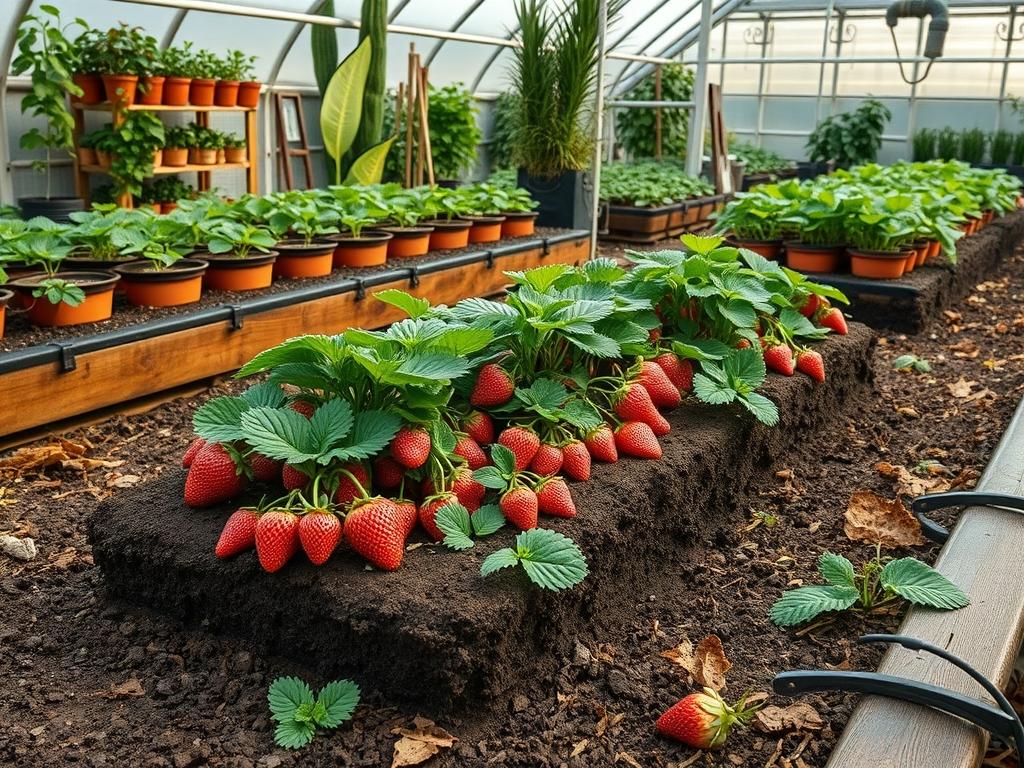
Integrating edible elements into a luxury landscape requires a delicate balance between aesthetic elegance and high-performance horticulture. While traditional garden beds offer scale, container-grown strawberries provide a unique opportunity to define vertical space and add texture to hardto-reach corners of a patio or terrace. The success of these installations rests entirely on the quality of the substrate. Selecting the best soil for strawberries involves more than just purchasing a standard bag of dirt; it requires an understanding of the physics of container drainage and the specific nutritional demands of the Rosaceae family. When we design these spaces, we look at how the fruit-bearing containers influence the curb appeal and the functional flow of an outdoor living room. A well-placed terracotta urn overflowing with lush green foliage and bright red berries acts as a living sculpture, but if the soil lacks the proper structural integrity, the plant will fail to thrive, leaving an unsightly gap in the design plan.
The architectural challenge of container gardening centers on the limited root zone. Because the roots cannot reach deep into the earth to find moisture or minerals, the medium must be engineered to provide everything the plant needs in a concentrated volume. In professional landscaping, we characterize the best soil for strawberries as a peat-based or coconut coir-based “soilless” mix. These mediums provide the high porosity necessary for oxygen to reach the roots while maintaining a high cation exchange capacity to hold on to nutrients. Climate also dictates our choice. In arid environments, we prioritize moisture-retentive components like vermiculite, whereas in humid coastal regions, we increase the ratio of coir or perlite to prevent the medium from becoming waterlogged during heavy rains.
Landscape Design Principles
When incorporating strawberries into a professional landscape design, we apply the same principles used for ornamental shrubbery: symmetry, focal points, and elevation layers. Utilizing containers allows us to lift the strawberries to eye level, which serves two purposes. First, it simplifies the harvest by eliminating the need to crouch. Second, it protects the fruit from soil-borne pathogens and ground-level pests. We often use tiered planters or vertical “living walls” to create a sense of height in small urban courtyards. This elevation creates a rhythmic pattern that guides the eye through the landscape.
Symmetry is achieved by flanking entryways or staircases with identical ceramic pots or cedar troughs. The visual weight of these containers must be anchored by a substrate that is heavy enough to prevent the pots from tipping in high winds but light enough to allow for seasonal relocation. By layering strawberries at different heights, perhaps placing trailing Alpine varieties at the front of a planter and upright Everbearing types in the center, we create a sense of depth and visual interest. Irrigation planning is also a vital part of the design principle. We often hide quarter-inch micro-drip tubing beneath the surface of the soil to ensure consistent moisture without disrupting the clean lines of the hardscape.
Plant and Material Selection
The following table outlines the plant species and materials commonly used in high-end strawberry container projects. Selecting the right combination is essential for achieving the “spiller” effect over the edges of planters while maintaining professional-grade production.
| Plant Type | Sun Exposure | Soil Needs | Water Demand | Growth Speed | Maintenance Level |
| :— | :— | :— | :— | :— | :— |
| Albion (Everbearing) | Full Sun | High Porosity | Moderate | Fast | Medium |
| Seascape | Full Sun | Slightly Acidic | High | Moderate | Medium |
| Alexandria (Alpine) | Partial Shade | Loamy Mix | Low | Slow | Low |
| Quinault | Full Sun | Rich Organic | High | Fast | High |
| Honeoye (June-bearing) | Full Sun | Well-drained | Moderate | Medium | Medium |
For the substrate itself, the best soil for strawberries in a container should consist of 40 percent peat moss or coconut coir, 20 percent aged compost, 20 percent perlite, and 20 percent coarse sand or pine bark nuggets. This ratio ensures that the bulk density remains low, allowing for rapid root elongation. We also recommend the inclusion of a slow-release 10-10-10 fertilizer and a handful of elemental sulfur if the local water supply is highly alkaline, as strawberries prefer a pH between 5.5 and 6.5.
Implementation Strategy
The implementation phase of a container strawberry garden begins with the physical placement of the vessels. In a professional layout, we first establish the grading of the patio or deck. Pots must be placed on pot feet or elevated platforms to prevent “pot sealing,” a condition where the drainage hole at the bottom of the container is blocked by the flat surface of the pavers. Once the pots are positioned, we install a layer of geotextile fabric at the bottom to prevent the soil from leaching out during irrigation.
Filling the containers requires a layered approach. We do not use “fillers” like packing peanuts or rocks at the bottom; these actually raise the perched water table and increase the risk of root rot. Instead, we fill the entire volume with the prepared strawberry mix. As we add the soil, we lightly tamp it down to remove large air pockets, though we are careful not to compact the medium too tightly. The plants are then spaced approximately 8 to 12 inches apart depending on the variety. For a five-gallon container, three plants are usually sufficient. We finish the surface with a one-inch layer of stabilized pine straw or fine cedar mulch. This mulch layer serves as a barrier that keeps the fruit clean and off the damp soil, reducing the incidence of gray mold.
Common Landscaping Failures
One of the most frequent mistakes in strawberry landscaping is the use of native garden soil in pots. Field soil is too heavy and contains silt and clay particles that collapse in a container environment, leading to severe soil compaction. This compaction chokes out oxygen, which is the primary cause of plant decline. Another common failure is improper drainage management. If the water cannot exit the pot within seconds of application, the roots will sit in stagnant water, leading to anaerobic conditions and pathogenic fungal growth.
Overcrowding is also a significant issue. While a dense planter looks lush initially, strawberries produce runners that will quickly fill the space. If the landscape architect does not account for this growth, the plants will compete for limited nutrients, resulting in smaller, sour fruit. Furthermore, many amateurs forget to monitor the “crown” height. Planting a strawberry too deep will cause the crown to rot; planting it too shallow will cause the roots to desiccate. The midpoint of the crown should sit exactly at the soil surface.
Seasonal Maintenance
Landscape management is a year-round commitment. In the spring, the focus is on fertilization and runner management. We apply a liquid seaweed extract every two weeks to encourage flowering. As the summer heat intensifies, irrigation becomes the priority. Containers can dry out in a matter of hours during a heatwave, so we often program automated timers to deliver water twice daily: once in the early morning and once at dusk.
In the autumn, we transition the plants into a dormancy phase. This involves removing any yellowing foliage and cutting back the remaining runners to focus the plant’s energy on the main crown. For winter maintenance, strawberries in pots are vulnerable to “freeze-thaw” cycles which can heave the plants out of the soil. In colder climates, we wrap the containers in burlap and insulating foam or move them to a sheltered unheated garage. If they remain outdoors, adding an extra three inches of clean straw over the entire top of the plant provides the thermal protection needed to ensure they return the following spring.
Professional Landscaping FAQ
What is the best soil for strawberries in hanging baskets?
A lightweight, peat-based potting mix is ideal for baskets. It must contain high levels of perlite or vermiculite to ensure proper aeration while maintaining enough moisture to prevent the suspended roots from drying out in the wind.
How often should I replace the soil in my strawberry pots?
To maintain professional yields, replace the top three inches of soil annually with fresh compost. Every three years, the entire container should be emptied and refilled with a fresh substrate to prevent the buildup of pathogens and salts.
Can I use regular garden fertilizer for my strawberries?
It is better to use a balanced, water-soluble fertilizer specifically formulated for berries. Avoid high-nitrogen blends in the late spring, as this will result in excessive leaf growth at the expense of fruit production and structural integrity.
How do I fix poor drainage in an existing strawberry planter?
First, check if the drainage holes are blocked. If the soil is compacted, you can use a slim wooden dowel to gently aerate the medium. If drainage does not improve, you must repot the plant into a mix with more coarse grit.
What pH level is optimal for strawberry production?
Strawberries thrive in slightly acidic conditions, specifically a pH range of 5.5 to 6.5. Use a digital pH meter to test your mix; if it is too alkaline, incorporate sphagnum peat moss or aluminum sulfate to lower the value.