
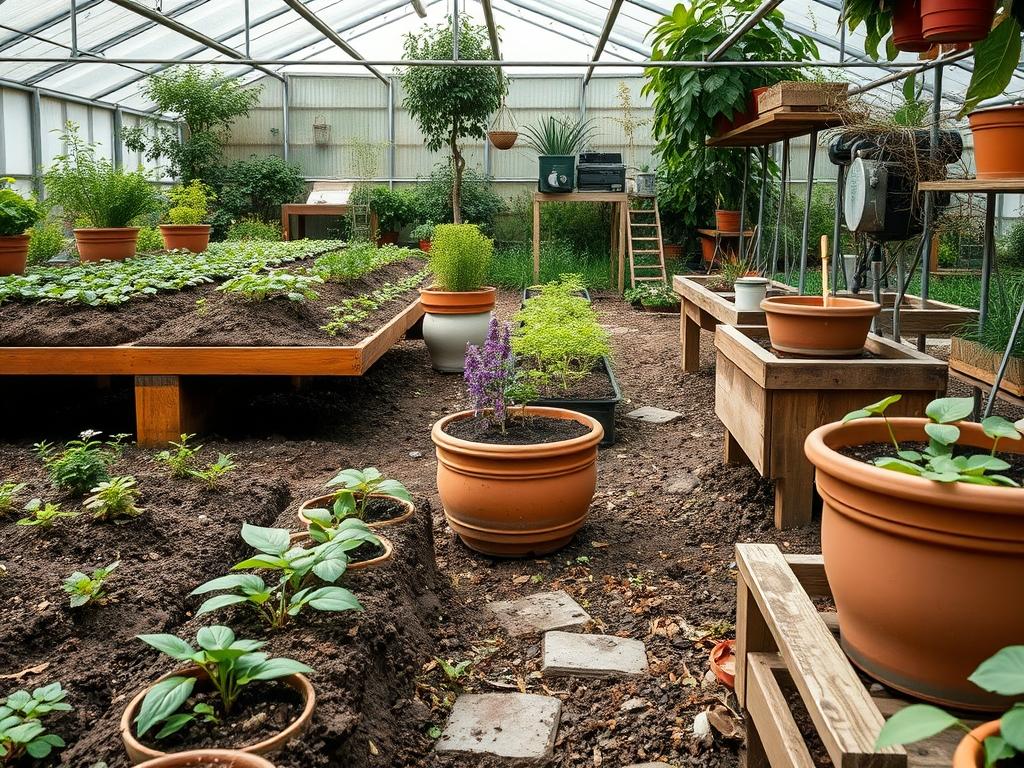
Modern landscape architecture demands a precise balance between aesthetic grandeur and long term maintenance sustainability. When designing outdoor environments for high end residential or commercial clients, the integration of container gardening serves as a primary tool for creating focal points and softening hardscape borders. However, the success of these installations often hinges on a hidden mechanical process known as capillary action. While traditional ground planting relies on gravity and rainfall, self-watering systems operate on the principle of sub-irrigation. In these systems, water is stored in a reservoir at the base and must travel upward against gravity to reach the root zone. If the Self-Watering Pot Soil fails to facilitate this upward movement, the entire landscape feature will wither, regardless of how much water is present in the lower chamber. Achieving the correct moisture tension is not just a gardening preference; it is a fundamental requirement for maintaining curb appeal and ensuring the longevity of expensive ornamental specimens.
Professional landscape designers must account for the microclimates created within these containers. Unlike the open earth, a pot is a closed system subject to rapid temperature fluctuations and specialized drainage requirements. In arid environments or areas with intense summer sun, the evaporation rate at the surface can quickly outpace the upward wicking speed of a standard potting mix. This creates a lethal dry zone in the upper 3 inches of the soil where young root systems are most vulnerable. By optimizing the capillary action of the substrate, we ensure that moisture is distributed evenly throughout the vertical profile, preventing the salt buildup and localized drought stress that often plague neglected urban landscapes. When we plan these installations, we consider the functionality of the outdoor living space, ensuring that the greenery remains vibrant with minimal human intervention, thereby fulfilling the core promise of a self-sustaining outdoor environment.
Landscape Design Principles
Effective landscape design using self-watering technology requires a deep understanding of visual balance and structural integrity. Symmetry is often the first principle applied; we use identical containers to flank a portico or line a formal walkway. This creates a sense of order and leads the eye toward a primary architectural feature. However, the weight of these containers, especially when the water reservoirs are at full capacity, must be factored into deck loads and paver specifications. A large 24-inch fiberglass planter filled with saturated soil and water can exert significant pressure, necessitating a stable, level foundation to prevent tilting or structural failure.
Elevation layers play a crucial role in creating depth within a garden. By utilizing tall self-watering pots in the rear and shorter vessels in the foreground, we mimic the natural stratification seen in woodland edges. This verticality is enhanced by selecting plants with varying growth habits to create a lush, tiered effect. Irrigation planning must also be integrated into the initial design phase. Even though these pots are self-watering, they require a strategy for refilling, whether through a manual maintenance contract or an automated top-off system tied into the main site irrigation. Visual balance is further achieved by coordinating the texture of the container with the surrounding materials, such as Natural Stone, Cedar Decking, or Powder-Coated Aluminum. Each element must work in harmony to transform a simple backyard into a sophisticated outdoor retreat.
Plant and Material Selection
Selecting the right components for a sub-irrigated environment is critical. The soil itself is a material that must be engineered. A high performance Self-Watering Pot Soil usually consists of Peat Moss or Coconut Coir for wicking, combined with Perlite or Pumice for aeration.
| Plant Type | Sun Exposure | Soil Needs | Water Demand | Growth Speed | Maintenance Level |
| :— | :— | :— | :— | :— | :— |
| Lavandula angustifolia | Full Sun | Gritty, High Drainage | Low | Medium | Low |
| Heuchera | Partial Shade | Humus-Rich, Wicking | Medium | Medium | Low |
| Caladium | Shade | Moist, Highly Capillary | High | Fast | Medium |
| Buxus microphylla | Full to Part Sun | Loamy, Well-Aerated | Medium | Slow | High (Pruning) |
| Carex oshimensis | Part Shade | Consistent Moisture | High | Medium | Very Low |
| Dipladenia | Full Sun | Lightweight, Porous | Medium | Fast | Low |
Implementation Strategy
The transition from a design concept to a functioning landscape requires a methodical implementation strategy. The first step involves grading the area where containers will be placed. Even a slight slope can cause the water in a reservoir to pool on one side, leaving the wick dry on the other and rendering the self-watering mechanism useless. Once the surface is level, we place the containers and verify the integrity of the overflow drainage holes. These holes are vital; they prevent the reservoir from overfilling during heavy rain, which would otherwise drown the root system and lead to anaerobic soil conditions.
Next, the substrate must be prepared. We never use standard topsoil in these systems. Instead, we blend a mix that is roughly 60 percent wicking material like Coconut Coir and 40 percent aeration material like Perlite. Before filling the pot, the wicking chambers must be packed tightly with the moist mix to ensure a continuous bridge between the reservoir and the main soil body. As we fill the container, we incorporate a slow-release 14-14-14 Fertilizer to provide a steady nutrient supply, as the sub-irrigation method tends to wash away surface-applied nutrients more slowly. Finally, a 2-inch layer of Organic Mulch or Decorative River Rock is applied to the surface. This layer reduces surface evaporation and maintains the hydrostatic pressure necessary for the capillary action to function efficiently throughout the heat of the day.
Common Landscaping Failures
One of the most frequent failures in container landscaping is the use of heavy, clay-based soils. These materials compact easily, crushing the macropores required for oxygen exchange. When soil compacts, capillary action is disrupted because the water cannot move through the dense mass, leading to a perched water table where the bottom is saturated while the top is bone dry. Root overcrowding is another significant issue. As a plant becomes root-bound, the sheer volume of root mass displaces the soil, reducing the substrate’s ability to wick water. In these cases, the plant may wilt even when the reservoir is full because there is simply not enough soil left to transport the moisture.
Improper spacing of containers can also lead to maintenance disasters. If pots are placed too close to heat-retaining walls without adequate airflow, the water in the reservoir can reach temperatures that cook the roots. Furthermore, many installers neglect the importance of flushing the system. Over time, as water wicks upward and evaporates, dissolved salts from fertilizers and tap water accumulate in the top layer of the soil. If not flushed out periodically with top-down watering, these salts will reach toxic levels and kill the foliage. Irrigation inefficiency often stems from a lack of understanding of the “wicking break,” which occurs when the soil is allowed to dry out completely. Once dry, many peat-based soils become hydrophobic, meaning they repel water rather than absorbing it. This breaks the capillary link, requiring a full manual saturation to reset the system.
Seasonal Maintenance
Landscape management is a year-round commitment that changes with the cycles of the environment. In the spring, the primary focus is on refreshing the top layers of the soil and checking the reservoir for debris or mosquito larvae. We often add a fresh layer of Compost to reintroduce beneficial microbes that may have perished during the winter. As summer approaches, the demand for water increases exponentially. During this peak growing season, we monitor the wicking speed and ensure the overflow holes remain clear of spider webs or silt.
Autumn requires a shift in strategy. As plant metabolism slows, the water demand drops. This is the time to prune back aggressive growth and remove any annuals that have finished their cycle. The most critical phase for self-watering pots is winter, especially in climates prone to freezing. Containers must be drained of their reservoirs to prevent the expanding ice from cracking the plastic or stone housing. In some cases, we wrap high-value containers in Burlap or Insulating Foam to protect the root ball from the freeze-thaw cycle. By following this seasonal cadence, the landscape remains a resilient and vibrant asset to the property.
Professional Landscaping FAQ
Why does my self-watering pot feel heavy but the plant is wilting?
This usually indicates a wicking break or soil compaction. The water is trapped in the reservoir, but the Self-Watering Pot Soil has lost its ability to pull moisture upward. You must top-water thoroughly to reconnect the capillary bridge.
Can I use regular garden soil in these containers?
No, regular garden soil is too dense and contains silt and clay that clog the wicking mechanism. It lacks the necessary Perlite or Vermiculite to maintain the air-to-water ratio required for successful sub-irrigation in a closed system.
How often should I add fertilizer to the system?
In a self-watering setup, use a slow-release granular Fertilizer once in the spring. Because water moves upward, nutrients are not leached out as quickly as they are in traditional pots, making over-fertilization a potential risk for the plants.
Do these pots prevent root rot effectively?
Only if the overflow hole is functioning. If the reservoir overfills during a storm and cannot drain, the soil becomes waterlogged. This creates anaerobic conditions, leading to root rot. Proper drainage at the reservoir level is absolutely essential.
What is the best wicking material for custom soil mixes?
Coconut Coir is widely considered the best wicking agent. It has a neutral pH, lasts longer than peat moss, and maintains its structure when wet, which facilitates consistent capillary action over multiple growing seasons in a professional landscape.