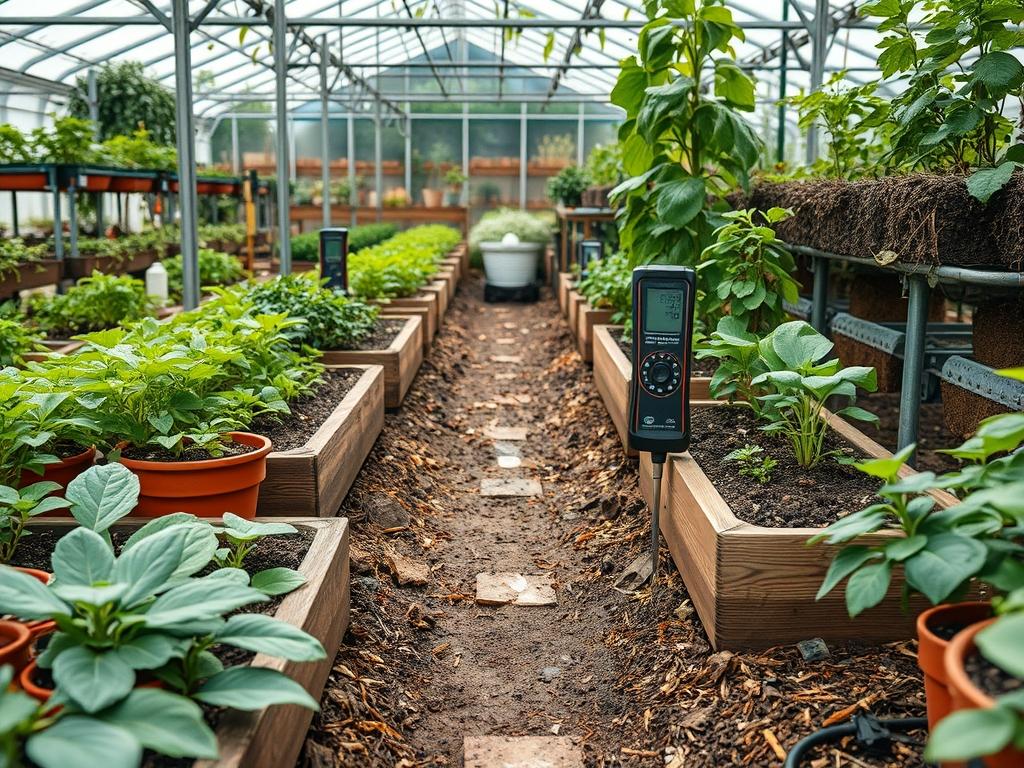
Maintaining a professional landscape requires a delicate balance between artistic vision and biological necessity. Often, high-end residential projects succeed or fail based on a single variable: the management of the invisible root zone. While aesthetic elements like Flagstone Walkways and Corten Steel Edging provide the structural framework, the longevity of the plant palette depends entirely on the precision of irrigation. In diverse climates, where microclimates can exist within a single acre, guessing the hydration needs of expensive specimens is a recipe for fiscal and horticultural disaster. This is where the integration of Soil Moisture Meters becomes essential for the modern landscape architect. These devices bridge the gap between human intuition and the physical reality of the rhizosphere, ensuring that water is delivered exactly when and where it is needed. By moving away from rigid timer-based irrigation and toward data-driven moisture management, we enhance curb appeal while significantly reducing water waste.
Landscape Design Principles
A successful landscape design utilizes symmetry and focal points to guide the eye, but these visual triumphs rely on the health of the living material. We structure designs using elevation layers, often employing Retaining Walls and terracing to create depth. These changes in elevation significantly alter how water moves through the site. A plant at the top of a slope will experience much faster drainage and higher evaporation rates than one at the base. Consequently, we group plants into hydrozones based on their specific water requirements. Using Soil Moisture Meters during the first year of a project allows us to verify if these hydrozones are functioning as intended. If a Japanese Maple situated on a northern slope shows a different moisture profile than its counterpart on a southern exposure, we adjust the irrigation emitters accordingly.
Symmetry in a formal garden demands uniform growth. If one side of a Boxwood Hedge receives slightly more subsurface runoff, it will eventually outpace the other side, ruining the visual balance. Precision monitoring ensures that both sides of the focal point remain identical in vigor. Furthermore, the selection of walkways and hardscaping materials must account for heat radiation. Large expanses of Concrete Pavers or dark stone can bake the surrounding soil, increasing the localized transpiration rate. We use sensors to determine how far this heat halo extends into the planting beds, allowing us to increase mulch depth or adjust watering frequency in those specific high-stress zones.
Plant and Material Selection
Selecting the right plant for the right place involves analyzing sun exposure, soil texture, and predicted growth rates. The following table highlights common landscape staples and their specific environmental requirements.
| Plant Type | Sun Exposure | Soil Needs | Water Demand | Growth Speed | Maintenance Level |
| :— | :— | :— | :— | :— | :— |
| English Lavender | Full Sun | Well-Drained/Sandy | Low | Moderate | Low |
| Japanese Maple | Partial Shade | Loamy/Acidic | Moderate | Slow | Medium |
| Emerald Green Arborvitae | Full Sun | Moist/Loamy | Moderate | Moderate | Medium |
| Blue Star Creeper | Full/Partial | Rich/Organic | High | Fast | Medium |
| Sedum Autumn Joy | Full Sun | Any/Poor Soil | Very Low | Moderate | Low |
| Hydrangea Macrophylla | Shade/Partial | Humus Rich | High | Fast | High |
The use of Soil Moisture Meters is particularly critical for high-water-demand species like Hydrangeas. These plants serve as the “canary in the coal mine” for a garden; they wilt quickly when the soil tension increases. However, over-compensation with water can lead to root rot. By using a probe to check the soil at a depth of 8 inches, a gardener can determine if the wilt is due to true dehydration or merely temporary midday heat stress.
Implementation Strategy
Implementing a professional backyard layout begins with proper grading. We ensure that the ground slopes away from the home foundation at a minimum rate of 2 percent. Once the primary drainage is established, the installation of Landscape Edging defines the borders between turf and ornamental beds. We recommend a mulch depth of 3 inches using organic materials like shredded cedar or hemlock. This layer acts as an insulator, but it can also trick surface-level sensors. When using Soil Moisture Meters, the probe must bypass the mulch layer entirely to reach the active root zone.
During the installation phase, we often incorporate sub-surface irrigation systems. Unlike traditional overhead sprinklers, these systems deliver water directly to the soil. To calibrate these systems, we take readings at multiple depths across the site. This process reveals “dead zones” where the emitters might be clogged or improperly spaced. In areas with heavy clay, we might install a French Drain to handle excess subsurface water. Regular monitoring after the construction phase ensures that these drainage solutions are effective and that the soil is not becoming anaerobic.
Common Landscaping Failures
The most frequent cause of plant mortality in professional landscapes is not underwatering, but rather the chronic overwatering that leads to root asphyxiation. When soil pores are constantly filled with water, oxygen cannot reach the roots, leading to a rapid decline in plant health. This is often exacerbated by soil compaction. During construction, heavy machinery compresses the soil, destroying its structure and making it nearly impermeable. Using a Soil Moisture Meter can reveal this issue; if the surface is muddy but the probe remains dry just a few inches down, you are likely dealing with a compaction layer that needs mechanical aeration.
Another common failure involves improper spacing. Designers often plant for immediate “fullness” without considering the mature spread of the species. As plants grow, their root systems overlap and compete for the same moisture and nutrients. Without objective data from moisture sensors, it is impossible to know which plant is losing the competition until the foliage begins to thin. Furthermore, “volcano mulching,” the practice of piling mulch high against the trunk of a tree, creates a false sense of moisture that actually encourages rot and fungal pathogens. Accurate measurements should always be taken at the drip line of the tree to get a true representation of available water.
Seasonal Maintenance
Landscape management is a year-round commitment that shifts with the seasons. In the spring, the goal is to monitor the soil as it wakes up. As the ground thaws, moisture levels fluctuate wildly. This is the time to calibrate your Soil Moisture Meters and ensure that your automated systems are not triggering during spring rains. We check the 4-inch and 8-inch depths to see if the deep subsoil has recharged over the winter.
Summer brings the highest stress. During heatwaves, evaporation rates can outpace irrigation capacity. We use daily moisture readings to determine if supplemental hand-watering is required for high-value specimens. Autumn is the season for transition. As plants enter dormancy, their water needs drop significantly. Continuing to water at summer levels in October can prevent trees from properly hardening off before the first frost. Winter maintenance focuses on protection. While we generally stop active irrigation, evergreen species like Arborvitae still lose moisture through their needles on windy winter days. If a mid-winter thaw occurs, we use a probe to check for dry soil; if the ground is not frozen, a deep watering can prevent winter desiccation and subsequent browning in the spring.
Professional Landscaping FAQ
How deep should I insert a moisture meter for my lawn?
For standard turfgrass, you should insert the probe approximately 3 to 4 inches deep. This represents the primary root zone for most cool-season grasses. Measuring any deeper will give you data that the grass cannot actually utilize.
Can soil moisture meters work in heavy clay soil?
Yes, but you must be careful not to bend the probe. Clay holds moisture tightly, so digital meters are often more accurate than analog ones in these conditions. Ensure the probe has full contact with the soil for an accurate reading.
Do these meters require frequent calibration?
High-end digital sensors often have self-calibration features, but manual probes should be tested periodically. You can check accuracy by testing a bucket of dry sand versus a bucket of saturated soil to ensure the needle or digital readout reacts accordingly.
Are moisture meters better than the finger test?
The finger test only reaches about 2 inches into the soil. For shrubs and trees, the critical moisture levels are often 6 to 12 inches deep. A meter provides objective data where your senses cannot reach.
Is it necessary to leave the meter in the ground?
Unless you have a permanent wireless sensor system, you should remove portable meters after each use. Leaving them in the soil can lead to electrode corrosion, which will eventually ruin the accuracy of the sensor and shorten its lifespan.