
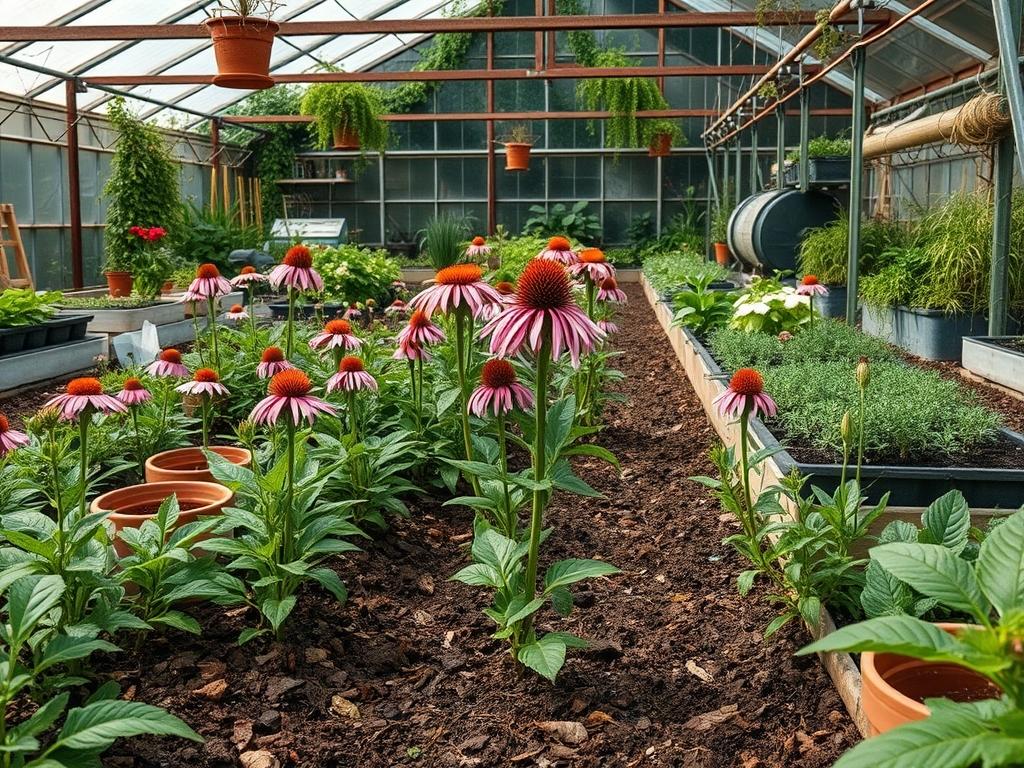
Integrating durable perennials into a commercial or residential landscape requires more than an eye for color; it demands a deep understanding of the structural and chemical composition of the site. Echinacea, commonly known as the coneflower, serves as a cornerstone species for designers aiming to achieve both ecological value and high curb appeal. The primary challenge in utilizing these North American natives lies in their specific sensitivity to hydraulic conditions and site preparation. While they are often marketed as drought tolerant, their success is predicated on a well developed root system anchored in a specific soil profile. When a landscape architect specifies Echinacea purpurea or Echinacea pallida, the primary goal is to ensure the plant provides vertical interest and seasonal transition without succumbing to crown rot or nutrient lockout. Proper planning addresses the functional goals of the space, such as stormwater mitigation and thermal cooling, while ensuring the aesthetic goals of texture and rhythm are met throughout the growing season.
Landscape Design Principles
Successful garden planning relies on the articulation of space through symmetry and focal points. Echinacea provides a rigid, architectural form that serves as an excellent mid-to-back layer in a perennial border. When designing for visual balance, we often use the rule of thirds to place large groupings of Echinacea near structural elements like retaining walls or contemporary walkways. This creates a sense of permanence and intentionality. The elevation layers of the garden should be planned to showcase the prominent “cones” of the flower, which can reach heights of 24 to 48 inches depending on the cultivar.
Irrigation planning is perhaps the most critical design principle when dealing with this genus. Unlike tropical species that require consistent moisture, Echinacea thrives when the upper soil profile is allowed to cycle between wet and dry states. We design these zones with independent irrigation valves to prevent overwatering, which is the most common cause of plant failure in high density installations. By placing these plants on slightly elevated mounds or along the upper edges of a bioswale, we ensure that water moves away from the crown efficiently. This elevation also adds a dynamic visual element, creating a sense of movement and depth that flat beds often lack.
Plant and Material Selection
| Plant Type | Sun Exposure | Soil Needs | Water Demand | Growth Speed | Maintenance Level |
| :— | :— | :— | :— | :— | :— |
| Echinacea purpurea | Full Sun | Well-drained Loam | Low | Moderate | Low |
| Echinacea angustifolia | Full Sun | Rocky/Sandy Loam | Very Low | Slow | Medium |
| Panicum virgatum | Full Sun | Variable/Clay | Low | Fast | Low |
| Perovskia atriplicifolia | Full Sun | Lean/Alkaline | Very Low | Fast | Low |
| Rudbeckia fulgida | Full Sun to Part Shade | Moist/Well-drained | Moderate | Fast | Low |
The selection of materials extends beyond the plants themselves. For Echinacea Soil Requirements, we specify a blend of 60 percent sandy loam, 20 percent composted organic matter, and 20 percent coarse sand to ensure aeration. We avoid heavy cedar mulches directly against the stems, opting instead for pine bark fines or even a thin layer of pea gravel in contemporary minimalist designs. These materials prevent the accumulation of moisture at the base of the plant, which is the key to maintaining soil purity and preventing fungal pathogens.
Implementation Strategy
The transition from a design on paper to a physical landscape requires a disciplined approach to site grading and soil preparation. Before a single pot is placed, the subgrade must be inspected for compaction. In most suburban developments, the soil is heavily compacted by construction equipment, leaving it nearly impervious to water and air. We use a broadfork or a mechanical tiller to break up the soil to a depth of 12 to 18 inches. During this process, we incorporate sulfur or lime based on the results of a professional soil test to achieve a target pH of 6.0 to 7.0.
Once the grade is set, we establish the edging to define the boundaries between turf and planting beds. A clean steel edge or a poured concrete curb provides a professional finish and prevents the encroachment of aggressive grasses. When planting, we ensure the crown of the Echinacea is positioned approximately 0.5 inches above the surrounding soil level. This allows for settling and ensures that water does not pool around the main stem. After the plants are in the ground, we apply a 3-inch layer of mulch, being careful to leave a small gap around the immediate base of each plant. This stage is also the ideal time to install a drip irrigation system with emitters placed 4 to 6 inches from the root ball, ensuring efficient water delivery without wetting the foliage.
Common Landscaping Failures
Failure in the landscape is rarely the fault of the plant; it is almost always a failure of the environment. The most frequent mistake we observe is improper drainage caused by “bathtubbing.” This occurs when a hole is dug into heavy clay soil and filled with light potting mix. The water fills the hole but cannot escape into the surrounding clay, essentially drowning the roots of the Echinacea. To avoid this, we recommend amending the entire bed rather than individual holes, or installing French drains in areas with severe drainage issues.
Another common failure is root overcrowding and improper spacing. Many contractors plant for “instant impact,” placing Echinacea too close together. As these plants mature, they compete for nutrients and air circulation diminishes, leading to powdery mildew. Following a spacing of 18 to 24 inches on center is vital for long term health. Finally, the use of high nitrogen, synthetic fertilizers can lead to “leggy” growth where the stems are too weak to support the flower heads. These plants require a balanced, slow release organic fertilizer that promotes root development over rapid foliar growth.
Seasonal Maintenance
Managing an Echinacea centered landscape follows a cyclical rhythm that shifts with the weather. In the Spring, maintenance involves removing the dead stems from the previous year using bypass pruners. This is also the time to apply a thin layer of compost to replenish nutrients. As the temperature rises, monitor for the emergence of new growth and ensure the irrigation system is functioning correctly after the winter freeze.
During the Summer, deadheading the spent blooms will encourage a second flush of flowers and keep the garden looking tidy. However, we often advise clients to stop deadheading in late August. This allows the plants to produce seeds which provide a critical food source for local bird populations. In the Autumn, the focus shifts to sanitation. Removing any diseased foliage prevents pathogens from overwintering in the soil. Finally, in Winter, the architectural skeletons of the coneflowers can be left standing. They provide visual interest against the snow and protect the crown from extreme temperature fluctuations. This “limit-intervention” approach in the winter supports a healthy ecosystem while maintaining the aesthetic integrity of the landscape.
Professional Landscaping FAQ
What is the ideal soil pH for coneflowers?
Echinacea thrives in a neutral to slightly acidic range, specifically between 6.0 and 7.0 pH. This range ensures that essential micronutrients remain chemically available to the root system, preventing leaf chlorosis and promoting strong, vibrant floral displays.
How do I fix heavy clay soil for planting?
Incorporate at least 4 inches of organic matter, such as leaf mold or compost, and 2 inches of expanded shale or coarse sand. This improves the porosity and allows for the critical gas exchange that Echinacea roots require to survive.
Can Echinacea survive in sandy soil?
Yes, they perform exceptionally well in sandy conditions provided the soil is enriched with some organic matter. Sandy soil offers the superior drainage these plants crave, although they may require more frequent irrigation during the initial 12 months of establishment.
Does mulch type affect soil quality?
Hardwood mulches can tie up nitrogen as they decompose, while dyed mulches may contain undesirable chemicals. We recommend pine bark fines or natural cedar, which break down into beneficial organic acids without significantly altering the essential nutrient balance of the bed.
How often should I test garden soil?
Professional landscapes should be tested every 2 to 3 years. Regular testing tracks the depletion of minerals and changes in pH levels, allowing for precise amendments rather than guesswork, which maintains the purity and productivity of the planting site.