
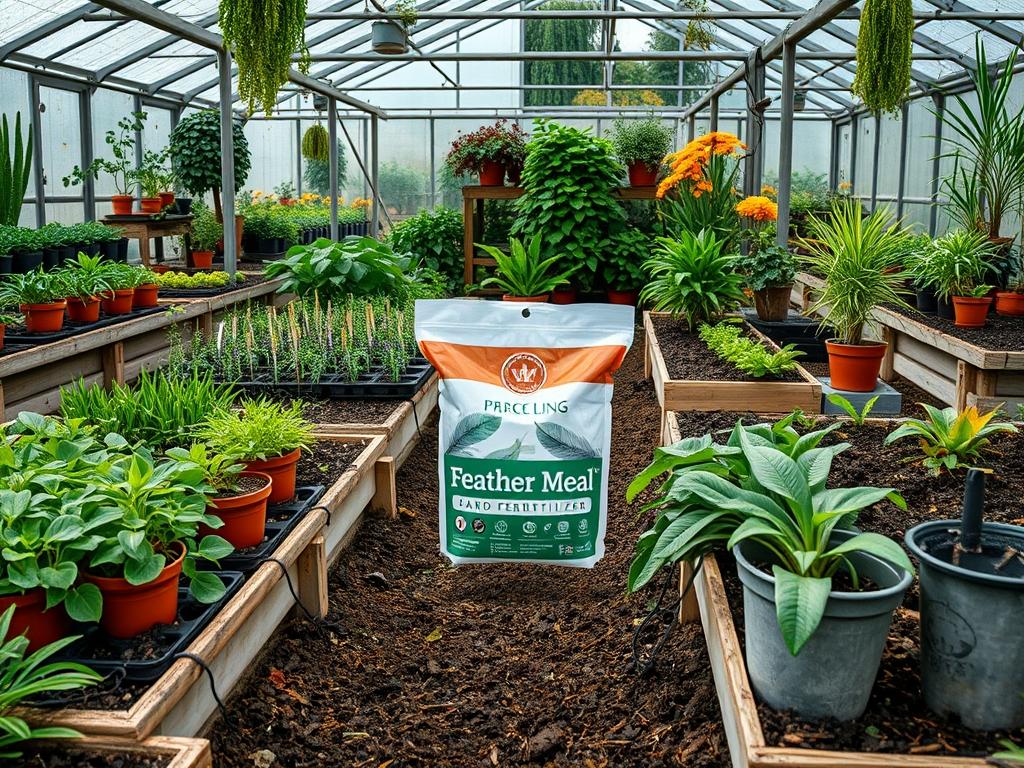
Achieving a professional-grade landscape requires more than an eye for aesthetics; it demands a deep understanding of soil chemistry and long-term nutrient availability. When designing a high-end outdoor environment, the primary challenge is often maintaining the vibrant green hues and structural integrity of plantings across diverse climate zones. Traditional synthetic fertilizers often provide a rapid flush of growth that leads to weak cellular structures and increased pest vulnerability. In contrast, Feather Meal Fertilizer offers a slow-release nitrogen source that aligns with the biological rhythms of the soil. This organic amendment, derived from hydrolyzed and ground poultry feathers, typically boasts an N-P-K ratio of 12-0-0. By providing a steady stream of nitrogen through microbial breakdown, it ensures that the curb appeal of a commercial or residential property remains consistent rather than fluctuating with the peaks and troughs of chemical applications.
Landscape Design Principles
Successful landscape architecture hinges on the interplay between structural symmetry and organic focal points. When planning a site, I prioritize the visual balance between hardscaping elements and the living biomass. Symmetry provides a sense of formality and order, often achieved through mirrored plantings of Buxus sempervirens or the strategic placement of limestone pavers. However, the long-term success of these focal points depends on the health of the soil profile. Nitrogen is the primary driver of the vegetative growth needed to create dense, lush privacy screens and deep green backdrops. Integrating Feather Meal Fertilizer into the initial soil preparation allows for a gradual mineralization process. This ensures that as plants establish their root systems, they have access to nitrogen without the risk of root burn or excessive leaching into local groundwater systems.
Elevation layers are equally critical in a professional layout. By utilizing retaining walls and tiered garden beds, an architect can create a sense of three-dimensional depth. These changes in elevation require sophisticated irrigation planning to prevent moisture from pooling at the base of slopes. High-nitrogen amendments like feather meal are particularly effective in these tiered environments because they are not highly water-soluble. Unlike synthetic nitrates that wash away during a heavy rainstorm or via a high-volume drip irrigation system, the proteins in feather meal remain in the soil until microbes break them down. This stability is essential for maintaining the visual balance of a project over several seasons, ensuring that the top tier of a landscape looks just as vibrant as the bottom.
Plant and Material Selection
Selecting the right plant material involves a rigorous analysis of site conditions and maintenance expectations. For a landscape to thrive, the soil must be treated as a living foundation rather than a static medium. The following table outlines several common species used in high-end designs and their specific requirements for optimal performance.
| Plant Type | Sun Exposure | Soil Needs | Water Demand | Growth Speed | Maintenance Level |
| :— | :— | :— | :— | :— | :— |
| Taxus x media (Yew) | Sun to Shade | Well-drained loam | Moderate | Slow | Low |
| Echinacea purpurea | Full Sun | Well-drained, organic | Low | Moderate | Low |
| Picea pungens | Full Sun | Moist, acidic | Moderate | Slow | Medium |
| Panicum virgatum | Full Sun | Any (prefers moist) | Low | Fast | Low |
| Cornus florida | Part Shade | Rich, acidic | Moderate | Moderate | High |
| Hydrangea macrophylla | Part Shade | Fertile, moist | High | Fast | Medium |
When installing these species, the choice of soil amendment is paramount. Feather Meal Fertilizer is particularly beneficial for heavy feeders like Hydrangea macrophylla or for establishing the deep green needles of Picea pungens. Because it does not contain significant phosphorus or potassium, it allows the landscape architect to precisely manage nitrogen levels without over-saturating the soil with other minerals that might already be present in sufficient quantities.
Implementation Strategy
The transition from a blueprint to a living landscape requires a methodical implementation strategy. The process begins with professional grading to ensure positive drainage away from architectural structures. Once the sub-grade is established, a landscape rake should be used to clear debris before a 3-inch layer of high-quality topsoil is applied. This is the optimal time to incorporate Feather Meal Fertilizer. For new installations, a rate of 3 lbs per 100 square feet is generally recommended. The meal should be worked into the top 6 inches of soil using a rototiller or a hand-held garden fork. This ensures that the nitrogen-rich protein is placed exactly where the developing root balls of new native plants can access it as the soil warms.
Edging and mulch depth are the final touches that define the professional aesthetic. A crisp edge, cut with an edging spade to a depth of 4 inches, creates a clean demarcation between turfgrass and ornamental beds. Following the application of feather meal, a 2-inch to 3-inch layer of shredded hardwood mulch should be applied. This mulch layer serves a dual purpose. It suppresses weed competition and creates the dark, moist environment necessary for the soil microbes to begin the process of breaking down the feather meal. Without this microbial activity, the nitrogen remains locked within the keratin proteins of the feathers, rendering it unavailable to the plants. This biological dependency is what makes feather meal an elite choice for sustainable, long-term garden planning.
Common Landscaping Failures
One of the most frequent failures in professional landscaping is improper drainage, which leads to soil compaction and anaerobic conditions. When soil is compacted, the microbes responsible for processing organic fertilizers like Feather Meal Fertilizer cannot survive. This results in nutrient deficiencies despite the presence of high-quality amendments. Furthermore, root overcrowding is a common mistake when designers fail to account for the mature spread of a species. If Quercus phellos is planted too close to a retaining wall, the resulting root pressure can compromise the structural integrity of the masonry within a decade.
Improper spacing and irrigation inefficiencies also plague many projects. Over-irrigation not only wastes resources but also promotes fungal pathogens and root rot. Many contractors attempt to compensate for poor soil health by increasing irrigation and applying high-salt synthetic fertilizers. This approach often leads to soil salinity issues and “lazy” root systems that stay near the surface. By utilizing a slow-release, organic nitrogen source such as feather meal, you encourage deeper root exploration. The plants must grow roots toward the pockets of microbial activity to access nutrients, resulting in a more drought-tolerant and resilient landscape that can withstand the rigors of various climate cycles.
Seasonal Maintenance
Seasonal management is the hallmark of a well-maintained outdoor environment. In the spring, the focus should be on soil testing and the first application of Feather Meal Fertilizer. As the soil temperature rises above 50 degrees Fahrenheit, microbial activity accelerates, and the nitrogen becomes available just as the plants enter their peak growth phase. This is also the time for structural pruning of deciduous trees and the application of a fresh layer of bark mulch.
During the summer months, maintenance shifts toward irrigation management and monitoring for pests. Because feather meal provides a steady, moderated supply of nitrogen, the plants are less likely to produce the succulent, nitrogen-heavy new growth that attracts aphids and mites. In autumn, a lighter application of feather meal can help perennials and woody ornamentals build up the nitrogen reserves needed for the following spring without stimulating late-season growth that could be damaged by frost. Finally, winter is the season for hardscape inspection and dormant pruning. While the biological activity in the soil stops, the organic matter from the feather meal continues to improve the soil structure, preparing the site for the next cycle of growth.
Professional Landscaping FAQ
What is the primary benefit of feather meal over synthetic nitrogen?
It provides a slow, steady release of nitrogen through microbial decomposition. This prevents the nutrient leaching and plant “surge” growth common with synthetics, leading to stronger cellular structures and improved long-term health for expensive landscape specimens.
How long does it take for feather meal to become effective?
Expect a visible response within 2 to 4 weeks after application, depending on soil temperature and moisture. The nitrogen continues to release for up to 4 months, making it an exceptionally efficient long-term amendment for permanent plantings.
Can feather meal be used on all landscape plants?
Yes, it is highly versatile. It is particularly effective for leaf-heavy ornamentals, turfgrass, and evergreens. However, because it is an N-only source, it should be paired with compost if phosphorus or potassium deficiencies are identified via soil test.
Does feather meal have a strong odor after application?
In its dry form, it has a mild earthy scent. Once incorporated into the soil and covered with mulch, any odor dissipates rapidly. Proper soil integration is key to preventing wildlife from being attracted to the protein-rich meal.
Is feather meal safe for use in public-facing landscapes?
It is one of the safest high-nitrogen options available for public spaces. Since it is organic and non-burning, there is no risk to pedestrians or pets when applied correctly, unlike some synthetic granules that can cause skin irritation.