
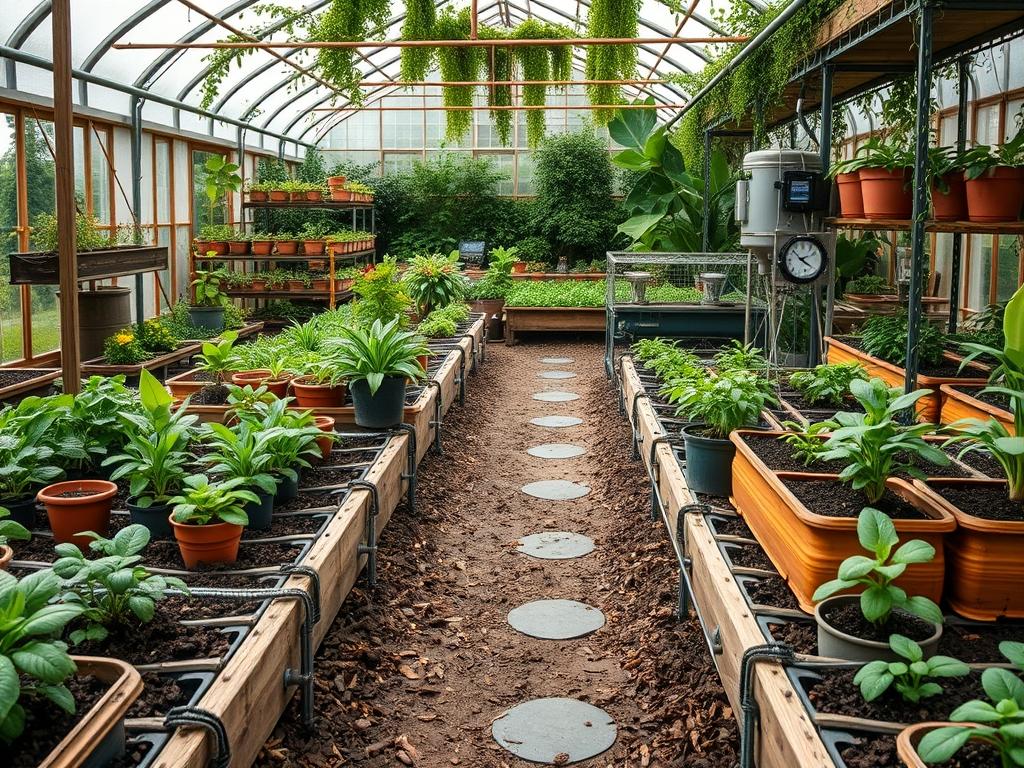
Integrating Valeriana officinalis into a professional landscape design requires a delicate balance between its rapid growth habit and its specific physiological needs. Most homeowners or commercial clients seeking a serene, naturalistic aesthetic find that valerian offers a unique verticality and a pleasant, hay-like fragrance during the blooming phase. However, the primary landscaping challenge lies in managing its spread and ensuring the soil profile supports its heavy nutrient demands without compromising the surrounding flora. A successful Valerian Soil Strategy is not merely about planting a root; it involves a holistic approach to site engineering, where moisture retention meets structural stability. From a curb appeal perspective, this plant provides a soft, airy texture that can bridge the gap between rigid retaining walls and more structured garden beds. Functionality is equally important, as the plant attracts pollinators, contributing to the local ecosystem and environmental health of the outdoor living space.
Landscape Design Principles
In the realm of professional landscape architecture, every element must serve a purpose, whether it is aesthetic or functional. When incorporating valerian, symmetry and visual balance are achieved by utilizing its height, which can reach up to 5 feet, as a backdrop for lower tiered plantings. Symmetry is often maintained by flanking walkways or entryways with these tall perennials to create a sense of enclosure and privacy. This adds to the elevation layers of the garden, allowing the eye to move from ground-cover sedum up toward mid-sized shrubs like boxwood, finally resting on the towering white or pink clusters of valerian.
Focal points are essential in larger estates or public parks. A well placed cluster of Valeriana officinalis can act as a seasonal beacon, drawing attention to specific areas like a stone bench or a water feature. Irrigation planning is critical here; because valerian thrives in moist environments, it should be grouped with other moisture-loving species to simplify the drip irrigation system zones. Walkways should be designed with enough clearance to account for the plant’s slight leaning habit when in full bloom, ensuring that accessibility is never compromised. By considering these principles, the architect ensures that the garden feels intentional rather than overgrown.
Plant and Material Selection
Selecting the right companions and substrate materials is the cornerstone of a resilient landscape. The following table outlines the requirements for valerian and its common architectural companions.
| Plant Type | Sun Exposure | Soil Needs | Water Demand | Growth Speed | Maintenance Level |
| :— | :— | :— | :— | :— | :— |
| Valeriana officinalis | Full Sun / Part Shade | Rich Loam | High | Fast | Moderate |
| Lavandula angustifolia | Full Sun | Well-Drained Sandy | Low | Medium | Moderate |
| Matteuccia struthiopteris | Part Shade / Full Shade | Moist Humus | High | Fast | Low |
| Nepeta cataria | Full Sun | Average Soil | Medium | Fast | Low |
| Cornus sericea | Full Sun / Part Shade | Boggy/Wet Soil | High | Medium | Medium |
The Valerian Soil Strategy rests on the selection of high quality organic compost and expanded shale to provide both nutrients and aeration. Using a 3-inch layer of shredded hardwood mulch is also recommended to maintain soil temperature and moisture consistency.
Implementation Strategy
The successful implementation of a garden layout begins with precise site preparation. First, the architect must evaluate the grading of the property. For regions with heavy rainfall, a slight 2 percent slope away from the home foundation is necessary to prevent basement seepage while still directing water toward the valerian beds. Once the grade is established, edging materials such as steel edging or poured concrete curbs should be installed to define the boundaries between the turf and the planting beds. This prevents the valerian from self-seeding into the lawn, a common maintenance headache.
Soil preparation is the next critical step. For a robust Valerian Soil Strategy, the existing dirt should be excavated to a depth of 18 inches. This area is then backfilled with a custom mixture of 40 percent topsoil, 40 percent organic compost, and 20 percent coarse sand. Using a rototiller, the landscape team integrates these materials to eliminate large clods and air pockets. Before planting, a slow-release nitrogen fertilizer is applied to the surface.
Drainage must be addressed internally. If the site naturally collects water, the installation of a French drain or a dry creek bed using river rock can channel excess moisture. For the valerian plants themselves, spacing is key. Each specimen should be placed 24 inches apart from center to center. This allows for adequate air circulation, which is vital for preventing powdery mildew. Once the plants are in the ground, a thorough soaking is required to settle the roots. This is followed by the application of the mulch layer, ensuring the mulch does not directly touch the stalks of the plants to avoid crown rot.
Common Landscaping Failures
One of the most frequent errors in garden execution is neglecting the long term effects of soil compaction. In high traffic areas, the soil becomes dense, stripping the roots of oxygen and leading to stunted growth. This is particularly detrimental to valerian, which requires a porous structure to expand its rhizomes. Another common failure is improper drainage planning. While valerian likes moisture, stagnant water leads to anaerobic conditions that kill the root system.
Root overcrowding is another issue seen in amateur designs. Because valerian is a vigorous grower, failing to provide enough room during the initial installation results in a tangled mess within three years, forcing difficult and expensive renovations. Additionally, irrigation inefficiencies, such as over-watering during the dormant winter months or under-watering during the peak of summer, can lead to plant stress. Finally, many fail to account for the weight of the flower heads; neglecting to provide subtle support or choosing a high wind location without a windbreak can result in the stems snapping or sagging over walkways.
Seasonal Maintenance
Landscape management is a year-round commitment. In the spring, the focus is on rejuvenation. As the ground thaws, gardener should apply a fresh 1-inch layer of compost to the base of the valerian. This is also the ideal time for division; using a spade, the architect can recommend splitting large clumps to maintain the desired density. Any dead foliage from the previous year should be cleared away using hand pruners to make room for new shoots.
Summer maintenance is dominated by hydration and deadheading. During heatwaves, the irrigation system should be monitored to ensure deep watering occurs at least twice a week. Deadheading the spent flowers before they drop seeds is a professional trick to control the population and encourage a second, smaller flush of blooms.
When autumn arrives, the focus shifts to protection and cleanup. As the valerian begins to yellow, it should be cut back to roughly 6 inches above the soil line. This prevents pests from overwintering in the dead stalks. Adding a fresh layer of mulch helps insulate the roots against the upcoming freeze. In winter, the landscape remains largely dormant, but the architect should inspect the hardscaping and retaining walls for any frost heave or shifting that might affect the planting beds in the coming spring.
Professional Landscaping FAQ
How does soil pH affect valerian growth?
Valerian prefers a slightly acidic to neutral pH between 6.0 and 7.0. Outside this range, the plant may struggle with nutrient uptake, leading to yellowing leaves. A professional soil test kit can determine if lime or sulfur additions are necessary.
Can valerian be used for erosion control?
While it has a hearty root system, valerian is best used in conjunction with other native grasses. Its roots help bind the topsoil, but on steep slopes, it should be paired with geotextile fabric or riprap for maximum stability.
What is the best mulch for a Valerian Soil Strategy?
A coarse organic mulch, such as pine bark or cedar chips, is ideal. These materials break down slowly, adding organic matter back into the soil while providing the necessary moisture barrier that valerian needs to thrive through summer.
Is valerian invasive in residential landscapes?
It is not classified as an invasive species in most regions, but it is a prolific self-seeder. Effective edging and timely deadheading with garden shears are professional requirements to keep the plant within its designated architectural boundaries.
How often should I test my garden soil?
For high-performance landscapes, a soil analysis should be conducted every two to three years. This ensures that the CEC (Cation Exchange Capacity) remains high and that the Valerian Soil Strategy is successfully providing the necessary minerals for growth.