
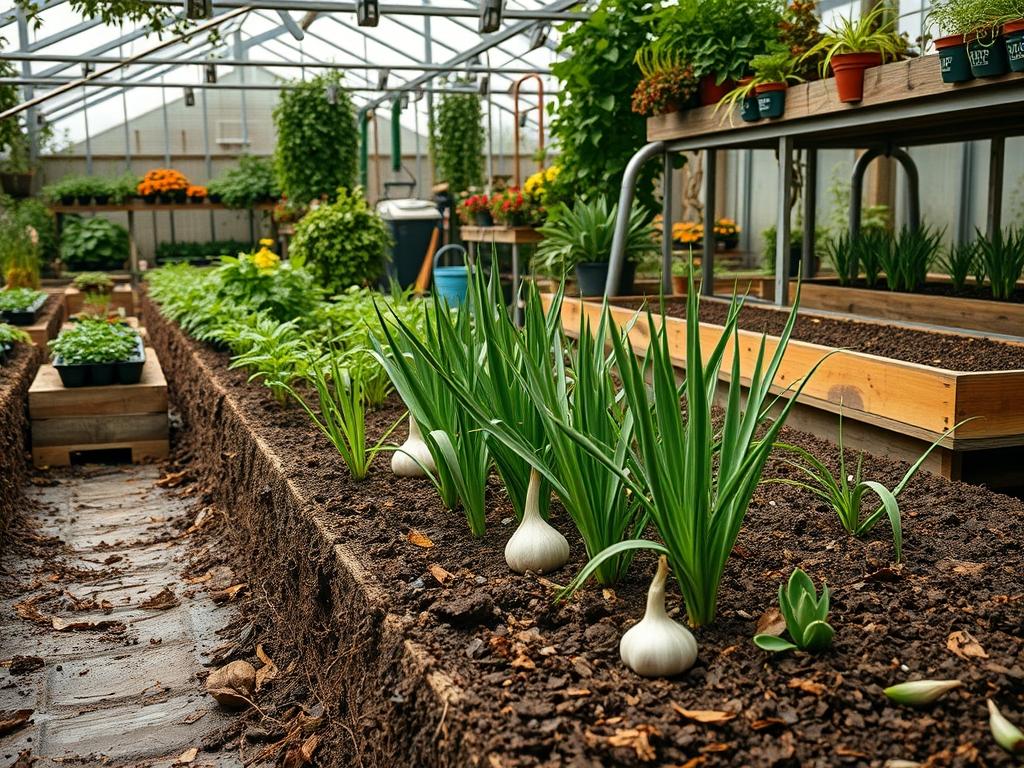
Achieving professional results in a residential landscape requires looking beyond the surface aesthetics of a planting bed to the chemical and physical properties of the substrate. When we discuss the Best Soil for Garlic, we are actually discussing the architecture of the subterranean environment. Proper land planning ensures that these overwintering crops do not just survive but thrive to produce robust, heavy yields. A well executed garlic patch serves two purposes in a high end landscape design. It acts as a structural green border during the early spring months while providing a functional harvest that justifies the space allocated for production beds. Professionals understand that site selection involves more than just finding a sunny spot; it requires an analysis of drainage, sunlight duration, and the surrounding hardscape to create a cohesive outdoor environment.
The challenge of growing large bulbs lies in the balance between moisture retention and drainage. If your landscape design features heavy clay, the bulbs will likely suffocate or rot during the wet winter months. Conversely, a purely sandy environment will leach nutrients before the plant can utilize them during its aggressive spring growth phase. We must treat the soil as a living foundation. This approach mimics the way we design retaining walls or walkways; we start with a stable, well draining base and build upward with layers that serve specific functional roles. By integrating garlic into the intentional landscape, you create a garden that is both productive and visually striking, providing a textured, linear contrast to the softer curves of ornamental shrubs.
Landscape Design Principles
Incorporating edible crops like garlic into a professional landscape requires adherence to core design principles to ensure the garden looks intentional rather than haphazard. Symmetry plays a vital role in this integration. By planting garlic in structured Raised Beds or along the geometric lines of Steel Edging, you create a formal aesthetic that complements modern architecture. The linear, upright foliage of Hardneck Garlic provides a unique vertical element that can be used to lead the eye toward a focal point, such as a garden sculpture or a water feature. Because garlic spends the winter underground, the design must also account for the visual void during the dormant season. Using Evergreen Shrubs as a backdrop ensures the area remains attractive even when the garlic is not actively growing.
Elevation layers are another critical consideration in the master plan. Planting garlic at a higher elevation than the surrounding lawn encourages natural drainage and prevents the pooling of water during heavy rain cycles. We often utilize Terraced Gardens or stone Retaining Walls to create these microclimates. This elevation not only benefits the health of the plant but also adds three dimensional depth to the backyard. Irrigation planning must be integrated into the initial design layout. A dedicated Drip Irrigation System ensures that moisture reaches the root zone without wetting the foliage, which reduces the risk of fungal pathogens. When designing the walkways around these beds, we choose materials like Crushed Granite or Flagstone to provide a stable, all weather surface for maintenance.
Visual balance is achieved by pairing the sharp, pointed leaves of the garlic with softer companion plants. This creates a layered effect that masks the utilitarian nature of a vegetable patch. We often design these areas with a tiered approach; the tallest garlic varieties sit in the center or rear of the bed, while lower growing herbs or flowers occupy the margins. This strategy maximizes the use of space and ensures that every square foot of the landscape contributes to the overall aesthetic goal. The result is a garden that feels like a professional sanctuary rather than a simple farm plot.
Plant and Material Selection
| Plant Type | Sun Exposure | Soil Needs | Water Demand | Growth Speed | Maintenance Level |
| :— | :— | :— | :— | :— | :— |
| Hardneck Garlic | Full Sun | Loamy, pH 6.5 | Moderate | Slow | Medium |
| Softneck Garlic | Full Sun | Sandy Loam | Moderate | Medium | Low |
| Rosemary | Full Sun | Well Draining | Low | Medium | Low |
| Creeping Thyme | Full Sun | Sandy | Low | Fast | Low |
| French Shallots | Full Sun | Rich, Silty | Moderate | Slow | Medium |
| English Lavender | Full Sun | Gritty, Alkaline| Low | Slow | Low |
The selection of materials is just as important as the plants themselves. To build the Best Soil for Garlic, a mix of 60 percent organic matter and 40 percent mineral components such as Coarse Sand or Perlite is recommended. The addition of Bone Meal and Blood Meal provides the necessary phosphorus and nitrogen required for bulb development. For mulching, we prefer Clean Wheat Straw or Shredded Leaf Mold applied at a depth of 3 to 4 inches. These materials protect the soil structure while slowly breaking down to provide additional nutrients over time.
Implementation Strategy
The first step in planning a garlic landscape is a thorough site analysis including a Soil Test. This diagnostic tool determines the baseline fertility and pH levels of your ground. For garlic, we aim for a neutral to slightly acidic range. Once the site is selected, grading becomes the priority. Use a Leveling Rake to ensure there are no low spots where water might collect. If the natural soil is heavy, we recommend excavating to a depth of 12 inches and backfilling with a custom blend of Topsoil, Aged Compost, and Vermiculite. This ensures the growing medium is light enough for the bulbs to expand without resistance.
After the grading is complete, install your Edging Materials to define the boundaries of the production zone. We often use Cedar Planks or Natural Stone to provide a clean transition between the garden and the turf. Planting should occur in the autumn, roughly 6 weeks before the first hard freeze. Use a Hand Trowel to create holes 4 inches deep, spaced 6 inches apart in rows that are 12 inches wide. This spacing allows for adequate airflow and room for the Hoe during weeding. Place the cloves with the pointed end up; this is a critical detail for successful sprout emergence.
Once the cloves are in the ground, cover them with the remaining soil and firm it gently with your palms to remove large air pockets. Immediately apply a layer of Mulch. This layer acts as an insulator against the freeze-thaw cycles that can heave bulbs out of the ground. Finally, set your Irrigation Timer to deliver a deep soaking. The goal is to settle the soil around the cloves and initiate root growth before the winter dormancy begins. A well planned implementation phase sets the stage for a maintenance free winter and a vigorous spring.
Common Landscaping Failures
One of the most frequent mistakes in garden planning is failing to account for soil compaction. When people walk directly on the planting beds, the weight of their bodies collapses the air pores in the soil. This prevents oxygen from reaching the roots and restricts the expansion of the bulbs, resulting in small, stunted yields. To avoid this, we design the beds to be no wider than 4 feet, allowing for maintenance from the surrounding walkways without ever stepping on the growing surface.
Drainage failure is another common issue. If you plant garlic in a depression or at the base of a slope without proper French Drains or diversion channels, the bulbs will sit in stagnant water. This leads to bottom rot and various fungal diseases that can wipe out an entire crop. Designers must also be wary of root overcrowding. It is tempting to plant cloves closer together to save space, but this leads to competition for nutrients and moisture. Without at least 6 inches of space, the Best Soil for Garlic will not be enough to overcome the lack of physical room for development.
Improper irrigation timing can also derail a professional landscape. Over watering in the late spring, as the bulbs are maturing, can cause the outer skins to split or rot. Designers should ensure that the Irrigation System can be adjusted or turned off for specific zones as the harvest approaches. Finally, neglecting the nutrient cycle by failing to add Compost annually will lead to soil exhaustion. Even the best initial soil mix needs replenishment to support the heavy feeding requirements of large bulbs.
Seasonal Maintenance
Spring maintenance begins as soon as the snow melts and the first green shoots appear. This is the time to remove any heavy, matted mulch that might prevent the soil from warming up. We apply a light application of Fish Emulsion or high nitrogen Organic Fertilizer to support the rapid leaf growth. For Hardneck Garlic, the appearance of the curly Scapes in late spring is a key milestone. Removing these flower stalks with Pruning Shears redirects the energy of the plant back down into the bulb, significantly increasing the final harvest size.
Summer is the season of maturation. Irrigation should be gradually reduced as the lower leaves begin to turn brown. This drying out period is essential for the development of the protective papery skins. Harvest typically occurs in mid summer when about 50 percent of the leaves have withered. Use a Garden Fork to gently loosen the soil around the bulbs, taking care not to bruise them. Once lifted, the garlic should be cured in a shaded, well ventilated area for 3 to 4 weeks before the roots and tops are trimmed.
Autumn is the time for renewal. After the harvest is cleared, we incorporate new Organic Matter into the beds to prepare for the next cycle. This is also the window for planting the next generation of cloves. Consistent crop rotation is a professional standard; we never plant garlic in the same spot two years in a row to prevent the buildup of soil borne pests like Nematodes. Winter maintenance is minimal, consisting mostly of checking the depth of the Mulch to ensure the ground remains insulated during extreme temperature fluctuations.
Professional Landscaping FAQ
How do I improve drainage in heavy clay soil?
Incorporate large quantities of Aged Compost and Coarse Sand. Building Raised Beds at least 8 inches high is the most effective way to ensure water moves away from the root zone in heavy clay environments.
What is the ideal pH for large garlic bulbs?
Garlic thrives in a pH between 6.0 and 7.0. If your soil is too acidic, add Dolomitic Lime. If it is too alkaline, incorporate Elemental Sulfur or Peat Moss to bring the levels down.
Should I use landscape fabric under my garlic beds?
No, do not use Landscaping Fabric directly under the soil where garlic grows. It restricts root movement and prevents the natural expansion of the bulbs. Use it only under permanent walkways to suppress weeds between the beds.
How deep should the mulch be for winter protection?
Apply a layer of Clean Straw or Shredded Leaves approximately 3 to 4 inches deep. This thickness provides enough thermal insulation to protect the cloves from frost heaving without smothering the emerging shoots in the spring.
Can I grow garlic in containers within a landscape?
Yes, use large Terra Cotta or Cedar Planters at least 12 inches deep. Ensure the pots have excellent drainage holes and use a high quality Potting Mix amended with extra Compost to provide adequate nutrition.