
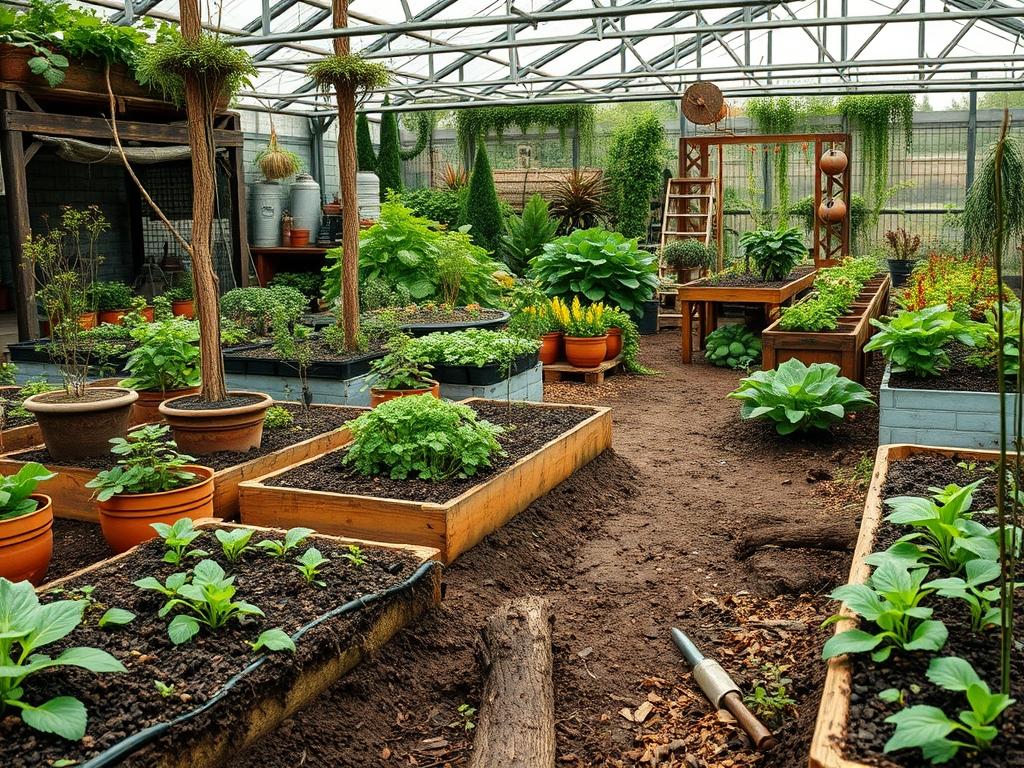
Establishing a thriving outdoor environment begins with a fundamental shift in how we perceive the ground beneath our feet. In traditional landscape architecture, the soil is often treated as a mere substrate or a structural base for hardscaping, but in high-end permaculture design, we view it as a living, breathing biological engine. The primary challenge for any property owner is balancing aesthetic curb appeal with a resilient, self-sustaining ecosystem that can withstand climate fluctuations and local weather extremes. When soil fertility is neglected, the landscape becomes an expensive liability requiring constant synthetic inputs and excessive irrigation. Conversely, by focusing on permaculture soil building, we create a landscape that gains value over time, transforming the property into a carbon-sequestrating sanctuary that thrives with minimal human intervention.
Sustainable landscaping requires a deep understanding of the local microclimate and the existing topography. Whether you are dealing with heavy clay that ponds during the rainy season or sandy soil that loses nutrients instantly, the goal remains the same: creating a spongy, nutrient-rich profile that supports long-term growth. This approach focuses on building topsoil through natural decomposition and fungal pathways rather than relying on chemical fertilizers. By integrating these methods into the initial design phase, a landscape consultant can ensure that the outdoor living space is not only beautiful but also ecologically functional, providing a cooler microclimate through transpiration and reducing the overall water footprint of the estate.
Landscape Design Principles
Modern landscape design relies on the core principles of symmetry, focal points, and elevation layers to create visual harmony. In a permaculture-centered design, we layer these aesthetic goals with functional water management and biological diversity. Symmetry does not have to mean identical rows of non-native shrubs; it can be achieved by balancing the mass and texture of different plant guilds on either side of a Walkway or Flagstone Path. By using focal points, such as a large Specimen Tree or a decorative Stone Basin, we draw the eye through the landscape while using those features to anchor the soil and provide shade.
Elevation layers are critical for effective soil building. We utilize the vertical space from the canopy down to the ground cover to maximize photosynthesis and organic matter production. In a well-planned landscape, we often utilize Berms and Swales to manage water runoff. These earthworks act as the site’s irrigation backbone, capturing rainwater and allowing it to infiltrate the soil slowly. This prevents erosion and ensures that the moisture reaches the deep roots of perennial plants. Planning the layout also involves strategic Walkway placement to prevent soil compaction, ensuring that heavy foot traffic is restricted to designated paths, which protects the delicate fungal networks in the growing beds.
Plant and Material Selection
Selecting the right biological components is the most important decision for long-term fertility. We prioritize plants that serve multiple functions, such as fixing nitrogen, mining minerals with deep taproots, or providing heavy biomass for mulch.
| Plant Type | Sun Exposure | Soil Needs | Water Demand | Growth Speed | Maintenance Level |
| :— | :— | :— | :— | :— | :— |
| Comfrey (Symphytum) | Full Sun to Part Shade | Rich, Loose | Moderate | Fast | Low |
| White Clover (Trifolium) | Full Sun | Adaptable | Moderate | Fast | Minimal |
| Lupine (Lupinus) | Full Sun | Well-Drained | Low | Medium | Moderate |
| Vetiver Grass | Full Sun | Deep, Sandy/Clay | Low | Fast | Low |
| Alfalfa (Medicago) | Full Sun | Deep, Loamy | Moderate | Fast | Medium |
| Winter Vetch | Part Sun to Full | Average | Low | Fast | Low |
Implementation Strategy
The successful implementation of a permaculture landscape begins with site preparation and grading. We start by mapping the drainage patterns to ensure that water moves away from the foundation of the home while being directed toward the planting zones. Grading should involve subtle contours that prevent pooling. Once the grade is established, we use an A-Frame Level to mark out contours for Swales, which are level-bottomed trenches designed to horizontalize water flow.
Following the earthworks, we apply the sheet mulching technique, often referred to as lasagna gardening. This involves a layer of Corrugated Cardboard or thick Builder’s Paper to suppress existing weeds without tilling, which preserves the soil structure. On top of this, we layer 3 Inches of high-quality Compost, followed by 6 Inches of Arborist Wood Chips or Hardwood Mulch. This heavy mulching strategy mimics the forest floor, regulating soil temperature and retaining moisture. For the edging, we recommend using Natural Stone or Cor-Ten Steel to create clean lines that separate the wilder, nutrient-building zones from the formal lawn or hardscape areas. This ensures the landscape remains polished and maintains high curb appeal while the soil biology thrives underneath.
Common Landscaping Failures
The most frequent mistake in landscape installation is poor drainage, which leads to anaerobic soil conditions and root rot. Many contractors overlook the importance of Perforated Drain Pipe and French Drains in areas with high water tables, resulting in dead zones where no plants can survive. Another common failure is root overcrowding. When plants are installed too close together for immediate impact, they compete for the same nutrients and water, leading to stunted growth and increased disease susceptibility. Proper spacing, as dictated by the mature width of the species, is essential for a healthy landscape.
Soil compaction is a silent killer of garden fertility. Using heavy machinery during construction without subsequently aerating the ground with a Broadfork or Subsoiler leaves the earth as hard as concrete. This prevents oxygen from reaching the roots and stops water from infiltrating the subsoil. Additionally, over-reliance on automated Drip Irrigation can sometimes backfire if the sensors are not calibrated correctly; either the soil remains too wet, or the salt buildup from the water kills the beneficial Mycorrhizal Fungi. It is vital to monitor these systems seasonally to ensure they complement the natural precipitation cycles.
Seasonal Maintenance
Seasonal management is the key to maintaining the balance between a wild permaculture system and a formal landscape. In the Spring, the focus is on light aeration and the application of Compost Tea to jump-start the microbial life. This is also the time to prune any dormant trees and use the trimmings as a base layer for new mulch zones. During the Summer, the priority shifts to moisture retention. We check the Mulch Depth to ensure it remains at least 4 Inches thick to protect the soil from the intense heat. Regular weeding should be done before seeds set, though in a thick mulched system, this requirement is significantly reduced.
When Autumn arrives, we embrace the “chop and drop” method. Perennials like Comfrey or Artichokes are cut back, and their nutrient-rich leaves are left on the soil surface to decompose over winter. This is also the ideal time for planting new trees and shrubs, as the cooling temperatures and increased rainfall allow roots to establish without the stress of summer heat. In the Winter, maintenance is primarily about protecting the hardscape and monitoring for erosion. We apply a final thin layer of Straw or Leaf Mold to any exposed soil to prevent the winter winds from drying out the earth, ensuring the fungal networks remain insulated and active until the spring thaw.
Professional Landscaping FAQ
How long does it take to see results from permaculture soil building?
While immediate moisture retention is noticeable after mulching, significant changes in soil structure and nutrient availability typically take 12 to 24 Months. During this window, the biological activity increases, and you will see more vigorous plant growth and improved health.
Does sheet mulching attract pests like termites or rodents?
Using Cedar Mulch or Hardwood Chips away from the home foundation reduces risk. Keeping the mulch a few inches away from wooden structures and ensuring proper drainage prevents the damp conditions that attract termites while providing a habitat for beneficial predatory insects.
Can I use these soil building methods in a small urban yard?
Absolutely. Permaculture principles scale perfectly to small spaces. In urban environments, you can use Raised Beds or Steel Planters filled with high-quality organic matter to create intensive fertility zones that maximize output while maintaining a clean, modern aesthetic.
What is the best way to fix heavy clay soil without tilling?
Using a Broadfork to create deep cracks without turning the soil is the most effective method. Follow this by sowing Daikon Radishes or Alfalfa, whose powerful roots break up the clay while adding organic matter deep into the earth.
Is it necessary to use chemical fertilizers in a new landscape?
No. By prioritizing Biochar, Rock Dust, and Compost, you provide a full spectrum of minerals and microbes. These organic inputs build long-term fertility and soil structure that synthetic fertilizers, which are essentially salts, can actually destroy over time.