
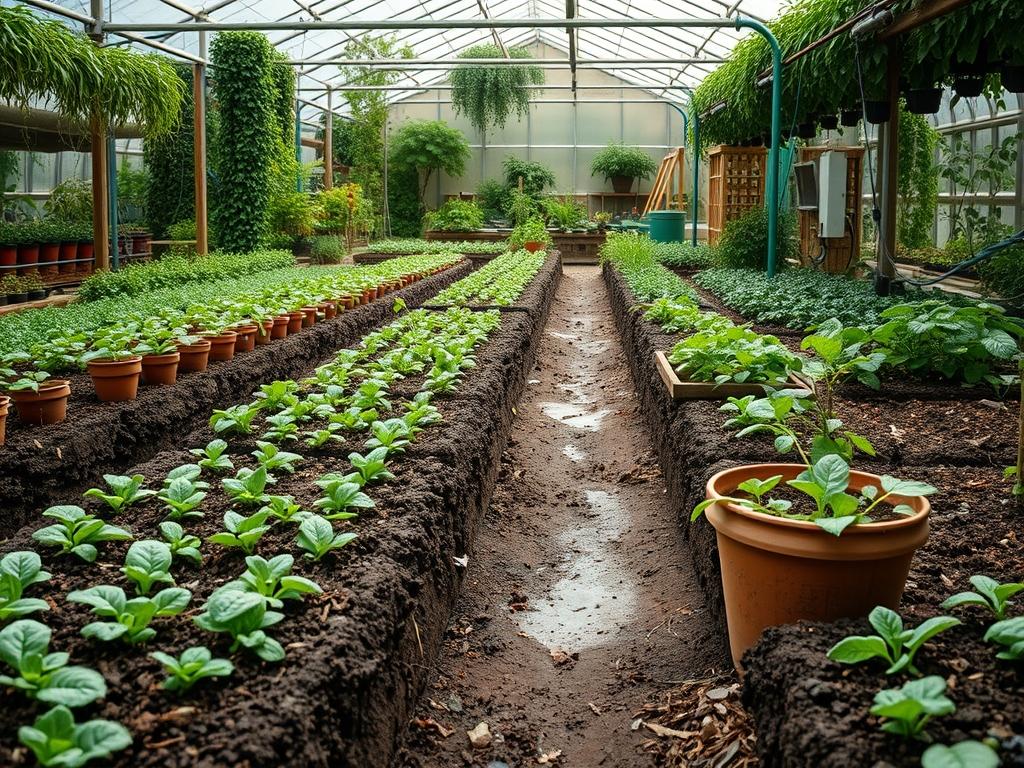
Winter landscapes often suffer from a clinical, barren appearance that exposes the underlying soil architecture to erosive forces. For the landscape architect or dedicated property manager, the dormant months represent a period of vulnerability where the structural integrity of the site is at risk. Bare soil is a liability; it leads to nutrient leaching, surface crusting, and the loss of the microbiological life that sustains high-value ornamental plantings. Implementing Cover Crops for Winter serves as a biological insurance policy. These living mulches protect the investment made in grading, irrigation, and plant selection by stabilizing the ground plane and enhancing the aesthetic profile of the property during the colder months. A well-planned cover crop strategy ensures that when the spring growth cycle begins, the soil is friable, nutrient-rich, and ready to support the next phase of the outdoor environment.
The transition from a vibrant summer garden to a winter-ready landscape requires a shift in perspective. We must view the soil as an active component of the overall design rather than a static medium. Utilizing specific species like Winter Rye or Hairy Vetch provides a verdant carpet that prevents the site from looking abandoned. This intentionality maintains curb appeal and signals a high level of maintenance to observers. Beyond aesthetics, the functional benefits are undeniable. By capturing nitrogen and preventing sediment runoff into hardscaped areas or drainage systems, cover crops preserve the functional longevity of the entire landscape.
Landscape Design Principles
In professional landscape design, the soil serves as the foundation of every focal point and elevation layer. We approach the use of cover crops with the same rigor used for selecting Boxwood or Oak trees. Symmetry and visual balance play crucial roles even in utility plantings. When sowing cover crops in formal garden beds, designers often use crisp borders created by Steel Edging or Stone Pavers to define the space. This ensures the green growth looks like a deliberate design choice rather than an overgrown weed patch. By providing a consistent green texture across different levels, cover crops help maintain the visual flow of the site, preventing “dead zones” that can detract from the property’s architectural lines.
Elevation and drainage are central to the structural health of any outdoor environment. Cover crops with deep taproots, such as Daikon Radish, act as biological drills. They break up subterranean compaction layers that often form during heavy construction or through repeated foot traffic on Stone Walkways. This natural aeration improves the efficiency of your Irrigation System by allowing water to penetrate deeper into the profile rather than pooling on the surface. Furthermore, the root systems create a subterranean mesh that anchors the soil on slopes, preventing the degradation of Retaining Walls and other expensive hardscape features caused by hydraulic pressure and erosion.
Plant and Material Selection
| Plant Type | Sun Exposure | Soil Needs | Water Demand | Growth Speed | Maintenance Level |
| :— | :— | :— | :— | :— | :— |
| Winter Rye | Full Sun to Shade | Adaptable/Poor | Moderate | Fast | Low |
| Crimson Clover | Full Sun | Well-Drained | Low | Moderate | Low |
| Hairy Vetch | Full Sun/Partial | Loamy | Moderate | Fast | Medium |
| Daikon Radish | Full Sun | Loose/Friable | Moderate | Very Fast | Low |
| Austrian Winter Pea | Partial to Full | Rich/Moist | High | Moderate | Medium |
| Barley | Full Sun | Well-Drained | Low | Fast | Low |
Implementation Strategy
The successful deployment of winter soil protection begins with meticulous site preparation. Proper grading is the first step; ensure the area is leveled to prevent water from pooling, which can rot the seeds of your Cover Crops for Winter. Before sowing, the soil should be cleared of debris and existing weeds using a Steel Rake. If the soil is heavily compacted, a shallow tilling to a depth of 2 inches may be necessary to create an ideal seedbed. Once the surface is prepared, the seeds are distributed using a Broadcast Spreader to ensure even coverage across the entire zone.
Timing is the most critical factor in this implementation. For most temperate regions, sowing should occur 6 to 8 weeks before the first hard frost. This window allows the root systems to establish sufficient biomass to survive the deep freeze. After spreading the seed, a light application of Straw Mulch or a thin layer of Compost—approximately 0.5 inches deep—should be applied. This protects the seed from avian predation and helps retain the moisture required for germination. For larger estate transitions, integration with the existing Irrigation System is vital; keep the soil consistently moist for the first 14 days to ensure a high germination rate.
Common Landscaping Failures
One of the most frequent errors in garden planning is the failure to account for drainage in the winter months. Poorly drained soil leads to “heaving,” where the freeze-thaw cycle pushes plants out of the ground. This often happens when Cover Crops for Winter are planted in areas with high clay content without proper soil amendments like Coarse Sand or Perlite. Additionally, the mistake of root overcrowding occurs when seeding rates are too high. This results in weak, spindly plants that cannot withstand the weight of heavy snow or ice.
Another significant failure involves soil compaction and the subsequent “nitrogen tie-up.” When a cover crop is terminated in the spring, it must be incorporated back into the soil correctly. Professional landscapers avoid the mistake of planting new ornamentals immediately after tilling in high-carbon materials like Winter Rye. If the soil is not given time to break down this organic matter, the microbes will consume all available nitrogen, leaving the new plantings yellow and stunted. Proper spacing and allowing a 2-week decomposition window are essential to keeping the landscape flourishing.
Seasonal Maintenance
Landscape management is a year-round commitment that changes with the light and temperature. During the autumn, the primary goal is establishment. This involves monitoring the Cover Crops for Winter for uniform growth and addressing any gaps with supplemental seeding. As the site moves into winter, maintenance becomes largely observational. Ensure that heavy snow accumulation is managed so it does not crush the living mulch, and check that Drainage Channels remain free of debris. The green biomass will act as a natural insulator, protecting the microbial life from extreme temperature fluctuations.
As spring approaches, the strategy shifts toward termination and nutrient recycling. Before the cover crops go to seed, they should be mowed down to a height of 1 inch using a String Trimmer or Fail Mower. The resulting “green manure” is then lightly turned into the soil or left on the surface as a nutrient-rich Mulch. In the summer, the focus moves to managing the increased fertility provided by the winter crops. The improved soil structure will likely reduce the water demand of your primary plantings, allowing for a more efficient Drip Irrigation schedule and reduced reliance on synthetic fertilizers.
Professional Landscaping FAQ
When is the best time to plant cover crops for winter?
For optimal results, sow seeds 6 to 8 weeks before the first killing frost. This period allows the root architecture to stabilize the soil and generate enough vegetative biomass to provide effective thermal protection during the freezing months.
Can I use cover crops in a small urban garden?
Yes, cover crops like Crimson Clover are excellent for small spaces. They offer aesthetic value with their deep green foliage while preventing the soil in raised beds or small containers from eroding or losing vital nutrients over the winter.
How do I clear the cover crop in the spring?
Terminate the crop by mowing it close to the ground using a Power Mower or Scythe before it flowers. You may then incorporate the remnants into the soil with a Shovel or leave them as an organic mulch layer.
Will cover crops attract pests to my property?
While they provide habitat for beneficial insects, most winter cover crops do not harbor common garden pests during the dormant season. In fact, many species like Mustard can act as natural bio-fumigants, reducing soil-borne pathogens and harmful nematodes.
Which cover crop is best for breaking up hard clay soil?
The Daikon Radish is the professional choice for addressing compaction. Its powerful taproot can penetrate up to 12 inches or more, creating natural channels for air and water to reach the deeper layers of the soil profile.