
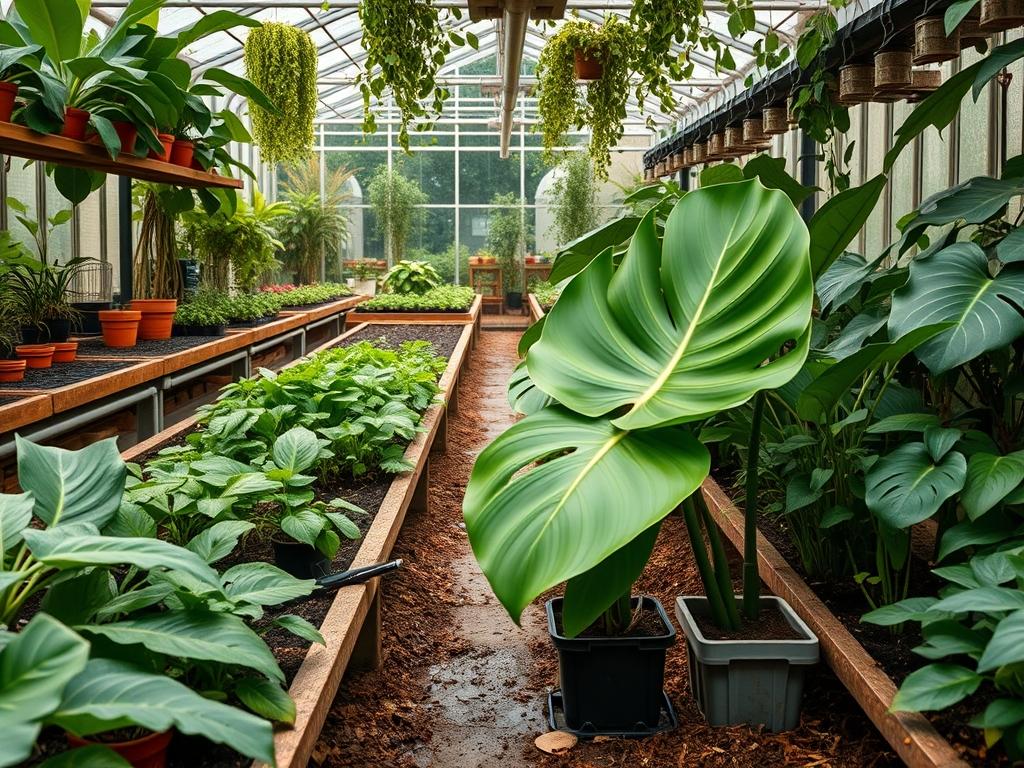
Cultivating a high end outdoor environment requires a sophisticated understanding of how specific botanical species interact with their substrate and surrounding architecture. For the landscape architect, the Monstera deliciosa represents one of the most versatile tools for creating a sense of lush, tropical structure in Zone 9b through 11. These plants provide immediate verticality and a permanent green screen that enhances curb appeal and defines outdoor living zones. However, the primary challenge in integrating these aroids into a permanent landscape is not the temperature or light alone; it is the physical and chemical composition of the ground. Unlike traditional garden shrubs that may tolerate native clay or sandy loams, an aroid requires a highly specialized environment to thrive without succumbing to root rot or nutrient lockout. To achieve the aesthetic goals of a luxury landscape, one must focus on creating the Best Soil for Monstera within the context of the larger site plan.
The transition from a potted specimen to a landscaped feature demands a shift in perspective regarding soil management. In a backyard setting, we are not just filling a container; we are engineering a microclimate. This involves careful consideration of the site’s natural drainage and the implementation of soil amendments that maintain a high level of porosity over several years. Aroids are hemi-epiphytic by nature, meaning their ancestors evolved to climb trees with roots exposed to the air. Success in the ground depends on replicating this airy, coarse environment while providing enough mass to support the weight of a plant that can easily reach 10 feet in height and 8 feet in width.
Landscape Design Principles
Successful aroid landscaping relies on the principle of elevation. By creating raised mounds or using Retaining Walls, a designer can control the drainage profile more effectively than by planting at grade. This elevation serves as a visual focal point, lifting the large, fenestrated leaves of the Monstera into the line of sight. Symmetry can be achieved by flanking a primary entryway with matched specimens, though a more naturalistic, asymmetrical grouping often provides a better sense of balance in a tropical modernism theme.
Airflow is a critical, often overlooked design component. When planning the layout, spacing between the Monstera and the home’s exterior walls must be at least 3 feet. This prevents stagnant air pockets that encourage fungal growth and allows the soil surface to dry appropriately between irrigation cycles. Integrating Walkways made of permeable materials, like Decomposed Granite or spaced Flagstone, further assists in site-wide water management, ensuring that heavy rains do not lead to saturation of the aroid beds.
Visual balance is maintained through layered planting. We position the high-reaching Monstera as the anchor or background layer, utilizing its dark green tones to make secondary layers of silver or chartreuse foliage pop. Irrigation must be planned with precision. While these plants enjoy humidity, they require a “dry-down” period. Sub-surface drip systems are preferred over overhead spray to keep the foliage dry and reduce the risk of leaf spot diseases, especially in areas with high morning dew.
Plant and Material Selection
| Plant Type | Sun Exposure | Soil Needs | Water Demand | Growth Speed | Maintenance Level |
| :— | :— | :— | :— | :— | :— |
| Monstera deliciosa | Dappled Shade | Coarse, Aroid Mix | Moderate | Fast | Moderate |
| Philodendron Selloum | Partial Sun | Well-Drained Loam | High | Rapid | Low |
| Alocasia Macrorrhiza | Full to Part Sun | Rich, Moist Organic | High | Very Fast | High |
| Thaumatophyllum | Partial Shade | Aerated Substrate | Moderate | Moderate | Low |
| Rhaphidophora tetrasperma | Shaded / Trellis | Light Aroid Mix | Medium | Fast | Moderate |
Implementation Strategy
The installation of a professional aroid bed begins with site grading. The ground must slope away from any hardscaping or foundations at a minimum 2 percent grade. After clearing the area, we excavate to a depth of 18 inches. This is significantly deeper than the root ball, as we want to replace the native soil with a custom-engineered blend. The Best Soil for Monstera in a landscape context is a mix containing 30 percent Orchid Bark, 30 percent Coconut Coir, 20 percent Perlite or Pumice, 10 percent Worm Castings, and 10 percent Horticultural Charcoal.
Once the excavation is complete, we line the bottom with a thin layer of Gravel if the native soil is heavy clay, though usually, the coarse nature of the aroid mix prevents the need for a full French drain in the bed itself. We backfill with the custom mix and plant the Monstera so that the crown remains slightly above the soil line to prevent rot. Edging should be installed to keep the specialized soil from washing away or mixing with lawn grasses. We typically use Steel Edging or Paver Borders for a clean, contemporary look.
After planting, a 3 inch layer of Pine Bark Mulch or Wood Chips is applied. This mulch serves two purposes: it retains necessary moisture in the top layer of the soil and, as it breaks down, it contributes to the organic “forest floor” acidity that aroids crave. Finally, we install support structures such as Cedar Posts or Moss Poles for the climbing varieties, securing them with Soft Landscape Ties.
Common Landscaping Failures
The most frequent error in placing Monstera outdoors is failing to account for soil compaction. Over time, walking near the plants or the natural settling of organic matter can squeeze the air out of the root zone. Without oxygen, the roots suffer from anaerobic conditions. Professional installers mitigate this by using a high percentage of Inorganic Aggregates like Pumice, which does not break down or compress over time.
Another failure is improper spacing. A young Monstera in a 7 gallon nursery pot looks small, but within two growing seasons, it will expand aggressively. Overcrowding leads to poor light penetration and spindly growth. Furthermore, irrigation inefficiencies often arise when aroids are placed on the same zone as a traditional turf lawn. Lawns require frequent, shallow watering; aroids require deep, infrequent dretching. Mixing these on one zone will either kill the lawn from drought or kill the Monstera from overwatering.
Seasonal Maintenance
Spring is the primary window for structural maintenance. As the temperature rises, we apply a slow-release, granular fertilizer with an NPK ratio of approximately 20-20-20 or a specialized tropical blend. This is also the time to refresh the Mulch and prune any leaves damaged by winter cold. Throughout the summer, the focus shifts to hydration and pest monitoring. Spider mites can become an issue in dry, hot conditions, so an occasional hosing of the leaves can help maintain cleanliness and humidity.
Autumn requires a reduction in fertilization. We want the plant to harden off before any potential cool snaps. If your region experiences frost, fall is the time to prepare Frost Blankets and ensure the organic matter at the base of the plant is thick enough to insulate the root system. In winter, irrigation should be cut back by at least 50 percent. The plant’s metabolism slows down, and wet, cold soil is the quickest way to lose an expensive landscape specimen.
Professional Landscaping FAQ
What is the single most important ingredient for Monstera soil?
Coarse Orchid Bark is essential. It provides the structural scaffolding that allows air to reach the roots while holding onto enough moisture to prevent total desiccation in an outdoor environment.
How deep should the specialized soil bed be for aroids?
Aim for an excavation depth of 12 to 18 inches. This ensures the primary root mass remains within an aerated, nutrient-rich medium rather than the potentially compacted or poor-quality native soil found beneath.
Can I use regular potting soil for my outdoor Monstera?
Standard potting soil is often too fine and lacks the necessary drainage for long-term outdoor use. It tends to compact and stay overly saturated, leading to root rot during heavy rain events.
Does mulch help the Best Soil for Monstera?
Yes, a thick layer of Bark Mulch is vital. It regulates soil temperature, prevents the specialized mix from eroding, and naturally Acidifies the soil as it decomposes, mimicking the plant’s natural habitat.
How do I know if my soil drainage is sufficient?
Perform a percolation test. Dig a hole, fill it with water, and monitor it. If the water does not drain completely within 2 hours, you must increase the amount of Perlite or Pumice in your mix.