Creating a sensory-focused landscape requires more than just aesthetic intuition; it demands a rigorous understanding of the biological requirements of your plant palette. Lavender remains one of the most sought after specimens for high end residential designs due to its architectural structure, silver foliage, and evocative fragrance. When we integrate these Mediterranean shrubs into a master plan, we are often solving for more than just visual appeal. We are looking to increase curb appeal through year round texture while providing functional benefits like pollinator attraction and drought resistance. The primary obstacle to the success of this species is not the cold or the sun, but the architecture of the soil itself. Root rot, caused by stagnant water and anaerobic conditions, is the silent killer of the most meticulously planned gardens. By identifying the best soil for lavender before the first trowel hits the ground, we can ensure these plants thrive for a decade rather than a single season.
Landscape architects prioritize site conditions, specifically focusing on how the land moves water away from the crown of the plant. In many regions, the native soil consists of heavy clay or dense silt, which acts as a sponge, holding moisture long after the rain has stopped. This is the antithesis of the lavender’s natural habitat. To combat this, we must look at the garden as a system of drainage and elevation. Incorporating lavender into a landscape isn’t just about digging a hole; it is about engineering an environment where the roots can breathe. Whether you are designing a formal parterre or a rugged rock garden, the soil composition determines the longevity of your investment.
Landscape Design Principles
In the realm of professional landscape architecture, we view lavender as a structural element that provides both symmetry and soft focal points. When planning a garden layout, we often use English Lavender to define the edges of walkways or to create low-level hedges that guide the eye toward a primary focal point, such as a fountain or a large retaining wall. To achieve visual balance, we employ the concept of elevation layers. By planting lavender on raised mounds or behind stone curbing, we naturally elevate the plant’s root system above the surrounding grade. This serves two purposes: it creates a more dynamic vertical interest in the garden bed and provides a failsafe against heavy rainfall.
Symmetry is often a key component of traditional Mediterranean or French Provencal designs. We might frame a doorway with identical terracotta pots containing French Lavender, ensuring that the irrigation planning is separate from higher moisture plants like hydrangeas. In a larger field or backyard setting, we use mass plantings to create a wash of color, but this requires precise grading. If the site is flat, we must artificially create slope or use perforated drainage pipes buried beneath a layer of crushed stone. The goal is to ensure that even during a heavy storm, the water is channeled away from the stems. Visual balance is further maintained by grouping lavender with other drought tolerant native plants that share its lean soil preferences, ensuring the entire bed looks cohesive and remains easy to manage.
Plant and Material Selection
| Plant Type | Sun Exposure | Soil Needs | Water Demand | Growth Speed | Maintenance Level |
| :— | :— | :— | :— | :— | :— |
| English Lavender | Full Sun | Sandy, Alkaline | Very Low | Moderate | Low |
| French Lavender | Full Sun | Gritty, Porous | Low | Fast | Medium |
| Spanish Lavender | Full Sun | Well-drained | Very Low | Fast | Medium |
| Rosemary | Full Sun | Sandy Loam | Low | Moderate | Low |
| Russian Sage | Full Sun | Any Well-drained | Low | Fast | Low |
| Blue Fescue | Full/Part Sun | Gritty/Dry | Low | Moderate | Low |
Implementation Strategy
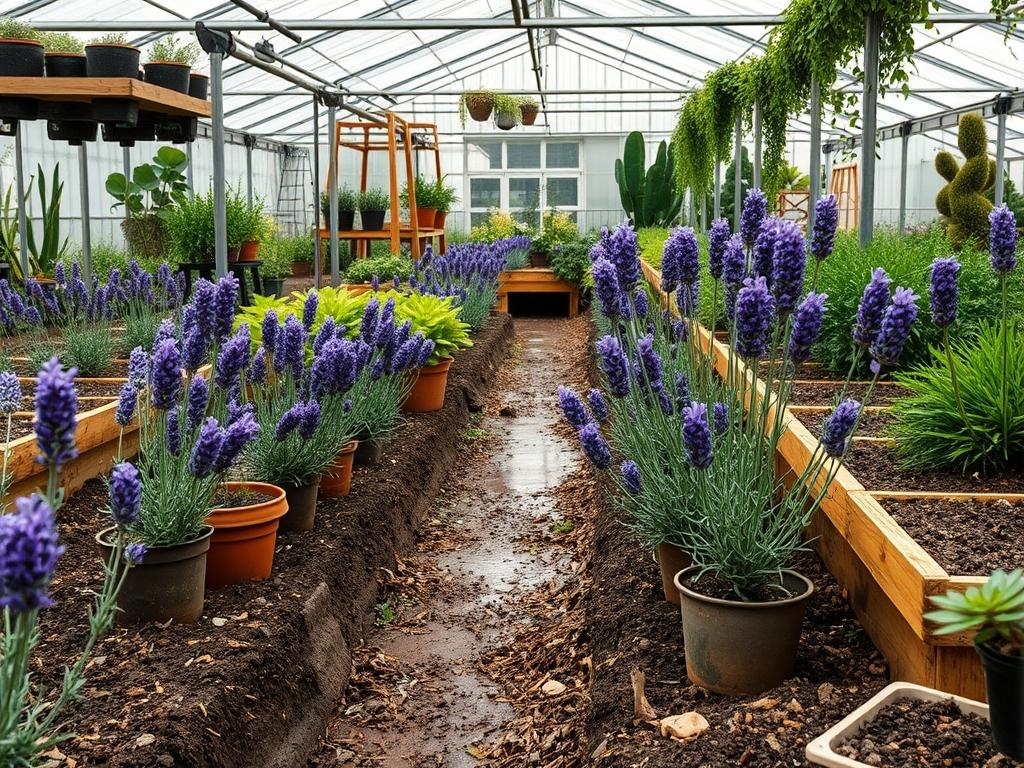
The process of installing a lavender garden begins long before the plants arrive from the nursery. First, we must assess the grading of the site. A professional survey will identify low spots where water naturally collects. If your backyard lacks a natural slope, the implementation strategy must include the construction of raised beds or the use of retaining walls to lift the growing zone 12 inches to 18 inches above the natural grade. Once the site is prepared, the focus shifts to soil modification.
We start by excavating the planting area to a depth of 12 inches. The native soil is then amended to create the best soil for lavender. A standard professional mix consists of one part coarse sand, one part fine gravel or pea gravel, and one part screened topsoil. We consciously avoid heavy organic matter like peat moss or rich manure, as these retain too much moisture and can lead to fungal outbreaks. If the native soil is particularly acidic, we incorporate dolomitic lime to raise the pH level to a range between 6.7 and 7.3.
After the soil is mixed and backfilled, we establish the edging. Sharp, defined steel edging or stone borders prevent lawn grass from encroaching into the lavender beds. When spacing the plants, we provide at least 24 inches to 36 inches of clearance between centers to facilitate maximum airflow. Air circulation is just as critical as soil drainage in preventing root rot. Finally, the surface is finished with a 2 inch layer of crushed limestone or light colored pea gravel rather than wood mulch. Stone mulch reflects heat back into the plant and allows the crown to remain dry, whereas wood bark tends to hold dampness against the stems, inviting decay.
Common Landscaping Failures
The most frequent mistake in garden planning is the “one size fits all” approach to irrigation. Homeowners often place lavender on the same drip irrigation zone as thirstier shrubs. This constant, incremental watering keeps the soil around the lavender roots perpetually damp, which is a primary cause of root rot. Another common failure is soil compaction. During construction, heavy machinery can crush the soil structure, eliminating the air pockets necessary for drainage. If lavender is planted into compacted ground, the roots will eventually suffocate.
Improper spacing and over-mulching also rank high among landscaping failures. In an attempt to make a garden look “full” immediately, plants are often placed too close together. As they grow, their foliage touches, trapping humidity and creating a breeding ground for pests and rot. Furthermore, using thick organic mulch can raise the moisture levels at the base of the plant too much. Another overlooked factor is the use of high nitrogen fertilizers. Lavender thrives in “lean” soil; excessive nutrients cause the plant to grow too quickly, leading to weak, floppy stems that are more susceptible to disease.
Seasonal Maintenance
Seasonal management is what separates a professional landscape from an amateur one. In the spring, the focus is on revitalization. Once new growth appears, we use sharpened bypass pruners to trim back the foliage by about one third, taking care not to cut into the old, woody stems. This encourages a rounded, bushy habit and prevents the plant from becoming leggy. This is also the time to check the pH of the soil and add a small amount of bone meal if necessary.
Summer maintenance involves monitoring the irrigation system to ensure it is only running during extreme droughts. Most established lavender plants require a deep soaking only once every two weeks during the hottest months. In autumn, we clean up fallen debris from around the base of the plants. Allowing dead leaves to accumulate on top of the pea gravel can create a moisture-trapping mat that leads to winter rot. As winter approaches, in colder climates, we might apply a light layer of evergreen boughs for wind protection, but we never cover the plants with plastic or heavy fabrics. The goal is to keep the plants dormant and dry until the cycle begins again in the spring.
Professional Landscaping FAQ
How can I tell if my lavender has root rot?
Wilted, yellowing leaves despite the soil being wet are primary indicators. If the base of the stems feels soft or the roots appear black and slimy rather than firm and white, the plant is likely suffering from advanced root rot.
What is the fastest way to fix heavy clay soil for lavender?
Excavate the area entirely and replace the native clay with a mixture of 60 percent grit or sand and 40 percent topsoil. Alternatively, install a raised masonry planter to bypass the heavy clay altogether and ensure perfect drainage.
Should I use landscape fabric under my stone mulch?
Use a high-quality, breathable geotextile fabric only if necessary for weed suppression. However, for lavender, avoiding fabric is often better because it can sometimes trap rising moisture in the soil, preventing the rapid evaporation these plants significantly prefer.
Can lavender grow in containers if my backyard drainage is poor?
Yes, lavender thrives in terracotta pots because the material is porous and allows the soil to dry out quickly. Ensure the container has large drainage holes and use a potting mix specifically designed for cacti or succulents.
How much sun does lavender actually need for the best results?
Lavender requires at least 6 to 8 hours of direct, unobstructed sunlight daily. Shady conditions lead to poor flower production, leggy growth, and slower soil evaporation, all of which increase the risk of fungal infections and root rot.