
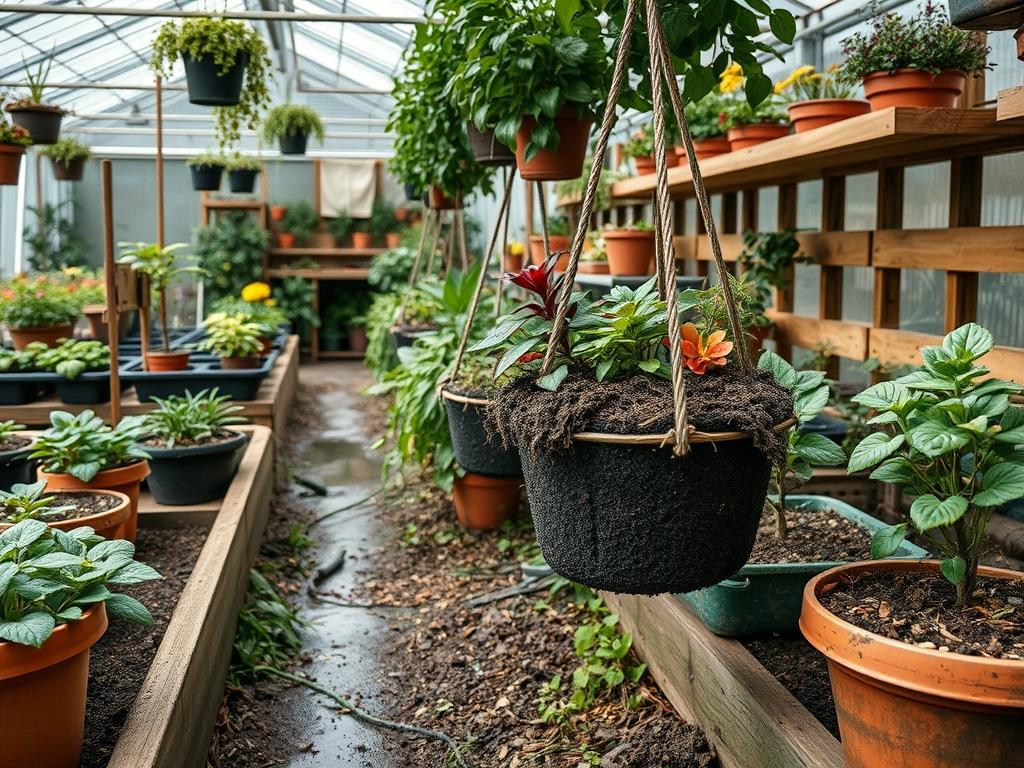
Designing a cohesive outdoor environment requires a balance between permanent structures and the ephemeral beauty of ornamental plantings. Within the discipline of landscape architecture, hanging baskets serve as critical vertical accents that bridge the gap between hardscape elements and the sky. They provide immediate curb appeal, soften the harsh lines of a porch, and create intimate atmospheres in outdoor living spaces. However, the primary challenge of these suspended gardens is their extreme vulnerability to environmental stressors. Unlike plants established in the ground, hanging baskets are surrounded by moving air on all sides, leading to rapid transpiration and soil desiccation. To maintain the structural integrity of these displays, professionals utilize specific hanging basket soil hacks, most notably the integration of water crystals. These polymers act as localized reservoirs, mitigating the effects of erratic weather and high-elevation exposure.
Integrating suspended vegetation into a master site plan requires a deep understanding of microclimates and site orientation. A basket hanging on a south-facing pergola experiences significantly higher thermal stress than one tucked under a shaded north-facing eave. Successful landscape design ensures that these containers do not simply survive but thrive as functional components of the spatial layout. By using advanced soil amendments, a consultant can guarantee that the visual impact of the greenery remains consistent throughout the scorching summer months. This level of planning is essential for high-end residential and commercial properties where the cost of replacement and maintenance labor must be minimized through smarter initial configuration.
Landscape Design Principles
When placing hanging baskets within a broader landscape, the principle of symmetry often dictates their positioning. For example, flanking a main entrance with identical 14-inch coco-fiber baskets creates a formal, welcoming aesthetic that draws the eye toward the architectural focal point. Beyond symmetry, designers consider the concept of elevation layers. While ground covers, shrubs, and canopy trees form the traditional vertical hierarchy, hanging baskets introduce an intermediate layer of color and texture that exists at eye level. This fills the visual void that often exists between a flagstone walkway and the roofline of a home.
Irrigation planning is perhaps the most critical technical aspect of integrating these containers into a landscape. Relying solely on manual watering is a common error that leads to plant fatigue. A professional design often includes hidden quarter-inch drip irrigation lines snaked up the pillars of a veranda or through the structural beams of a deck. These lines deliver precise amounts of water directly to the root zone, usually controlled by a zone-specific timer. To complement this system, the soil must be engineered to hold that moisture. The use of water crystals, or hydrophilic polymers, provides a secondary insurance policy. These granules can expand up to several hundred times their original size, capturing excess irrigation water and releasing it slowly as the surrounding soil dries. This reduces the frequency of watering cycles and prevents the “feast or flood” cycle that can stress delicate root systems.
Plant and Material Selection
Choosing the right combination of botanical species and structural materials is the foundation of a durable hanging display. The following table provides a selection of high-performance plants suitable for various landscape applications.
| Plant Type | Sun Exposure | Soil Needs | Water Demand | Growth Speed | Maintenance |
| :— | :— | :— | :— | :— | :— |
| Trailing Petunia | Full Sun | High Organic Matter | Very High | Rapid | Moderate |
| Boston Fern | Part Shade | Peat-Based Mix | Consistent Moisture | Moderate | Low |
| Ivy Geranium | Full Sun | Well-Draining | Moderate | Moderate | Moderate |
| Creeping Jenny | Full to Part Sun | Versatile | High | Fast | Low |
| Fuchsia | Full Shade | Rich Loam | High | Moderate | High |
| Calibrachoa | Full Sun | Acidic Mix | Moderate | Rapid | Low |
For the material components, Coco Coir Liners are preferred for their breathability, although they require a moisture-retentive barrier, such as a thin layer of plastic film with drainage holes, to prevent water from leaching out too quickly. High-quality potting soil should always be used instead of garden soil, as it is lighter and resists compaction.
Implementation Strategy
The implementation of a professional-grade hanging basket begins long before the first plant is tucked into the soil. Site preparation involves checking the load-bearing capacity of the hardware and hooks. A fully saturated 16-inch basket can weigh over 30 pounds, necessitating heavy-duty zinc-plated screw eyes or steel brackets mounted directly into structural studs. Once the hardware is set, grading and drainage at the ground level beneath the basket must be addressed. Water runoff from baskets can stain concrete pavers or create muddy spots in the mulch. Designers often place a larger planter or a gravel-filled French drain directly underneath the hanging basket to manage this overflow elegantly.
When assembling the basket, start with a high-porosity potting mix containing perlite and vermiculite. One of the most effective hanging basket soil hacks is the two-layer crystal method. Mix one tablespoon of water crystals into the bottom half of the soil profile, then add another layer of plain soil before planting. This ensures the crystals are deep within the root zone and do not float to the surface during watering. As you arrange the plants, place the largest “thriller” species in the center and “spillers” like Sweet Potato Vine around the perimeter. Firm the soil gently to remove large air pockets, but avoid excessive compaction, which can impede root respiration. Finally, top the soil with a thin layer of sphagnum moss or fine wood chips to act as a localized mulch, further suppressing evaporation.
Common Landscaping Failures
The most frequent failure in hanging basket management is poor drainage management. While moisture retention is vital, a basket that sits in stagnant water will succumb to root rot within days. Many homeowners mistakenly use containers without sufficient holes or over-apply water crystals, causing the soil to expand out of the pot and displace the plant roots. Soil compaction is another silent killer. Over a season, the constant weight of water can compress peat-based mixes into a dense, anaerobic brick. This prevents oxygen from reaching the roots, leading to stunted growth and yellowing leaves.
Irrigation inefficiency also ranks high among common mistakes. Applying water too quickly often results in the liquid running down the inside edges of the pot and out the bottom without ever penetrating the root ball. This creates a deceptive appearance of a well-watered plant while the center remains bone dry. To solve this, professional landscapers use the “soak and pulse” method, where a small amount of water is applied to break the surface tension, followed by a deeper application ten minutes later. Lastly, failing to account for wind shear can decimate a hanging garden. In high-wind areas, baskets should be secured with tether wires to prevent them from swinging violently and damaging both the plant and the building structure.
Seasonal Maintenance
Landscape management is a year-round commitment that changes with the transit of the sun. In the Spring, focus on establishment. This is the optimal time to incorporate slow-release fertilizer granules and ensure that the irrigation timers are calibrated for the increasing temperatures. As the season transitions into Summer, the peak of the heat requires daily, or sometimes twice-daily, inspections. Deadheading spent blooms on species like Petunias is necessary to encourage continuous flowering. If the water crystals have been properly utilized, the baskets should remain resilient even during heatwaves, but a mid-season liquid fertilizer boost is often required to replace nutrients leached out by frequent watering.
As Autumn approaches, the focus shifts to aesthetics and transition. Replace heat-stressed summer annuals with cold-tolerant species like Ornamental Peppers or Pansies. This is also the time to check the structural integrity of the hanging chains and hooks for any signs of rust or fatigue. During Winter, most hanging baskets in temperate climates should be emptied and stored. Terracotta pots can crack in freezing temperatures, and even plastic containers will become brittle with UV exposure. Clean the hardware with a mild bleach solution to kill any pathogens and store the soil in a dry area for composting. For those in warmer zones, winter maintenance involves reducing irrigation frequency significantly, as the lower sun angle and cooler temperatures slow down the rate of evaporation and plant metabolism.
Professional Landscaping FAQ
How often should I water my hanging baskets?
Most hanging baskets require daily watering during the summer months. If temperatures exceed 90 degrees, they may need moisture once in the morning and again in the late afternoon to prevent wilting and soil contraction.
Do water crystals eventually disappear from the soil?
Modern hydrophilic polymers are designed to break down slowly over several years. However, their efficacy in a small container usually lasts for one growing season, as they can become saturated with mineral salts from fertilizers and hard water.
Can I reuse the soil from last year’s baskets?
It is not recommended to reuse soil for hanging baskets. Previous seasons’ soil is often depleted of nutrients, compacted, and may harbor pests or fungal spores. Always start with a fresh, sterile soat-based potting mix.
Why is my hanging basket leaking water immediately?
This usually occurs when the soil has become hydrophobic after drying out completely. The water runs down the gap between the soil and the pot wall. To fix this, submerge the entire basket base in a bucket of water for an hour.
What is the best fertilizer for flowering baskets?
A water-soluble fertilizer with a high phosphorus count, such as a 10-30-20 NPK ratio, promotes heavy blooming. For long-term health, incorporate controlled-release fertilizer spikes or granules at the time of planting to provide a steady nutrient baseline.