
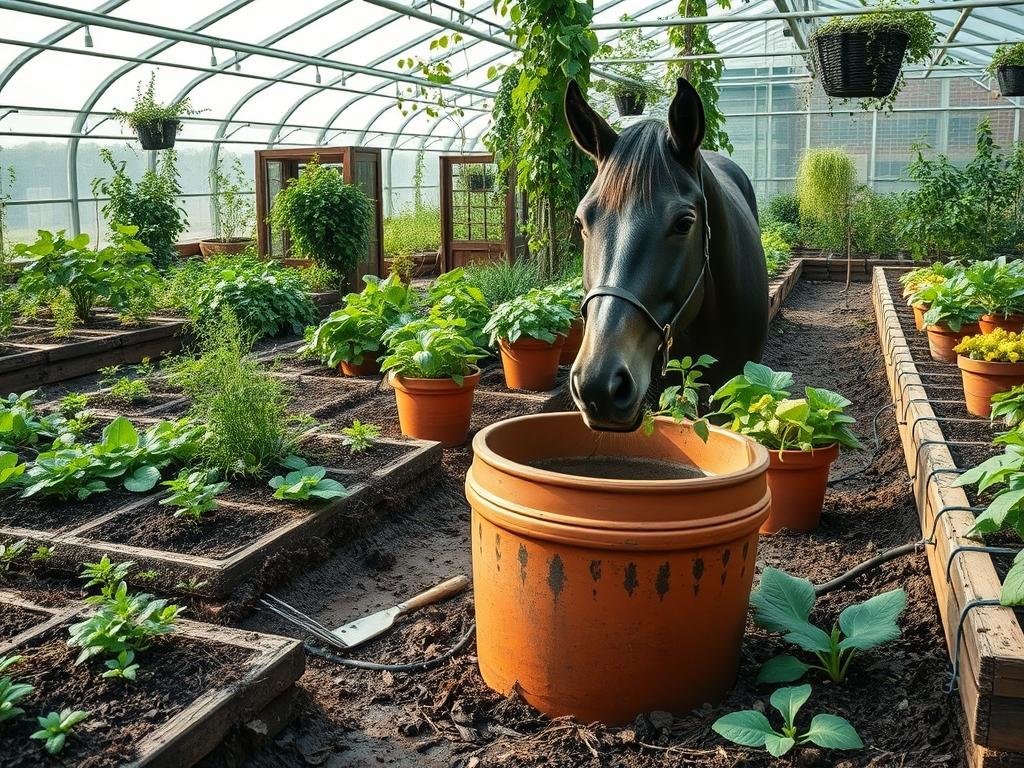
Integrating organic soil amendments into a high end landscape design requires a delicate balance between nutrient density and aesthetic management. For many estate owners and professional landscapers, horse manure represents an abundant and potent resource, yet it arrives with a notorious reputation for introducing invasive weed species. The challenge lies in the biological reality of the horse’s digestive system; unlike ruminants, horses do not fully break down the seeds of the grasses and hay they consume. When this raw material is applied directly to garden beds, it can transform a pristine, manicured environment into a maintenance nightmare within a single growing season. Effective horse manure composting is not merely a waste management task; it is a critical component of soil engineering that ensures long term curb appeal and the structural integrity of the ornamental environment. By mastering the thermophilic composting process, professionals can neutralize pathogens and weed seeds while creating a rich, humus based substrate that improves drainage and promotes vigorous root growth in diverse plant species.
Landscape Design Principles
In the realm of professional landscape architecture, every element of the soil profile must support the broader design goals of symmetry, balance, and focal intensity. When using horse manure composting as a primary fertility driver, the design must account for the varying nutritional needs of different elevation layers. For instance, the transition from high canopy trees to low lying groundcovers requires a soil consistency that remains uniform across the property to prevent patchy growth. Symmetry in a formal garden is often disrupted by uneven soil quality; therefore, using a standardized, hot composted manure ensures that every Boxwood or Yew hedge receives identical levels of bioavailable nitrogen and carbon.
Focal points within a garden, such as a centralized fountain or a specimen tree, demand the highest quality root environment to ensure they remain the stars of the show. Weeds introduced via poor composting compete for water and nutrients, pulling the eye away from the intended visual anchor. Furthermore, the placement of the composting site itself must be an intentional part of the landscape plan. It should be situated to allow for efficient movement of materials via a Kubota Loader or heavy duty Wheelbarrow while remaining screened by dense Privacy Fencing or Evergreen Screens. Proper irrigation planning around these enriched beds is also vital, as the increased organic matter improves water retention, potentially allowing for adjusted flow rates in the Drip Irrigation System to prevent over saturation.
Plant and Material Selection
The following table provides a guide for selecting plants that thrive in the nutrient dense environment created by properly processed horse manure.
| Plant Type | Sun Exposure | Soil Needs | Water Demand | Growth Speed | Maintenance Level |
| :— | :— | :— | :— | :— | :— |
| Hybrid Tea Rose | Full Sun | Well Draining, Rich | Moderate | Fast | High |
| Japanese Maple | Partial Shade | Slightly Acidic | High | Slow | Medium |
| Giant Hosta | Full Shade | Humus Rich, Moist | High | Medium | Low |
| Tall Fescue | Full Sun/Partial | Nitrogen Heavy | Moderate | Fast | Medium |
| Lavender | Full Sun | Gritty, Alkaline | Low | Medium | Low |
| Purple Coneflower | Full Sun | Lean to Rich | Low | Fast | Low |
Implementation Strategy
A successful backyard or garden layout begins with the preparation of the site long before the first plant is placed in the ground. When incorporating horse manure composting into the workflow, grading is the first technical hurdle. The composting area must be leveled and slightly sloped toward a drainage swale to prevent nutrient runoff from contaminating local water sources or pooling around the foundations of Retaining Walls. A solid base of Compacted Gravel or a Concrete Pad helps maintain cleanliness and allows for easier turning of the piles with a Pitchfork or Front-End Loader.
Once the site is prepared, the composting process must reach temperatures between 131 and 160 Degrees Fahrenheit to effectively kill weed seeds like Crabgrass, Pigweed, and Foxtail. Use a Long Stem Compost Thermometer to monitor the internal core temperature daily. The pile should be a mix of “greens” (the manure and urine soaked bedding) and “browns” (additional Wood Chips or Straw if the manure is too wet). Aeration is the primary driver of heat; the pile must be turned every three to five days during the active phase to ensure the outer material, which is cooler, moves to the hot center. After the pile has sat for several weeks and no longer generates significant heat after turning, it should be allowed to cure for at least two months. This stabilized material can then be applied at a Mulch Depth of 2 to 3 Inches around perennials or tilled into new beds to a depth of 6 Inches to improve soil structure.
Common Landscaping Failures
The most frequent failure in horse manure composting is the development of anaerobic conditions. When a pile is too wet or poorly aerated, it becomes a slimy, foul smelling mass that preserves weed seeds rather than destroying them. This lack of oxygen also leads to the production of organic acids that can harm the roots of Native Plants or delicate Sod. Another common mistake is improper spacing of the compost piles in relation to the main landscape. If a pile is located uphill from a manicured garden without proper Silt Fencing or Drainage Trenches, heavy rains can wash uncomposted seeds and high concentrations of ammonia directly into the floral displays, causing “nitrogen burn” and a sudden explosion of weeds.
Root overcrowding often occurs when amateurs apply too much manure directly against the trunks of trees or the base of shrubs. This creates a “volcano mulching” effect that traps moisture against the bark, encouraging fungal rot and providing a haven for rodents. Finally, failing to account for soil compaction can negate the benefits of the manure entirely. If the soil beneath the compost layer is heavily compacted from heavy machinery used during construction, the nutrients will stay on the surface and wash away rather than penetrating the root zone. Always use a Broadfork or Tiller to break up the subsoil before applying your high quality compost.
Seasonal Maintenance
Landscape management is a year round commitment that shifts with the cycles of the environment. In the spring, focus on incorporating the cured compost into the soil just as the ground thaws. This is the optimal time for the Spade and Rake to prepare the beds for new growth. As temperatures rise in the summer, the emphasis shifts to monitoring the moisture levels of the composted beds. Because horse manure increases organic matter, the soil will hold more water; however, the surface can dry out and become hydrophobic if not managed. A light scratching of the surface with a Hand Cultivator can break this tension.
Autumn is the season for collection and pile building. As the horses transition into winter stalls, the volume of manure typically increases. This is the time to build large, well insulated piles that can maintain their internal heat even as the ambient air temperature drops. Using Black Plastic Tarps or a layer of Loose Straw can help retain that precious thermophilic energy. During the winter, the landscape consultant should plan the next year’s enrichment schedule. While turning the pile becomes difficult in freezing conditions, the heat generated by a well constructed pile can often keep the center active even in the snow. Proper winter insulation ensures that by the following spring, you have a weed free, nutrient dense product ready for the garden.
Professional Landscaping FAQ
How can I tell if the weed seeds are truly dead?
Monitor the pile with a Probe Thermometer to ensure it maintains 145 Degrees Fahrenheit for at least three consecutive days. Consistent heat throughout the entire volume of the pile is the only biological guarantee that the seeds have been neutralized.
Does horse manure change the soil pH significantly?
Generally, well rotted horse manure is near neutral, around 6.5 to 7.0 pH. However, if the horses use Pine Shavings for bedding, the initial acidity may be higher. Always test your final compost with a pH Soil Meter before application.
How much composted manure should I apply to established flower beds?
For established perennial borders, a top dressing of 1 to 2 Inches is sufficient. Use a Garden Rake to spread it evenly, ensuring the material stays a few inches away from the stems of Rose Bushes or Hydrangeas to prevent rot.
Can I use fresh horse manure if I bury it deep?
This is not recommended for professional landscapes. Fresh manure can contain high levels of salts and ammonia that may dehydrate roots. Additionally, buried weed seeds can remain dormant for years, only to emerge when the soil is eventually disturbed or aerated.
Will composting horse manure attract unwanted pests?
A properly managed, hot compost pile produces very little odor and is less likely to attract flies or rodents than a cold, wet pile. Keep the moisture level like a Wrung Out Sponge and turn it regularly to maintain aerobic conditions.