
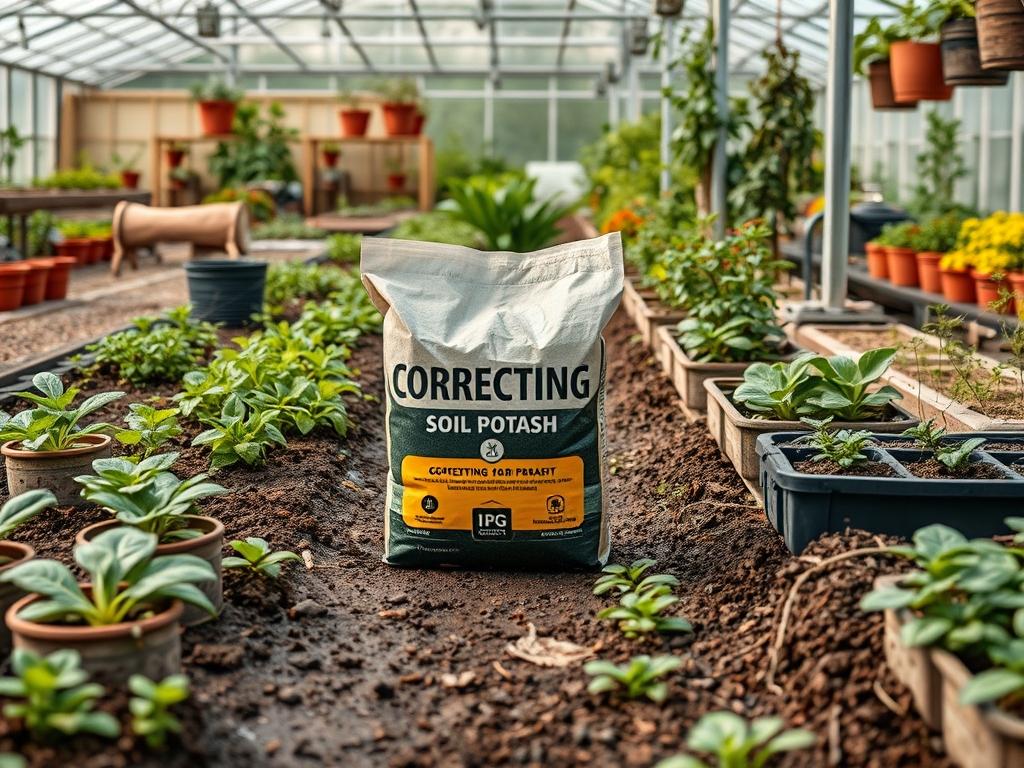
Developing a high end outdoor environment requires more than just an eye for symmetry and a list of aesthetic plant varieties. It demands a deep understanding of the geochemical foundations that support structural integrity. Potassium, commonly referred to as potash in the landscaping industry, serves as the primary regulator for water movement and cellular wall thickness within a plant. When a landscape suffers from potash deficiency, even the most expensive specimens can become brittle, prone to disease, and unable to withstand the wind loads common in open garden designs. Correcting soil potash is a fundamental step in ensuring that your curb appeal remains resilient through the seasons, as it directly impacts the turgor pressure that keeps stems upright and architectural foliage crisp.
In various climates, particularly those with high rainfall or sandy soil profiles, potassium leaches away from the root zone with frustrating speed. As a landscape architect, I view soil chemistry as the invisible scaffolding of the garden. If the scaffold is weak, the visual functionality of the outdoor living space collapses. Sturdy stems are necessary for maintaining the clean lines of a formal hedge or the tall, swaying grace of ornamental grasses. Without a robust potassium level, the vascular system of the plant fails to transport nutrients efficiently, leading to a sprawling, disorganized appearance that detracts from the intended design.
Landscape Design Principles
Successful garden planning integrates the physical strength of the plants into the broader architectural vision. When we design for symmetry, we rely on plants having uniform growth rates and structural stability. A potash-deficient row of Boxwoods will show irregular heights and thinning branches, shattering the mirror-image effect required for formal entryways. Focal points, such as a solitary Japanese Maple, require strong branch attachments to support their canopy during heavy snow or high winds. By ensuring the soil provides adequate potassium, we reinforce these focal points against environmental stressors.
Elevation layers also play a critical role in how we perceive garden depth. We often use taller perennials and shrubs in the rear of a border to create a sense of enclosure. If these plants lack the stem strength provided by potash, they often flop forward onto smaller foreground plants, creating a maintenance nightmare and a cluttered aesthetic. Furthermore, irrigation planning must be calibrated to the local soil type; over-irrigation in sandy loam can strip the soil of its mineral salts, necessitating a proactive potash management strategy. Every walkway and retaining wall should be complemented by plantings that remain turgid and upright, framing the hardscape rather than obscuring it with weak, drooping limbs.
Plant and Material Selection
Selecting the right plant for the right soil condition is the hallmark of professional environmental consulting. The following table provides a breakdown of common landscape plants and their specific requirements when managing for soil health and structural vigor.
| Plant Type | Sun Exposure | Soil Needs | Water Demand | Growth Speed | Maintenance |
| :— | :— | :— | :— | :— | :— |
| English Rose | Full Sun | Rich, Loamy | High | Moderate | High |
| White Oak | Full Sun | Well-Drained | Moderate | Slow | Low |
| Switchgrass | Full Sun/Part Shade | Adaptable | Low | Fast | Low |
| Hydrangea Macrophylla | Part Shade | Moist, Acidic | High | Moderate | Moderate |
| Japanese Maple | Part Shade | Acidic, Well-Drained | Moderate | Slow | Moderate |
| Lavender | Full Sun | Gritty, Alkaline | Very Low | Moderate | Low |
Implementation Strategy
Correcting soil potash begins with a comprehensive site analysis. Before moving any earth or installing a single Gallon-Sized container, use a Soil Probe to collect samples from at least 10 locations throughout the property. These samples should be taken at a 6-inch depth to capture the active root zone. Send these to a lab to determine the precise parts per million of available potassium. Professional grading must also be handled at this stage to ensure that drainage runoff does not concentrate in areas where it might leach away your amendments.
Once the lab results return, apply Potassium Sulfate or Sul-Po-Mag if magnesium levels are also low. Avoid using muriate of potash in sensitive residential landscapes, as the high chlorine content can damage delicate Native Plants. After applying the amendments, establish a clean edge for your garden beds using a Manual Edger or Spade. Apply a 3-inch layer of organic Hardwood Mulch to help regulate soil temperature and prevent the rapid evaporation that can pull soluble salts away from the roots. If you are building Retaining Walls, ensure that the backfill includes a mix that allows for nutrient retention rather than just basic drainage stone.
Common Landscaping Failures
The most frequent mistake in amateur gardening is the over-application of high-nitrogen fertilizers without a balanced potassium component. This results in “lanky” growth where the plant produces cells faster than it can build the lignin needed to support them. In a professional landscape, this leads to lodging, where plants collapse under their own weight. Another common failure is poor drainage planning. If water pools around the base of a plant, the roots cannot breathe, leading to root rot and a total inability to up-take potassium, regardless of how much is in the soil.
Soil compaction is another silent killer of landscape functionality. In high-traffic areas near walkways, the soil becomes compressed, squeezing out the pore space necessary for ion exchange. When potassium ions cannot move through the soil solution, the plant shows signs of deficiency even in nutrient-rich earth. Finally, improper spacing of large shrubs often leads to root overcrowding. This creates a competitive environment where plants fight for a finite amount of potash, resulting in a weak, spindly appearance that ruins the visual balance of the backyard layout.
Seasonal Maintenance
Landscape management is a year-round commitment that changes with the environmental markers of each season. In the spring, your focus should be on base applications. Once the ground has thawed, apply a slow-release granulated potash to give the plants the building blocks they need for the vigorous growth of the coming months. This is also the time to inspect your Irrigation System for leaks that could cause localized leaching.
During the summer, monitor the foliage for “marginal scorch,” which is a distinct yellowing or browning of the leaf edges. This is the classic signature of potash deficiency. If this occurs, a liquified kelp or a water-soluble potassium foliar spray can provide a quick rescue while the granular slow-release work continues below the surface. In autumn, potassium is vital for “hardening off.” As the temperature drops, plants move sugars to their roots and strengthen their cellular membranes to survive the freeze. A late-season application of Sulfate of Potash helps woody ornamentals and Evergreens survive the desiccation of winter winds. In winter, focus on structural pruning and reviewing your soil test data from the previous year to prep for the next cycle.
Professional Landscaping FAQ
How can I tell if my soil needs potash without a lab test?
Look for “marginal chlorosis,” where the outer edges of older leaves turn yellow or brown while the center remains green. Stems may also appear weak or brittle, and fruit or flower production will be significantly diminished or stunted.
What is the best way to apply potash to established trees?
Use a Deep Root Feeder or an Auger to create holes 12 inches deep around the drip line of the tree. This places the nutrients directly into the active root zone, bypassing the competing turf grass and surface mulch.
Can I use wood ash to increase my potash levels?
Yes, wood ash is a traditional source of potassium, but it will also raise the pH of your soil. It should be used sparingly, primarily in acidic environments, and always checked against a pH meter to avoid creating alkaline conditions.
Does potassium help during a summer drought?
Potassium is essential for the operation of stomata, which are the pores on leaves that control water loss. Adequate potash allows the plant to close these pores more efficiently, significantly increasing drought tolerance and preventing systemic wilting.
Is organic potash as effective as synthetic versions?
Organic sources like Greensand or Kelp Meal release potassium much more slowly than synthetic sulfates. While they are excellent for long-term soil health and microbial activity, they may not provide the immediate correction required for a severe deficiency.