
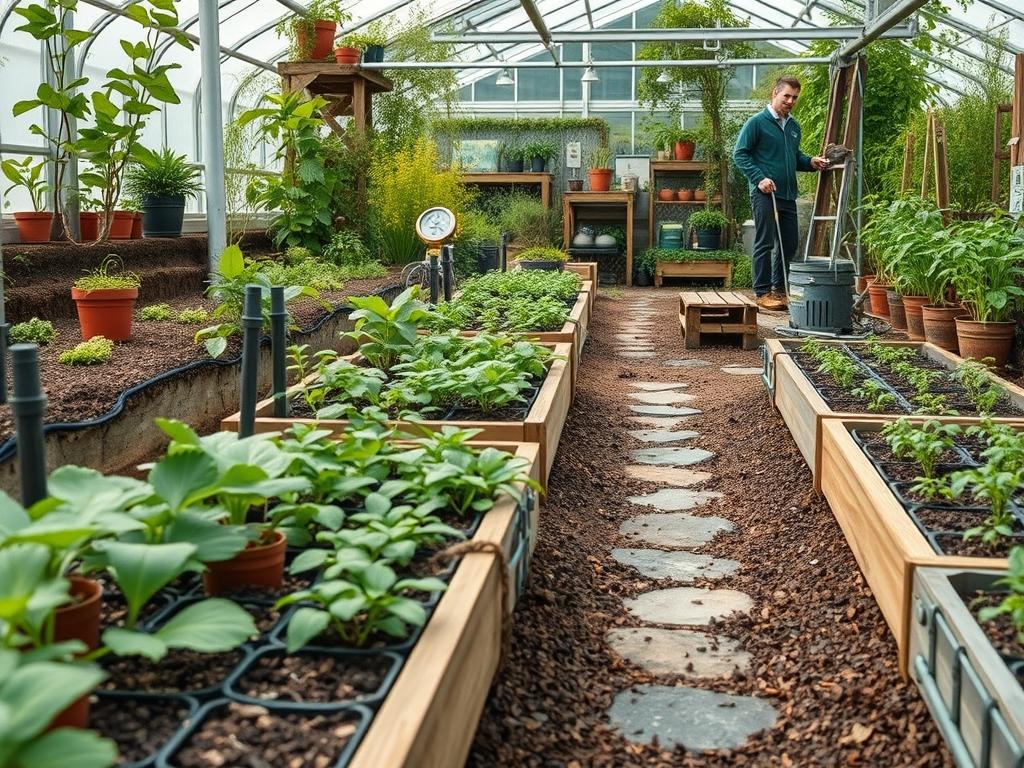
Healthy, vibrant landscapes are built from the ground up, starting with the invisible architecture of the soil. In the high-stakes world of professional landscaping, soil compaction is a quiet but devastating adversary that can undermine thousands of dollars in plant material and hours of meticulous design work. When soil particles are pressed together, the essential pore spaces that hold oxygen and water collapse, leading to a condition known as high bulk density. This suffocating environment prevents root expansion, triggers anaerobic conditions, and destroys the natural drainage capacity of the site. A garden beds curb appeal depends entirely on the vigor of its vegetation; if the soil is as hard as concrete, even the most expensive boxwoods or perennials will eventually succumb to stress. Effective soil compaction prevention is not merely a maintenance task but a fundamental design requirement for any functional outdoor environment.
Landscape Design Principles
Professional landscape design requires a deep understanding of how humans and machines interact with the earth. One of the primary principles for soil health is the clear separation of traffic areas from planting zones. By establishing strict focal points and using symmetry to guide the eye and the feet, a designer can subtly direct guests away from sensitive root zones. Elevation layers also play a critical role; by utilizing retaining walls or strategically placed boulders, a landscape architect can create physical barriers that prevent foot traffic from encroaching on soft planting beds.
Walkways are perhaps the most vital tool in the soil compaction prevention arsenal. Rather than leaving the path of travel to chance, which leads to “desire lines” through garden beds, designers should install permanent hardscaping. Using materials like pavers, flagstone, or decomposed granite ensures that the weight of foot traffic is distributed across a compacted base specifically engineered for that purpose, leaving the adjacent plant beds untouched. Furthermore, irrigation planning must ensure that water is delivered deeply and efficiently through drip emitters rather than high-impact spray heads, as excessive surface saturation can make soil more vulnerable to compression.
Visual balance in a garden is often achieved through a mix of mass plantings and negative space. However, that negative space should never be bare soil. Unprotected earth is susceptible to the kinetic energy of raindrops, which can cause surface crusting and compaction. A well-designed landscape utilizes groundcovers and mulch to ensure every square inch of the bed is shielded, maintaining the integrity of the soil structure while contributing to the overall aesthetic unity of the property.
Plant and Material Selection
The following table outlines plants and materials that are either resilient to soil pressure or active participants in soil compaction prevention through their root structures and biological contributions.
| Plant Type | Sun Exposure | Soil Needs | Water Demand | Growth Speed | Maintenance |
| :— | :— | :— | :— | :— | :— |
| Baptisia australis | Full Sun | Deep, well-drained | Low | Moderate | Low |
| Panicum virgatum | Full/Part Sun | Various/Adaptable | Medium | Fast | Low |
| Echinacea purpurea | Full Sun | Rich, friable | Medium | Fast | Moderate |
| Compost (Material) | N/A | High Organic | N/A | N/A | Annual |
| Pine Bark Mulch | N/A | Acidic to Neutral | N/A | N/A | Seasonal |
| Cover Crops | Full Sun | Disturbed Soil | Medium | Very Fast | Low |
Implementation Strategy
Implementing a soil compaction prevention strategy begins during the initial layout and grading phase of a project. The first and most critical tip is to establish “no-go” zones for heavy machinery. Simple orange safety fencing should be used to cordone off future planting beds before any construction begins. Even a single pass with a skid steer can compress soil to a depth of 12 inches or more, a condition that is difficult to reverse once a landscape is finished.
Second, incorporate high-quality organic matter, such as well-aged compost, into the top 8 to 10 inches of the soil profile. This organic material acts as a biological buffer, creating stable soil aggregates that resist collapsing under pressure. Third, utilize a broadfork rather than a mechanical tiller when preparing beds. While tilling provides a temporary fluffing effect, it often creates a “plow pan” of hard soil just beneath the tined depth and disrupts the delicate fungal networks necessary for soil health.
Fourth, implement permanent edging. Whether using steel edging, cobblestones, or pressure-treated timber, a clear physical boundary signals that the bed is a protected zone. Fifth, apply a consistent layer of organic mulch at a depth of 2 to 3 inches. This layer acts as a shock absorber for both foot traffic and heavy rains. Sixth, plant in high densities. The more root volume that exists within a bed, the more the soil is naturally aerated as those roots grow, die back, and decompose.
Seventh, create “stepping stones” within large beds to allow for maintenance access. Using flat flagstones or concrete rounds provides a stable platform for gardeners to stand on, distributing their body weight across a larger surface area and preventing localized “pocking” of the soil. Eighth, avoid working in the beds when the soil is wet. Soil is most vulnerable to compaction when its moisture content is high, as water acts as a lubricant that allows soil particles to slide together and lock.
Ninth, consider the use of cover crops like daikon radish or clover during transition periods or in new beds. These plants, often called biological drills, have powerful taproots that can pierce compacted layers and leave behind channels for air and water. Finally, tenth, monitor irrigation closely. Over-saturation leads to a loss of soil structure, making the ground much more susceptible to even minor mechanical pressures.
Common Landscaping Failures
One of the most frequent failures in residential landscaping is the improper management of drainage. If a site is not graded correctly, water pools in planting beds, leading to a muddy slurry that compacts instantly when stepped on. Poor drainage and soil compaction often exist in a feedback loop; compaction causes poor drainage, and standing water promotes further compaction. Another common mistake is root overcrowding caused by improper spacing. While dense planting is a strategy for soil health, planting heavy-set trees too close to each other can lead to competitive root zones that eventually dry out and harden the surrounding soil.
Irrigation inefficiencies are also a major culprit. Systems that are left to run on generic timers often over-water, keeping the soil in a perpetually soft state that is easily deformed. Furthermore, many homeowners make the mistake of using high-pressure power washers or heavy lawn furniture directly on unpaved garden areas. This concentrated weight exceeds the load-bearing capacity of the soil, leading to localized dead zones where nothing will grow. Lastly, the failure to refresh mulch regularly leaves the soil surface exposed to the elements, leading to a hard, hydrophobic crust that prevents water infiltration regardless of how much the irrigation system runs.
Seasonal Maintenance
Landscape management is a year-round commitment that changes with the cycles of the earth. In the spring, the focus should be on assessment. This is the time to check for areas where winter snowmelt may have caused ponding or where early foot traffic has left ruts. Avoid the temptation to begin digging as soon as the ground thaws; wait until a handful of soil crumbles easily when squeezed.
Summer maintenance centers on moisture management and mulch integrity. As temperatures rise, the soil can bake and crack, a form of natural compaction. Ensuring a consistent 3 inch mulch layer helps retain moisture and keeps the soil temperature stable, which encourages the movement of earthworms and other beneficial organisms that naturally aerate the earth.
Autumn is the ideal window for adding amendments. Applying a fresh layer of compost or leaf mold allows the biology of the soil to process these nutrients over the winter months. If compaction has been identified during the growing season, fall is the time for gentle aeration using a hand-turning fork, being careful not to disturb established root systems.
Winter is primarily a period of protection. In regions with heavy snowfall, ensure that snow is not piled onto planting beds, as the sheer weight of a 4 foot snowbank can compress the underlying soil significantly. Use this time to plan for any hardscaping adjustments that might be needed in the following year to further direct traffic away from sensitive areas.
Professional Landscaping FAQ
How can I tell if my soil is compacted?
Push a sharpened piece of rebar into the soil. If you meet significant resistance within the first 6 inches when the soil is moist, you likely have compaction issues that require intervention with organic matter or mechanical aeration.
Is tilling a good way to fix compaction?
Tilling is often counterproductive. It provides a quick, temporary looseness but destroys the soil structure and creates a hard layer underneath the tilled zone. It is better to use a broadfork or incorporate compost through top-dressing.
Can I use sand to loosen heavy clay soil?
Never add sand to heavy clay soil to fix compaction. This often creates a substance similar to concrete. Instead, focus on adding high-quality organic mulch and compost, which improves the soil structure through biological activity over time.
How deep should my mulch layer be?
A depth of 2 to 3 inches is ideal for most ornamental beds. This is thick enough to suppress weeds and protect the soil from compression but thin enough to allow for proper gas exchange between the soil and the atmosphere.
Do earthworms really help with compaction?
Yes, earthworms are the best natural aerators in the landscape. By tunneling through the soil and leaving behind nutrient-rich castings, they create a network of channels that significantly increase the porosity and health of the garden bed.