
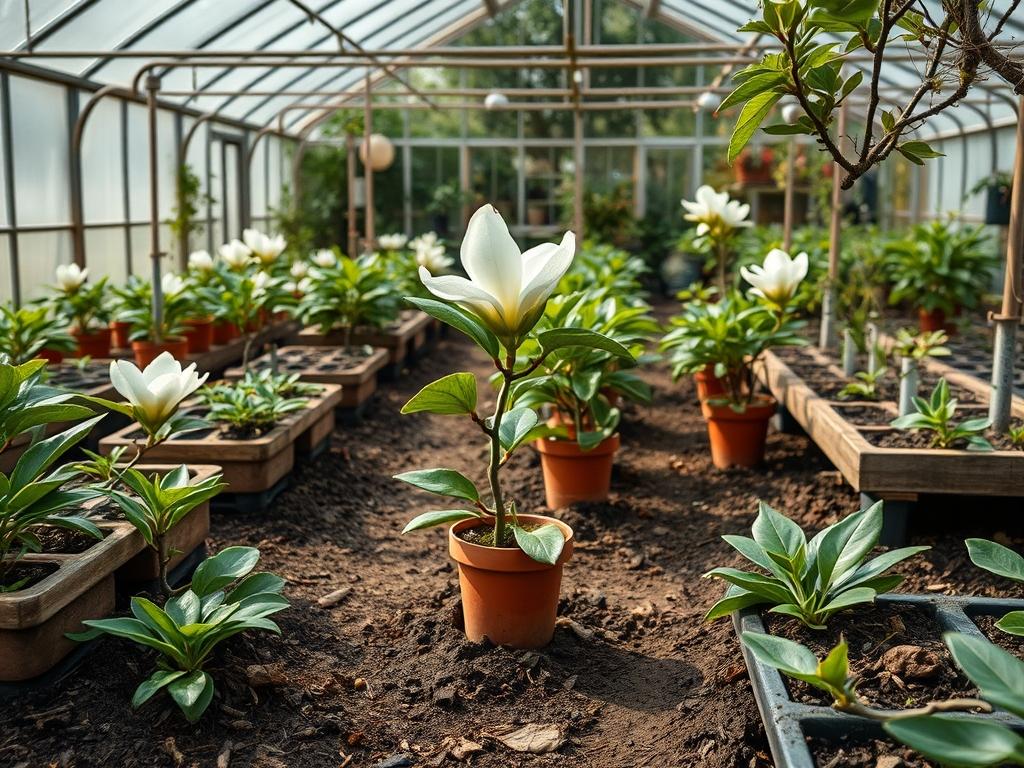
Selecting the perfect specimen tree for a high end residential landscape requires more than just an eye for aesthetic beauty. It demands a technical understanding of the relationship between the plant and the subterranean environment. Magnolias are often the crown jewels of an outdoor living space, providing an architectural structure that defines the garden’s character through all four seasons. Whether you are integrating a massive Southern Magnolia into a sprawling estate or placing a delicate Star Magnolia near a contemporary walkway, the success of the installation depends on your mastery of Magnolia Soil Needs and the precision of your planting depth. A failure to respect these biological requirements often leads to stunted growth, yellowing foliage, or the eventual decline of the tree, which can be a costly mistake for any property owner.
Landscape Design Principles
When incorporating magnolias into a professional landscape plan, we must consider the principles of visual balance and focal points. A magnolia is rarely a background plant; its glossy leaves and substantial blooms draw the eye immediately. To achieve symmetry, one might flank a grand entrance with two matching Magnolia grandiflora specimens, but this requires an identical soil profile on both sides of the driveway to ensure uniform growth. If the soil on one side is compacted or lacks the necessary acidity, the resulting asymmetry will undermine the entire design.
Elevation layers are another critical factor. We often use magnolias to create a mid-story canopy that bridges the gap between low-lying perennials and towering shade trees. In these tiered designs, irrigation planning becomes paramount. Because magnolias have extensive, shallow root systems, they should not be positioned in high traffic areas where human footfall or heavy garden furniture will compress the earth. Visual balance is maintained not just by the height of the tree, but by the negative space around it. Providing a wide, mulched radius ensures the tree has the room to breathe while preventing mower damage to the sensitive surface roots.
Plant and Material Selection
Choosing the right variety is the first step in aligning the tree with your specific site conditions. Not all magnolias share the same tolerance for soil moisture or sun exposure. Below is a professional breakdown of common varieties and their specific environmental requirements.
| Plant Type | Sun Exposure | Soil Needs | Water Demand | Growth Speed | Maintenance Level |
| :— | :— | :— | :— | :— | :— |
| Southern Magnolia | Full Sun | Deep, acidic, loamy | Moderate to High | Medium | Low |
| Star Magnolia | Full to Part Sun | Rich, well-draining | Moderate | Slow | Medium |
| Saucer Magnolia | Full Sun | Moist, organic-rich | Moderate | Medium | Medium |
| Sweetbay Magnolia | Full to Part Sun | Wet, acidic, boggy | High | Fast | Low |
| Little Gem Magnolia | Full Sun | Well-drained, acidic | Moderate | Slow | Low |
For these installations, professional grade materials are required. We recommend high-quality sphagnum peat moss for acidifying the soil and pine bark mulch for moisture retention. A soil pH tester and a sharpshooter shovel are essential tools for the initial site assessment and excavation.
Implementation Strategy
The implementation process begins with a rigorous assessment of the existing soil structure. Magnolia Soil Needs center on a texture that is loose enough for root penetration but dense enough to hold consistent moisture. If your site consists of heavy clay, you must modify the entire planting zone, not just the hole itself. Create a planting area that is three to five times the diameter of the root ball. Use a tiller to incorporate organic compost and coarse sand into the native soil to a depth of 12 inches. This creates a transition zone that prevents the roots from circling within the original hole.
Grading is the next tactical step. The site must be graded to ensure that water moves away from the trunk of the tree while still saturating the root zone. When digging the hole, depth is the most common point of failure. Use a measuring tape to verify that the hole is no deeper than the root ball. In fact, in heavier soils, it is often beneficial to plant the tree slightly high, with the top 2 inches of the root ball sitting above the surrounding grade. This “perch planting” technique ensures that the root flare, the point where the trunk widens into roots, remains exposed to oxygen.
Once the tree is positioned, backfill with a mixture of native soil and organic amendments, tamping lightly with your hands rather than your feet to avoid compaction. Apply a 3 inch Layer of arborist wood chips or pine needles over the entire disturbed area, keeping the material at least 4 inches away from the bark of the trunk to prevent fungal rot.
Common Landscaping Failures
The most frequent mistake I see in residential consulting is the “bathtub effect.” This occurs when a homeowner digs a deep hole in heavy clay soil and fills it with soft, potting-grade earth. During heavy rains, the clay hole holds water like a porcelain tub, drowning the magnolia roots in an anaerobic environment. Another common failure is improper mulch depth. While mulch is vital, piling it against the trunk, often called volcano mulching, traps moisture against the bark and invites boring insects and disease.
Soil compaction is a silent killer in mature landscapes. When heavy machinery or frequent pedestrian traffic moves over the root zone, the pore spaces in the soil collapse. Magnolias require these spaces for gas exchange. Without oxygen, the roots cannot uptake nutrients, leading to a slow decline characterized by dieback in the upper canopy. Furthermore, many planners fail to account for the ultimate width of the tree. Planting a Southern Magnolia within 5 feet of a retaining wall or a sidewalk will eventually lead to structural damage as the powerful surface roots lift the hardscaping in search of moisture and air.
Seasonal Maintenance
Managing a magnolia landscape requires a calendar-based approach to soil health. In the spring, apply a balanced, slow-release fertilizer designed for acid-loving plants. This should be spread at the drip line, which is the outermost edge of the tree’s canopy, where the most active feeder roots reside. As the temperatures rise in summer, irrigation efficiency is the priority. Use soaker hoses or drip irrigation emitters to provide deep, infrequent watering rather than short, daily bursts. This encourages the roots to grow deeper into the soil profile.
During the autumn, focus on soil insulation. As the tree prepares for dormancy, a fresh layer of mulch helps regulate soil temperatures and protects the shallow roots from the first hard frosts. This is also the time to test the pH again. If the soil has become too alkaline due to mineral leaching from nearby concrete walkways, apply elemental sulfur to bring the acidity back to the preferred 5.5 to 6.5 range. In winter, maintenance is primarily skeletal. Pruning should be kept to a minimum, focusing only on removing dead, damaged, or crossing branches to maintain the tree’s structural integrity.
Professional Landscaping FAQ
What is the ideal pH for Magnolia Soil Needs?
Magnolias thrive in slightly acidic soil, specifically between a pH of 5.5 and 6.5. If the soil is too alkaline, the tree may suffer from iron chlorosis, which causes the leaves to turn yellow while the veins remain green.
How deep should I dig the hole for a new magnolia?
The hole should be no deeper than the root ball itself. It is vital that the root flare remains at or slightly above the soil surface. However, the width of the hole should be at least twice the root ball diameter.
Can I grow a magnolia in heavy clay soil?
Yes, but you must improve the drainage. Amend the wide planting area with organic matter and consider planting the tree on a slight mound. This prevents water from pooling around the roots and ensures adequate aeration in the heavy soil structure.
How much mulch is necessary for a healthy magnolia?
Apply a layer of organic mulch between 2 and 4 inches thick. Spread it out to the drip line of the tree to retain moisture and regulate temperature. Always keep the mulch a few inches away from the actual trunk.
Why are my magnolia leaves turning brown and dropping?
This is often a sign of moisture stress or poor drainage. Check the soil moisture at a depth of 4 inches using a moisture meter. If the soil is soggy, improve the drainage; if it is bone dry, increase irrigation frequency.