
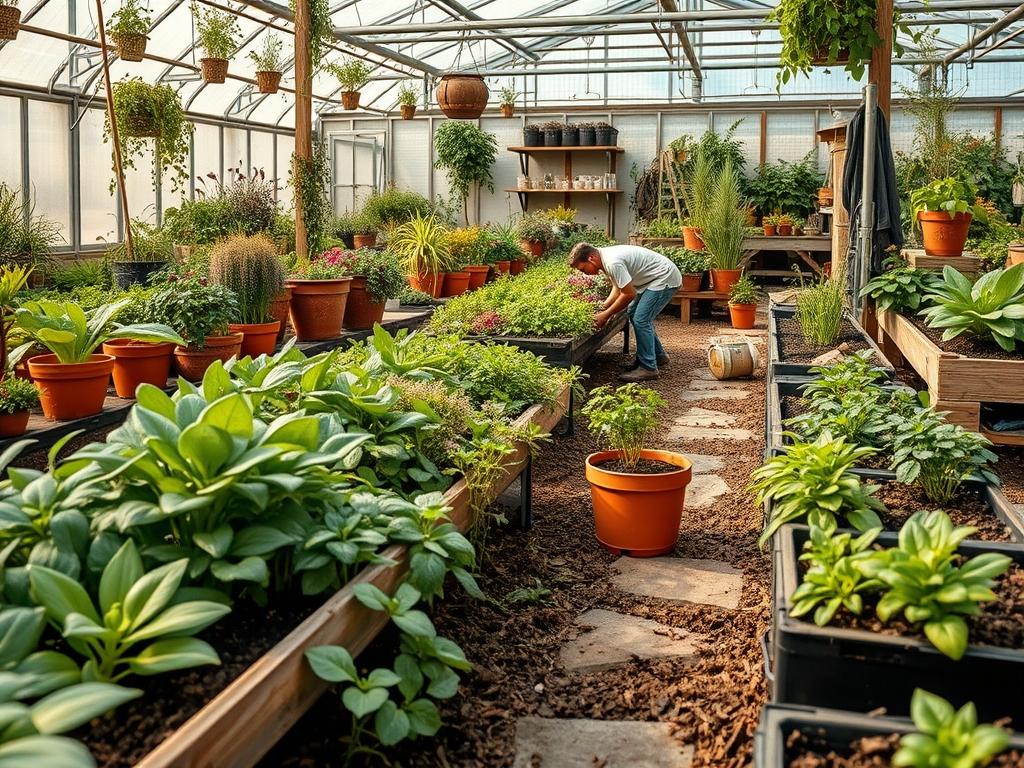
Success in professional landscape architecture hinges on the subterranean environment as much as the visible greenery. When we approach high-end residential or commercial designs, the primary challenge is rarely the aesthetic choice of a Japanese Maple or a set of Bluestone pavers. Instead, the true hurdle is creating a sustainable growing medium that thrives in specific climate zones while maximizing the client’s return on investment. Mixing Your Own Potting Soil serves as a critical strategy for both site health and budgetary efficiency. Commercial bagged mixes are often laden with fillers that offer little long-term nutritional value, and their cost per cubic yard is exorbitant compared to bulk procurement. By formulating custom blends, we can control the porosity, drainage, and nutrient density required for high-impact curb appeal and functional outdoor living spaces.
The health of a landscape begins with structural integrity. If you are designing for a modern estate, you might demand towering containers and tiered elevation layers to create depth. These features require a lightweight, well-draining medium that standard garden soil simply cannot provide. By Mixing Your Own Potting Soil, you ensure that the foundation of your focal points is engineered for longevity. This prevents the common issue of soil subsidence, where plants sink into pots as organic matter decomposes too quickly. Professional landscape consultants prioritize these custom mixes to achieve predictable growth rates, which is essential when the goal is to create symmetry and balance within a formal garden layout.
Landscape Design Principles
A successful landscape relies on more than just aesthetic choices; it requires a deep understanding of spatial geometry and site microclimates. Symmetry serves as a foundational pillar in formal designs, where identical plantings on either side of a walkway create a sense of order and prestige. To maintain this symmetry, the soil environment must be identical. If one Boxwood is planted in nutrient-rich custom mix and the other in poor native soil, the resulting visual imbalance will ruin the design intent within a single growing season. Using a standardized, self-mixed potting medium across the entire project ensures uniform growth speeds and foliage density.
Focal points are another crucial element where custom soil mixing plays a role. Whether it is a large architectural planter or a specimen tree elevated on a retaining wall, the medium must be tailored to the drainage needs of that specific feature. Elevation layers, created through tiered beds, require a layering of materials to prevent erosion. In these scenarios, we often use a coarser mix at the base for drainage and a finer, nutrient-heavy mix near the root zone. Furthermore, irrigation planning must be integrated into the soil strategy. Reticulated drip systems perform most efficiently when the soil has a consistent capillary action, which is achieved by balancing Sphagnum Peat Moss and Perlite in the mix. This consistency allows water to move laterally through the soil, reaching every root tip without creating stagnant pools or dry pockets.
Plant and Material Selection
| Plant Type | Sun Exposure | Soil Needs | Water Demand | Growth Speed | Maintenance Level |
| :— | :— | :— | :— | :— | :— |
| Boxwood | Part Sun | Well-drained | Moderate | Medium | High |
| Lavender | Full Sun | Sandy/Gritty | Low | Medium | Low |
| Hostas | Shade | Rich/Humus | High | Fast | Low |
| Fountain Grass | Full Sun | Loamy/Sand | Low | Fast | Medium |
| Hydrangea | Part Shade | Acidic/Moist | High | Fast | High |
| Japanese Maple | Filtered Sun | Loamy/Rich | Moderate | Slow | Medium |
Implementation Strategy
Implementing a professional-grade soil strategy begins with the procurement of high-quality bulk materials. The standard landscape professional ratio for containerized plants and raised beds is often referred to as the “one-third rule.” This involves mixing one part Sphagnum Peat Moss or Coconut Coir for moisture retention, one part Perlite or Pumice for aeration, and one part high-quality Compost or Worm Castings for biological activity. To begin, clear a large, flat surface or use a mechanical mixer for larger projects. Sift the Compost to remove large woody debris, as these can create air pockets that lead to root desiccation.
Once the base mix is prepared, it is time to address site grading and drainage. Before placing your soil mix into a garden bed or large-scale planter, ensure the sub-base is graded away from the building foundation at a minimum of a two percent slope. If you are working with hardscaping like retaining walls, install a Perforated Drain Pipe wrapped in filter fabric at the base of the wall before backfilling with your custom mix. This ensures that hydrostatic pressure does not build up and compromise the structure. When filling your beds, apply the soil in six-inch lifts, lightly tamping each layer to prevent major settling while avoiding heavy compaction. Finalize the installation with a two-inch layer of Hardwood Mulch to regulate soil temperature and prevent the custom mix from drying out too quickly under the summer sun.
Common Landscaping Failures
The most frequent failure in high-end landscaping is neglecting the drainage characteristics of the soil medium. Many homeowners and novice contractors make the mistake of using heavy garden soil in large pots or enclosed raised beds. This leads to soil compaction, where the lack of air pores literally drowns the roots. Without oxygen, the roots cannot perform the metabolic processes necessary for nutrient uptake, resulting in chlorosis or root rot. By Mixing Your Own Potting Soil, you can include adequate amounts of Perlite or Rice Hulls to keep the soil “fluffy” and oxygenated, even after several seasons of watering.
Another common pitfall is improper spacing compounded by nutrient leaching. In high-density plantings designed for “instant” curb appeal, plants quickly exhaust the available nutrients. If the soil lacks a “cation exchange capacity,” which is the ability to hold onto nutrients, the fertilizer will simply wash away with every irrigation cycle. Including high-quality organic matter like Leaf Mold or Compost in your custom mix increases this capacity. Additionally, failed irrigation planning often stems from ignoring the soil’s infiltration rate. If the soil is too sandy, the water drains before the plant can use it; if it is too heavy in clay, the water sits on the surface. A balanced, custom-blended mix mitigates these risks, providing a stable environment for expensive nursery stock to establish.
Seasonal Maintenance
Seasonal management is the key to preserving the structural integrity of your landscape. In the spring, your primary goal is to replenish the nutrients that were leached during the winter rains. This is the ideal time to top-dress your planters and beds with an additional inch of the custom Compost used in your original soil mix. This “slow-release” approach mimics natural forest floor decomposition. As the summer heat intensifies, focus on moisture management. Check the friability of your custom mix; if it feels hard or crusty on top, lightly break it up with a Hand Trowel to ensure water can reach the root zone.
When autumn arrives, the focus shifts to soil rejuvenation. As annuals are removed, work the old potting soil into your larger garden beds and refresh container soil with new organic matter. This is also the time to check the pH of your mixes, as many decorative plants like Azaleas or Blueberries prefer acidic conditions that can neutralize over time. In winter, the primary concern is frost heave. For perennials in pots, a more vertical, well-draining soil mix is essential to prevent ice from expanding and cracking heavy ceramic or concrete vessels. Ensuring your custom mix has high drainage will allow excess winter moisture to escape, protecting both the plants and your hardscape investment from freeze-thaw damage.
Professional Landscaping FAQ
Why should I mix my own potting soil instead of buying bags?
Mixing your own allows for precise control over drainage and nutrient density while significantly reducing costs. Bulk components like Peat Moss and Perlite are vastly cheaper when purchased in large quantities for professional-scale landscape projects.
How does soil quality impact my home’s curb appeal?
Soil is the life-support system for your greenery. High-quality, custom-blended soil ensures uniform growth, vibrant foliage colors, and lush blooms. This consistency prevents the patchy, stunted appearance that detracts from a property’s overall aesthetic and value.
What is the best material for drainage in a custom mix?
Perlite is a classic choice for its lightweight and airy properties. However, for large outdoor planters prone to wind, Pumice or Turface are better choices. They provide the necessary aeration while adding enough weight to prevent pots from tipping.
Can I reuse custom potting soil for next season?
Yes, but it must be refreshed. Over time, organic components decompose and lose their structure. To reuse soil, mix in 30 percent new Compost and a handful of Bone Meal or Kelp Meal to restore the biological and mineral balance.
What is the role of mulch in my landscape drainage plan?
Mulch acts as a protective skin for your soil mix. It prevents surface crusting, which can cause water runoff. By keeping the soil surface porous, Mulch ensures that irrigation effectively penetrates the root zone of your custom-mixed beds.