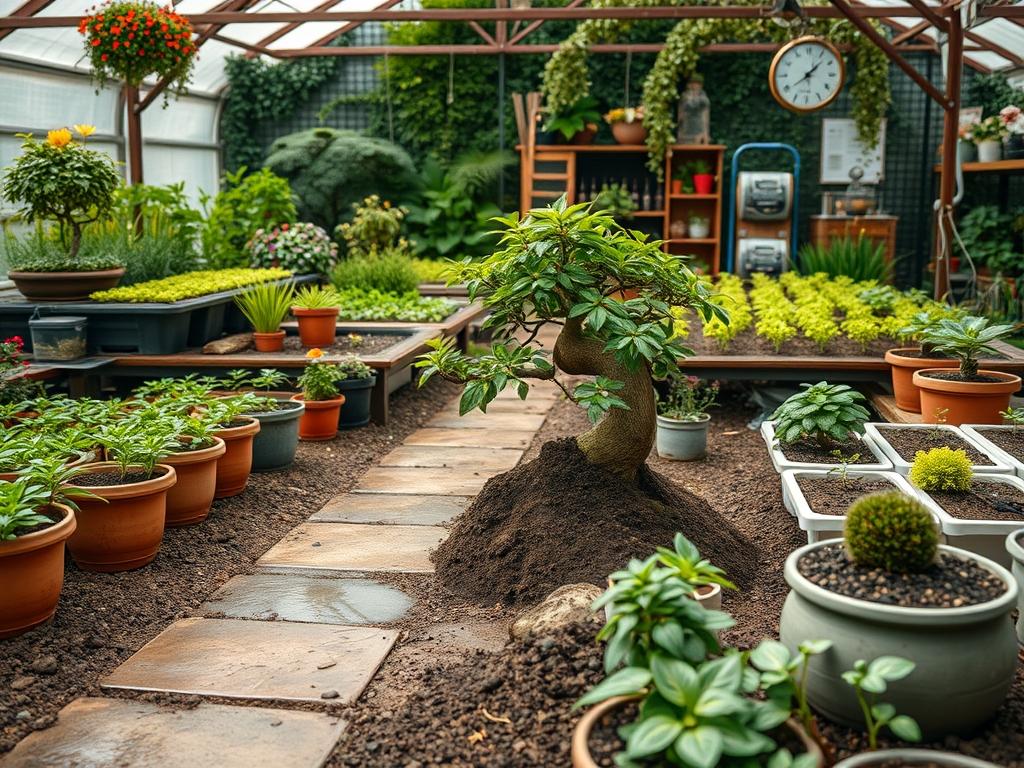
Designing a sustainable outdoor environment requires more than just aesthetic vision; it demands a deep understanding of the subterranean mechanics that support life. When integrated into a broader landscape design, bonsai serves as a focal point that bridges the gap between grand architecture and intimate horticulture. Selecting the Best Soil for Bonsai is a challenge that parallels master-level civil engineering. Because these trees are confined to shallow containers, the substrate must perform the functions of an entire forest floor within a few cubic inches of space. This micro-landscape must balance the competing needs of oxygenation, moisture retention, and structural stability. Without a precisely engineered soil profile, the most beautiful specimen will fail to thrive, leading to a loss of curb appeal and a breakdown in the garden’s visual rhythm.
Effective landscape planning treats the bonsai pot as a miniature site development project. In a traditional backyard, we worry about site grading and large-scale drainage systems. In the world of miniature trees, the soil components themselves provide the drainage and aeration that a French drain or a retaining wall might offer on a residential lot. The goal is to create a living environment where the roots can breathe while still accessing the nutrients required for vigorous growth. A failure to select the proper substrate leads to root rot, which is the horticultural equivalent of a foundation failure in a home. Professional consultants recognize that soil is not merely “dirt” but a sophisticated medium that dictates the longevity of the entire outdoor display.
Landscape Design Principles
In professional landscape architecture, we rely on principles like symmetry, focal points, and elevation layers to guide the eye. Bonsai trees often serve as the primary focal point on a patio, terrace, or courtyard. To ensure these trees harmonize with their surroundings, their health must be irreproachable. Visual balance is achieved when the tree appears robust and stable. This stability begins with the soil. The substrate must be heavy enough to anchor the tree against wind but light enough to allow for fine root bifurcation. Unlike standard garden beds where topsoil and mulch are layered, bonsai soil is typically a uniform mix of aggregates.
Irrigation planning is another critical principle. In a large-scale landscape, we might install a drip irrigation system with multiple zones. For a bonsai collection, the soil must be designed to work in tandem with the watering schedule. If the soil is too dense, the tree will drown during rainy seasons. If it is too porous, it will desiccate during summer heatwaves. We also consider elevation. Placing a bonsai on a high pedestal increases its exposure to wind, which accelerates evaporation. Therefore, the soil mix for a tree at eye level on a terrace might require more water-holding capacity than a tree placed at ground level near a koi pond. Walkways and viewing angles also matter; a healthy tree with vibrant foliage, supported by superior soil, draws the observer closer to appreciate the intricate details of the miniature landscape.
Plant and Material Selection
Choosing the right materials involves a calculated trade-off between water retention and aeration. The following table outlines how different species interact with specific soil requirements within a landscaped environment.
| Plant Type | Sun Exposure | Soil Needs | Water Demand | Growth Speed | Maintenance Level |
| :— | :— | :— | :— | :— | :— |
| Japanese Maple | Partial Shade | High Organic / Akadama | High | Medium | High |
| Juniper | Full Sun | High Drainage / Lava Rock | Low | Slow | Medium |
| Chinese Elm | Full Sun/Part Shade | Balanced Mix / Pumice | Moderate | Fast | Medium |
| Black Pine | Full Sun | Coarse Aggregates / 1/4 inch | Low | Slow | High |
| Ficus | Full Sun | General Purpose Mix | High | Fast | Low |
Implementation Strategy
The process of installing a bonsai into its miniature landscape begins with site preparation. First, evaluate the container. Just as we check the grading of a backyard to ensure water flows away from a foundation, we must ensure the bonsai pot has adequate drainage holes. These holes should be covered with a polyethylene mesh to prevent the substrate from escaping. The first layer of soil should consist of larger particles, such as 1/4 inch Lava Rock, to facilitate a “drainage layer” similar to the gravel base under a paver walkway.
Next, position the tree according to the design plan. Most landscape architects avoid placing a focal point exactly in the center of the frame; the same applies to the “potting” of a tree. Use copper or aluminum wire to anchor the root ball to the container. This provides the structural integrity needed until the roots can colonize the new soil. Fill the remaining space with your chosen mix, which may include Akadama, Pumice, and pine bark. Use a bamboo chopstick to work the soil into the gaps between the roots, ensuring there are no air pockets. Finally, apply a thin layer of sphagnum moss or fine green moss on the surface to help retain moisture and provide a finished, professional look that mimics a grassy meadow.
Common Landscaping Failures
The most frequent mistake in miniature landscape management is the use of standard potting soil. Traditional potting mixes are designed for temporary indoor plants and lack the structural longevity required for bonsai. Over time, these fine organic particles break down and compact, creating a “solid block” that prevents oxygen from reaching the roots. Soil compaction is the silent killer of outdoor environments, leading to stagnant water and anaerobic conditions.
Another common failure is improper spacing within the root zone. In a large garden, we avoid planting trees too close to a retaining wall to prevent structural damage. In a bonsai pot, we must prune the roots to prevent overcrowding. If the roots become a solid mass, they will push the soil out of the pot, rendering irrigation ineffective. Additionally, many enthusiasts fail to account for the local climate. A mix that works in the humid Southeast will likely be too fast-draining for the arid Southwest. Professional consultants always recommend adjusting the ratio of Akadama (which holds water) to Lava Rock (which provides drainage) based on specific micro-climates within the yard.
Seasonal Maintenance
Landscape management is a year-round commitment. During the Spring, focus on growth. This is the optimal time for repotting, as the tree’s metabolic rate is increasing. Inspect the soil for signs of moss overgrowth, which can block water penetration. If the soil surface has become crusty, use a small hand rake to loosen the top 1/2 inch of the substrate.
In the Summer, the priority shifts to hydration. High temperatures and wind can dry out a small container in mere hours. Mulching the top of the soil with a layer of shredded bark or using humidity trays can mitigate this risk. Autumn is a period of preparation. As the tree prepares for dormancy, reduce fertilizer applications. Ensure the soil is not overly saturated as temperatures drop, as excess water can freeze and expand, potentially cracking artistic ceramic pots. Finally, in Winter, protect the soil from extreme “heaving.” In colder zones, bury the pot in wood mulch or place it in a cold frame to insulate the root mass from the harshest frost, ensuring the tree survives to start the cycle again the following year.
Professional Landscaping FAQ
How often should I replace the soil in my bonsai?
Most deciduous trees require repotting every 2 to 3 years, while older conifers can remain in the same soil for 5 years or more. If water stops draining quickly, the soil has likely broken down and needs replacement.
Can I use rocks from my backyard for the drainage layer?
While possible, it is not recommended. Backyard stones may contain pathogens or lime that alters the soil PH. It is better to use sterilized Lava Rock or Pumice to maintain a controlled, healthy environment for the roots.
What is the best soil for a beginner bonsai?
A standard 1:1:1 ratio of Akadama, Pumice, and Lava Rock is the industry standard. This mix is forgiving, provides excellent aeration, and works well for a wide variety of species and climates during the learning phase.
Why is my bonsai soil turning green?
Green growth on the soil surface is usually algae or moss. While aesthetically pleasing, a thick layer can prevent oxygen from reaching the roots. Carefully thin the moss out if it becomes a solid, water-impenetrable mat across the pot.
Does the color of the soil matter for health?
Actually, yes. Akadama changes color significantly when wet, turning from light tan to deep brown. This serves as a visual “irrigation gauge,” helping the gardener decide exactly when the landscape requires additional water to maintain health.