
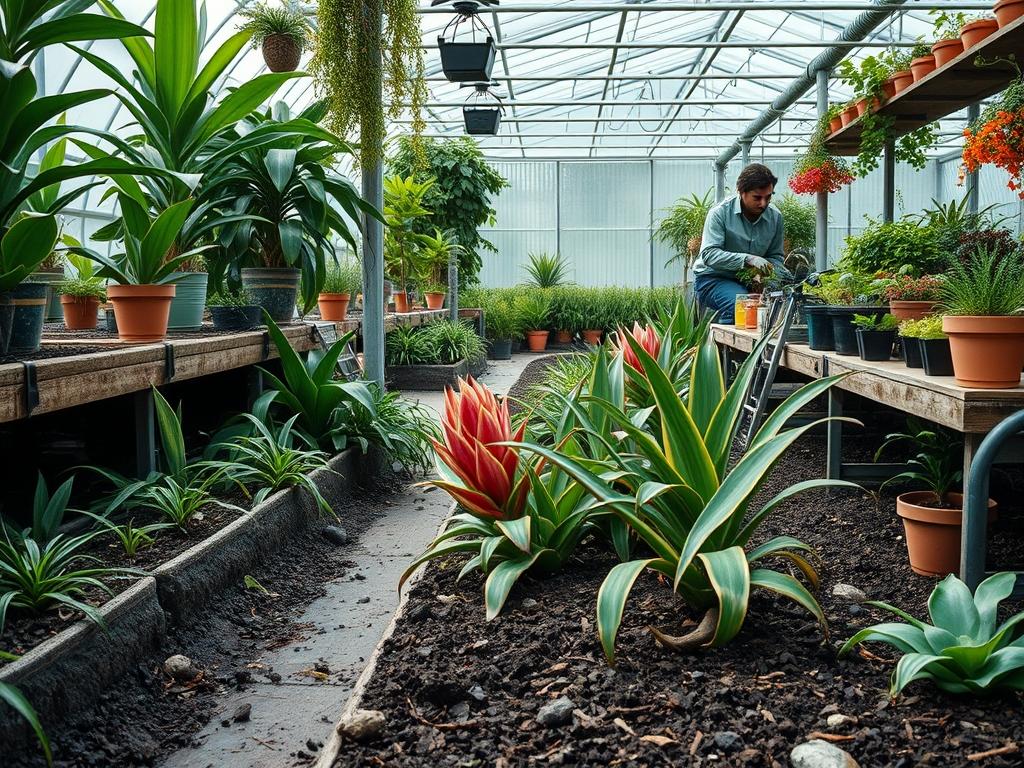
The architectural potential of bromeliads in a professionally designed landscape environment is often understated. These plants serve as living sculptures, offering vibrant hues and structural forms that few other species can replicate. However, the most significant hurdle for any designer or homeowner managing these specimens in containers is the maintenance of proper Bromeliad Soil Aeration. In high performance outdoor environments, curb appeal depends heavily on the health of these focal points. When drainage fails or oxygen levels in the substrate drop, the visual impact of the landscape suffers immediately. Effective garden planning requires us to view the container not just as a vessel, but as a mini ecosystem where air circulation is as critical as water or light. Achieving the perfect balance within these pots ensures that your outdoor living spaces remain lush and functional throughout the changing seasons.
Landscape Design Principles
In professional landscape architecture, we prioritize the hierarchy of visual elements to create a sense of order and beauty. When incorporating bromeliads, symmetry and focal points take center stage. Placing identical containers at the entrance of a walkway or flanking a retaining wall creates a formal, welcoming atmosphere. To maximize the impact, one must consider elevation layers. Instead of placing every pot on the ground, use tiered pedestals or integrate them into a stone wall to create a multi dimensional experience. This elevation does more than just look good; it assists with critical Bromeliad Soil Aeration by keeping the pots off damp earth and allowing air to circulate around the drainage holes.
Visual balance is achieved by contrasting the sharp, rigid leaves of Neoregelia with the softer textures of surrounding native plants. Irrigation planning is another cornerstone of our design strategy. In a potted landscape, a drip system must be calibrated not just for the volume of water, but for the rate of absorption. If the soil is too dense, the water sits, the roots suffocate, and the architectural value of the plant vanishes. By focusing on the spatial relationship between your containers and the surrounding hardscape, you ensure that each plant has the “room to breathe” that its biological makeup requires.
Plant and Material Selection
| Plant Type | Sun Exposure | Soil Needs | Water Demand | Growth Speed | Maintenance Level |
| :— | :— | :— | :— | :— | :— |
| Aechmea fasciata | Partial Shade | High Porosity | Moderate | Medium | Low |
| Neoregelia | Bright Indirect | Perlite / Bark | Low | Slow | Low |
| Vriesea splendens | Filtered Sun | Peat / Sand | Moderate | Medium | Moderate |
| Guzmania | Shade | Sphagnum Moss | High Humidity | Fast | Moderate |
| Alcantarea imperialis | Full Sun | Scoria / Pumice | Moderate | Slow | Low |
Implementation Strategy
A successful backyard layout begins with a clear grading plan. Even for potted plants, the ground beneath the pots should have a slight slope, perhaps a 2 percent grade, to prevent water from pooling under the containers. Start your layout by marking the primary walkways and then position your largest containers as anchor points. For those looking to optimize Bromeliad Soil Aeration, the choice of materials is the most critical step in the implementation phase.
When potting your specimens, use a mix of long-fiber sphagnum moss, coarse orchid bark, and horticultural charcoal. A ratio of 1 part bark, 1 part perlite, and 1 part peat is a standard starting point, though many architects prefer adding lavarock for permanent structure. Ensure the pots have at least 3 drainage holes of approximately 0.5 inches in diameter. If you are using decorative “cache” pots, place a layer of river rocks or gravel at the bottom to keep the inner nursery pot from sitting in stagnant water.
Finally, consider the mulch depth in the surrounding garden beds. If your pots are nestled into a mulch bed, keep the wood chips at least 2 inches away from the base of the pot. This prevents moisture-loving fungi from migrating into your bromeliad containers and preserves the integrity of your carefully planned drainage system.
Common Landscaping Failures
The most frequent mistake in containerized landscaping is soil compaction. Over time, organic materials like peat moss break down into fine particles that clog the air gaps necessary for Bromeliad Soil Aeration. When these gaps vanish, the roots are subjected to anaerobic conditions, leading to rapid rot. Another common failure is improper spacing. Designers often place pots too close together to create an “instant” lush look, but this restricts airflow between the plants and increases the risk of pest infestations like mealybugs.
Irrigation inefficiencies also plague many high end landscapes. Overwatering is more common than underwatering, especially when automated systems are used. If a system is set to spray the foliage but the pots have a dense canopy, the water may never reach the center of the plant or, conversely, it may keep the substrate perpetually soggy. Lastly, ignoring the drainage needs of the hardscape surface can lead to disaster. Pots placed on flat, non porous concrete without feet or risers often trap water against the bottom of the pot, effectively drowning the plant from the bottom up.
Seasonal Maintenance
In the spring, focus on revitalizing the substrate. This is the best time to check for compaction. Use a bamboo skewer or a hand trowel to gently poke the soil, ensuring that there is still plenty of “give.” If the soil feels like a solid brick, it is time to repot with fresh coarse bark. This is also the season to clear out any leaf litter that has accumulated in the central cups of the plants.
Summer maintenance is all about managing evaporation and heat. High temperatures can bake the roots in a pot, so move your sensitive Guzmania species to areas with more shade. Check your irrigation lines for clogs regularly. During the autumn, as growth slows, reduce the frequency of watering. This is the time to remove any “pups” or offsets using a serrated knife to prevent the mother pot from becoming overcrowded, which would otherwise reduce the effective aeration of the remaining soil.
Winter poses the challenge of cold, damp air. In regions where frost is a risk, move containers under a covered patio or into a greenhouse. The combination of cold temperatures and waterlogged soil is fatal for bromeliads. Ensure the central cup has a small amount of water, but keep the soil almost dry to prevent the roots from freezing or rotting in the dormant period.
Professional Landscaping FAQ
How can I tell if my bromeliad soil needs better aeration?
If water takes more than a few seconds to disappear from the surface, or if the plant leaves appear yellow despite regular feeding, the soil is likely compacted. Use a moisture meter to check for deep saturation.
What are the best tools for improving aeration in existing pots?
A thin wooden dowel or a soil probe can be used to create vertical air shafts. For a more permanent solution, a manual transplanter helps swap out old, dense soil with coarse perlite or bark chunks.
Do all bromeliads need the same type of aeration?
No; epiphytic species like Tillandsia or Aechmea require much more air in their root zones than terrestrial types like Cryptanthus. Always adjust your potting mix porosity based on the specific species natural habitat.
Can I use decorative rocks as a topper for my containers?
Yes, but use large river stones or porous lava rock rather than fine sand or small pebbles. Dense toppers can trap moisture and heat, which negatively impacts the Bromeliad Soil Aeration at the crown level.
How often should I replace the potting medium entirely?
For most landscape bromeliads, replacing the organic substrate every 2 to 3 years is ideal. This prevents the natural decomposition of pine bark or moss from turning into a muddy, airless silt.