
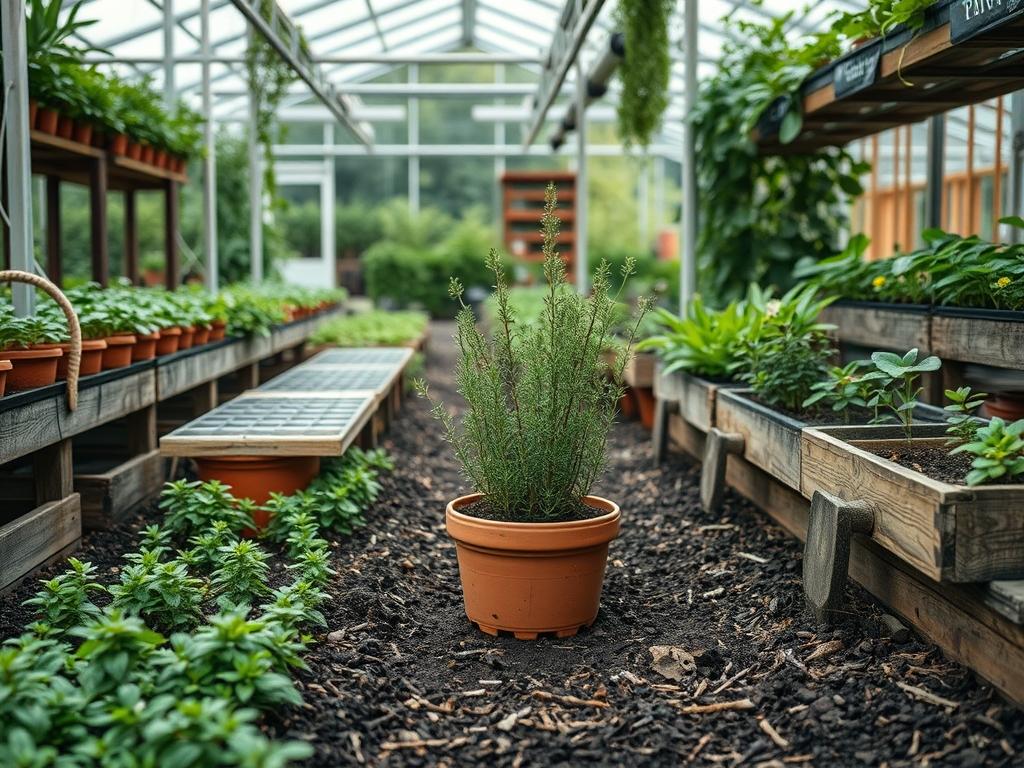
Creating a Mediterranean landscape requires a shift in perspective from traditional temperate gardening, moving away from lush, moisture-heavy lawns toward textural, drought-resistant environments. When integrating herbs like thyme into a professional landscape design, the primary challenge lies in balancing aesthetic appeal with the rigorous drainage requirements of the species. Thyme serves as a versatile tool for the landscape architect, functioning as a fragrant groundcover, a soft edge for hardscaping, or a cascading element in rockeries. Achieving success with this genus depends almost entirely on the substrate. Selecting the best soil for thyme is not merely about finding a planting medium; it is about engineering a micro-environment that mimics the rocky, sun-drenched hillsides of the Mediterranean basin.
In modern outdoor design, functionality and sustainability are paramount. Thyme offers an excellent solution for high-visibility areas like entryways and walkways, where its low-growth habit provides year-round green coverage without the need for constant mowing or intensive fertilization. However, the curb appeal of a Mediterranean garden can quickly diminish if the plants become leggy or succumb to root rot during a wet season. To prevent this, the architectural plan must prioritize elevation and soil structure. By elevating plantings through the use of retaining walls or raised beds, designers can ensure that excess water moves away from the root zone, maintaining the integrity of the landscape even in climates that receive significant rainfall.
Landscape Design Principles
Effective landscape design utilizing Mediterranean species relies heavily on the principle of visual balance and the strategic use of focal points. Thyme is rarely a primary focal point due to its low stature; instead, it acts as a unifying “carpet” that connects larger structural elements like olive trees, upright junipers, or large boulders. In a formal symmetrical layout, Thymus vulgaris can be used to border flagstone walkways, softening the harsh lines of the masonry and providing a tactile element for those walking through the space.
Elevation layers are critical in Mediterranean success. Because thyme thrives in well-drained scenarios, planting it at the highest points of a garden bed or within the crevices of a dry stack stone wall leverages natural gravity to pull water away from the plant’s crown. Furthermore, irrigation planning must be distinct from typical ornamental beds. A “hydro-zone” approach ensures that these drought-tolerant herbs are not placed on the same irrigation line as water-hungry annuals. Visual interest is maintained by varying the textures of the foliage, pairing the fine, needle-like leaves of thyme with the broader, silvery foliage of Lavandula or the architectural spikes of Agave.
Plant and Material Selection
The following table outlines the specific requirements for common Mediterranean plants utilized in modern landscape architecture.
| Plant Type | Sun Exposure | Soil Needs | Water Demand | Growth Speed | Maintenance |
| :— | :— | :— | :— | :— | :— |
| Thymus vulgaris | Full Sun | Gritty, Alkaline | Very Low | Medium | Low |
| Thymus praecox | Full Sun | Sandy, Rocky | Very Low | Slow | Minimal |
| Rosmarinus officinalis | Full Sun | Well-drained | Low | Moderate | Pruning |
| Lavandula angustifolia | Full Sun | Sandy Loam | Low | Moderate | Annual Deadhead |
| Salvia officinalis | Full Sun/Part | Loamy/Gritty | Moderate | Fast | Periodic Cut |
When selecting materials for the substrate, the best soil for thyme is often a custom blend. For professional installations, a mix of 60% mineral matter and 40% organic matter is recommended. The mineral component should include coarse sand, fine poultry grit, or crushed limestone. The limestone is particularly beneficial as it provides a steady release of calcium and maintains the slightly alkaline pH of 7.0 to 8.0 that most Mediterranean herbs prefer.
Implementation Strategy
The transition from a design on paper to a physical garden requires a meticulous implementation strategy, starting with site grading. Proper grading ensures that the entire garden surface slopes at a minimum of 2% away from any structural foundations or hardscaping. For thyme-heavy areas, increasing the grade to 5% or using mounding techniques can provide the necessary drainage for long-term health.
To prepare the planting area, start by removing at least 8 inches of existing heavy soil, especially if it contains high clay content. Replace this with a specialized Mediterranean mix consisting of loam, bulk perlite, and pea gravel. Once the soil is in place, the layout should be marked with landscape marking paint to ensure the design’s vision is maintained during the physical planting. When placing the plants, ensure they are set slightly higher than the surrounding soil level, a technique known as “high-plating,” to hide the root ball crown and prevent water from pooling around the stem.
Edge the area with corten steel or natural stone to create a clean boundary between the Mediterranean zone and other landscape features. Finish the installation with a mulch of decomposed granite or small river pebbles at a depth of 2 inches. Avoid organic wood mulches for thyme; wood chips retain too much moisture and can lead to fungal issues such as botrytis or root rot. The use of inorganic mulch also helps reflect sunlight back onto the foliage, which intensifies the essential oils in the plant.
Common Landscaping Failures
The most frequent failure in Mediterranean landscaping is the inability to manage soil moisture and compaction. Many contractors use standard garden soil or “triple-mix” for all plantings; however, this is a death sentence for thyme. Standard mixes contain too much peat moss or compost, which traps moisture around the delicate roots. Soil compaction is another silent killer. In high-traffic areas, the soil particles are pressed together, removing the air pockets necessary for root respiration. To fix this, always incorporate structural soil or porous aggregates in areas near paths.
Improper spacing is the second most common mistake. While a designer might want an “instant” look, planting thyme too closely prevents proper air circulation. Without airflow, the humid microclimate created between the leaves can lead to “melt-out” during the peak of summer. Furthermore, irrigation inefficiencies often involve over-watering. Mediterranean plants should be established using a drip irrigation system on a dedicated timer, allowing for deep, infrequent watering cycles rather than daily shallow mists.
Seasonal Maintenance
Landscape management for thyme and its companions varies significantly across the seasons. In the spring, the focus should be on “awakening” the plants. This involves a light pruning to remove any winter dieback and a check of the irrigation emitters to ensure they are not clogged by mineral deposits or debris. A light top-dressing of dolomitic lime can be applied if the soil pH has drifted toward acidic due to winter rain.
During the summer, maintenance is minimal, provided the drainage is functioning. Monitor for any signs of yellowing, which often indicates over-watering rather than a lack of nutrients. In autumn, clear away any fallen leaves from neighboring deciduous trees. If leaves are left to rot on top of thyme, they will create a moist mat that invites pests and rot. Winter maintenance involves protecting the soil from excessive saturation. In regions with heavy snow or rain, ensuring that the grading and drainage channels remain clear is the most critical task to ensure the plants survive until the following spring.
Professional Landscaping FAQ
What is the best soil for thyme in a container?
A high-quality mix for containers includes equal parts potting soil, coarse sand, and perlite. This ensures maximum drainage and aeration. Professional architects recommend using terra cotta pots to help wick away excess moisture from the root zone.
Can I use playground sand to improve soil drainage?
No, playground sand is too fine and can actually turn heavy clay soil into a material similar to concrete. Instead, use coarse builder’s sand or horticultural grit to create the necessary air gaps for healthy root development.
How deep should a thyme planting bed be?
A minimum depth of 10 inches is required for established Mediterranean herbs. This provides enough space for the taproots to anchor the plant while allowing for a thick layer of drainage substrate at the bottom of the planting hole.
Does thyme require regular fertilization?
Thyme thrives in nutrient-poor environments. Excessive nitrogen will cause the plant to produce lush, soft growth that lacks aroma and is highly susceptible to frost damage. Only use a low-nitrogen, organic fertilizer once a year in early spring.
How do I prevent thyme from becoming woody?
Annual pruning is the best solution for woodiness. After the plant finishes flowering, use straight-blade shears to remove the top one-third of the growth. This stimulates new, herbaceous stems from the base and maintains a carpet-like appearance for the landscape.