
Integrating edible perennials like Armoracia rusticana, commonly known as horseradish, into a professional landscape design requires a sophisticated understanding of both aesthetic balance and subterranean requirements. Most homeowners view this plant strictly as a culinary addition, but a Senior Landscape Architect recognizes it as a bold, structural element that can define the mid-story of a garden bed while serving a functional purpose. The primary challenge lies in the aggressive nature of its root system and its very specific environmental preferences. To achieve high-quality, pungent roots that are straight and thick, the Horseradish Soil Needs must be the foundational priority of the site plan. Poorly prepared soil results in woody, branched, or flavorless roots, which wastes valuable square footage and detracts from the overall health of the garden ecosystem.
Successful outdoor environment planning for this species begins with site analysis. This plant thrives in USDA hardiness zones 3 through 9, but its performance is dictated by the microclimate of the specific lot. When placing horseradish within a master plan, one must consider the curb appeal impact of its large, coarse leaves. These leaves can reach 2 feet to 3 feet in height, providing a lush, green backdrop for lower-growing perennials or annuals. However, because it is a perennial that can be difficult to eradicate once established, its placement must be intentional and permanent. We often utilize physical barriers or retaining walls to delineate its growing zone, preventing the rhizomes from migrating into turf areas or sensitive ornamental flower beds.
Landscape Design Principles
In professional garden design, we apply several key principles to ensure that functional plants like horseradish enhance the visual hierarchy of the space. Symmetry and focal points are essential. While horseradish is rarely the central focal point, it serves as an excellent companion to structural vertical elements like pergolas or stone pillars. Its broad foliage provides a texture that contrasts beautifully with fine-textured plants such as lavender or ornamental grasses. This contrast creates a more dynamic visual experience, drawing the eye through different layers of the landscape.
Elevation layers are another critical consideration. Because the root quality depends on deep, uncompacted soil, we frequently design raised beds or terraced planters for horseradish. These structures allow for manual control of the soil substrate and provide the necessary 18 inches to 24 inches of depth required for straight root development. Furthermore, incorporating these elements into the design adds architectural interest and helps with site drainage. A well-placed retaining wall of natural limestone or pressure-treated timber can house the horseradish while elevating it to a comfortable height for harvest, bridging the gap between utility and luxury.
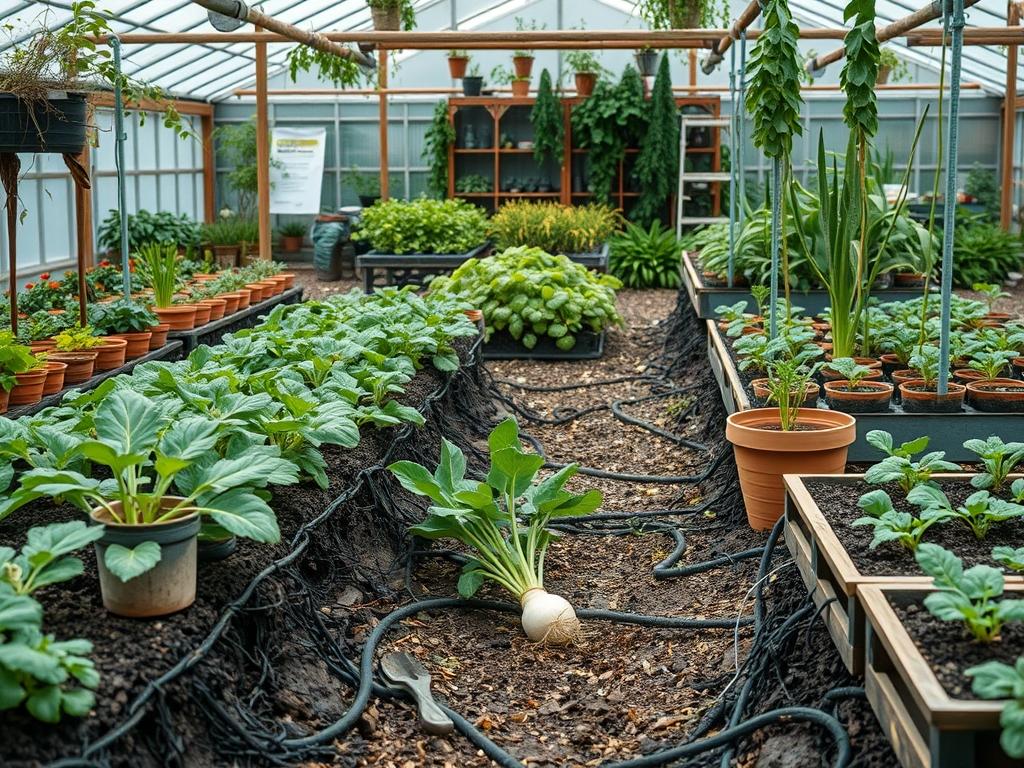
Irrigation planning must also be integrated into the design phase. Horseradish requires consistent moisture to prevent the roots from becoming overly woody or bitter. We typically recommend a drip irrigation system buried beneath a layer of organic mulch. This ensures that water reaches the root zone efficiently without wetting the foliage, which can lead to fungal issues. Walkways should be positioned at least 3 feet away from the planting center to prevent soil compaction from foot traffic. Compaction is the silent killer of root quality; it restricts oxygen flow and creates physical resistance that causes the taproot to fork or stunt.
Plant and Material Selection
| Plant Type | Sun Exposure | Soil Needs | Water Demand | Growth Speed | Maintenance Level |
| :— | :— | :— | :— | :— | :— |
| Armoracia rusticana | Full Sun / Part Shade | Deep, Silt Loam, pH 6.0-7.5 | Moderate to High | Fast | Low to Medium |
| Alliaria petiolata | Partial Shade | Moist, Rich Loam | Moderate | High | Medium (Invasive risk) |
| Rheum rhabarbarum | Full Sun | Well-drained, High Organic | High | Moderate | Medium |
| Asparagus officinalis | Full Sun | Sandy Loam, Excellent Drainage | Moderate | Slow | High |
| Symphytum officinale | Full Sun / Part Shade | Any, prefers moist soil | Moderate | Fast | Low |
Implementation Strategy
The implementation of a high-end garden layout begins with grading and site preparation. To meet the specific Horseradish Soil Needs, the designated area must be excavated to a depth of at least 2 feet. This is the time to address any underlying drainage issues. If the native soil is heavy clay, it must be amended with coarse sand and well-rotted compost to improve the tilth and porosity. We aim for a silt loam consistency. A professional-grade D-handle fork is used to loosen the sub-base, ensuring no hardpan layers remain to obstruct downward root growth.
Edging is the next step. To keep the horseradish contained, install a root barrier or a deep metal edging extending 12 inches below the surface. This prevents the lateral spread of thin, adventitious roots that can sprout new plants where they are not wanted. Once the boundary is set, the soil is backfilled in layers, incorporating a balanced 10-10-10 fertilizer or bone meal to provide the phosphorus necessary for vigorous root expansion.
The planting process itself involves setting root cuttings, often called sets, at a 45-degree angle. This professional technique encourages the carrot-like taproot to grow deep and thick. Space the sets 18 inches to 24 inches apart. After planting, a 3 inch layer of hardwood mulch or pine bark is applied across the entire surface. This mulch serves multiple purposes: it regulates soil temperature, suppresses weeds that would compete for nutrients, and preserves the moisture levels critical for the Horseradish Soil Needs.
Common Landscaping Failures
The most frequent mistake in managing this crop is ignoring the drainage requirements. While horseradish likes moisture, it cannot tolerate standing water. Saturated conditions lead to root rot and a complete loss of the architectural value of the plant as the leaves turn yellow and collapse. If your site has a high water table, utilizing French drains or bioswales nearby can help redirect excess runoff away from the root zone.
Another common failure is improper spacing and overcrowding. When plants are too close together, they compete for the same cation exchange capacity in the soil. This leads to thin, spindly roots that lack the characteristic heat and pungency of the plant. Furthermore, soil compaction from nearby construction or heavy equipment can ruin a site for years. If you are planning a larger backyard renovation, ensure that the horseradish beds are designated as non-compaction zones and marked off with silt fencing during the heavy work.
Finally, failing to refresh the soil leads to nutrient depletion. Even though horseradish is a hardy perennial, it is a heavy feeder. Without annual additions of organic matter or composted manure, the soil structure breaks down, and the root quality diminishes. Landscape architects often see gardens where the horseradish has been left for a decade without intervention; the result is a tangled mass of woody fibers rather than a harvestable, high-quality product.
Seasonal Maintenance
Spring maintenance is centered on growth initiation. As soon as the soil can be worked, we recommend side-dressing the plants with compost and checking the irrigation emitters for clogs. If you are seeking the highest quality roots, some professionals practice stripping, where they carefully lift the plant and remove small side roots before replanting. This focuses all the plant’s energy into a single, dominant taproot.
Summer management involves moisture monitoring and pest control. Aphids and flea beetles can occasionally mar the large leaves, impacting the plant’s ability to photosynthesize. A regular application of neem oil or a strong blast of water from a garden hose is usually sufficient to manage these. Ensure the mulch depth is maintained at 3 inches to protect the crown from excessive heat.
Autumn is the primary harvest season. Wait until after the first hard frost, which triggers the plant to move its sugars and essential oils into the root. This is when the flavor is most intense. Use a spading fork to carefully lift the roots, taking care not to snap the brittle tips. For winterizing, any remaining foliage should be cut back to the ground level once it has died back. In colder climates, an extra layer of straw mulch provides insulation against the freeze-thaw cycles that can heave roots out of the ground.
Professional Landscaping FAQ
How deep should the soil be for horseradish?
For optimal root quality, provide at least 18 inches to 24 inches of loose, unobstructed soil. This allows the taproot to grow straight and thick without hitting rocks or compacted clay layers that cause branching.
What is the best pH range for horseradish?
Horseradish performs most efficiently in slightly acidic to neutral soil, specifically a pH between 6.0 and 7.5. This range ensures that essential micronutrients remain bioavailable to the root system throughout the long growing season.
Can I grow horseradish in containers?
Yes, but they must be deep. Use a container at least 30 inches deep with excellent drainage holes. This mimics the Horseradish Soil Needs found in nature while keeping the invasive root system completely contained within the landscape design.
Do I need to fertilize every year?
Annual applications of organic compost or a low-nitrogen fertilizer are recommended. Avoid high-nitrogen blends, as they encourage excessive leaf growth at the expense of the root development and pungency that define a successful harvest.
How do I prevent horseradish from spreading?
The most effective method is using a physical root barrier made of high-density polyethylene or metal. Burying this barrier 12 inches deep around the planting area will significantly limit the lateral expansion of the rhizomes into other zones.