
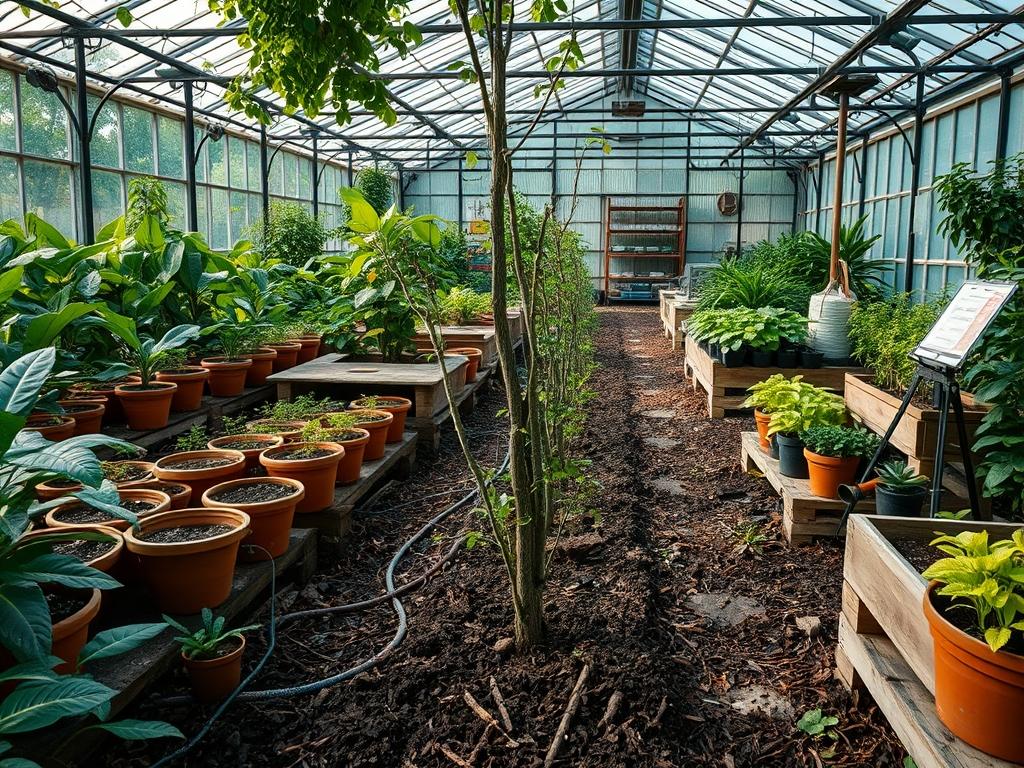
Establishing a high-impact landscape requires a deep understanding of structural botanical elements and the environmental conditions that allow them to thrive. The Ficus elastica, commonly known as the rubber tree, serves as a premier choice for designers seeking to add vertical interest, dense foliage, and a tropical aesthetic to outdoor environments. However, achieving rapid growth and maintaining the structural integrity of these specimens begins far below the surface. Rubber Tree Soil Prep is the single most important factor in determining whether a landscape installation will achieve its full potential or languish in a state of stunted development. In temperate and subtropical climates, particularly USDA zones 9b through 11, these trees act as structural anchors that enhance curb appeal and define the spatial flow of a backyard or courtyard. Without a rigorous approach to soil aeration, nutrient density, and drainage capacity, the tree will fail to establish the robust root system required to support its heavy, resinous limbs.
Expert landscape architects prioritize the biological foundation of the site before a single sapling is placed in the ground. When we consider outdoor functionality, we must look at how the tree interacts with the surrounding hardscape. A rubber tree that grows slowly often does so because the roots are struggling against compacted sub-grade materials or poor oxygen exchange within the soil profile. To accelerate the growth rate, one must engineer a soil environment that mimics the fertile, well-draining forest floors of Southeast Asia. This involves a calculated mixture of organic matter, inorganic aggregates, and strategic site grading. Proper preparation ensures that the tree achieves significant height and leaf spread within its first three growing seasons, providing the desired shade and privacy that many homeowners seek in a professional landscape design.
Landscape Design Principles
Integrating a rubber tree into a professional landscape requires more than just a focus on its health; it demands a keen eye for visual balance and spatial geometry. As a focal point, the Ficus elastica commands attention through its glossy, oversized leaves and dark structural lines. In large-scale residential designs, symmetry is often achieved by flanking a central entryway or a grand walkway with a matched pair of these trees. This creates a sense of arrival and formal elegance. However, the architect must account for the ultimate scale of the plant. A rubber tree cannot be treated as a static element; it is a dynamic, evolving structure that requires adequate clearance from retaining walls and building foundations to prevent future root-related displacement.
Elevation layers play a critical role in the surrounding garden beds. We typically design in tiers, placing the rubber tree as the highest layer to establish a canopy. Below this, mid-level shrubs and groundcovers are selected to complement the textures of the Ficus foliage. Visual balance is further maintained by using varied leaf shapes to contrast with the broad, oval leaves of the rubber tree. For instance, pairing the bold leaves of a Rubber Tree with the fine textures of Ornamental Grasses or the architectural spikes of Agave creates a compelling sensory experience. Irrigation planning must be integrated into this design early, ensuring that the water delivery system reaches the deep root zone without causing surface runoff or saturation near the trunk.
Plant and Material Selection
| Plant Type | Sun Exposure | Soil Needs | Water Demand | Growth Speed | Maintenance Level |
| :— | :— | :— | :— | :— | :— |
| Ficus elastica | Full Sun to Part Shade | Loamy, Well-Drained | Moderate | Fast | Medium |
| Strelitzia nicolai | Full Sun | Rich, Moist | High | Fast | High |
| Sansevieria | Part Shade to Shade | Sandy, Fast-Draining | Low | Slow | Low |
| Ophiopogon japonicus | Part Shade | Rich, Humus-based | Moderate | Medium | Low |
| Dracaena marginata | Part Shade | Loamy, Loose | Moderate | Medium | Medium |
| Codiaeum variegatum | Full Sun | Slightly Acidic | High | Medium | High |
Implementation Strategy
The process of Rubber Tree Soil Prep begins with a thorough site analysis and grading plan. Before any planting occurs, the soil must be tested for its current pH and drainage capacity. Use a Post Hole Digger or a Backhoe for larger installations to excavate a planting area that is at least three times the width of the root ball and 24 inches in depth. The goal is to break up the “glazing” on the sides of the hole that often occurs in clay-heavy soils. This allows the new roots to penetrate the surrounding earth more easily. If the site has poor natural drainage, a French drain or a subsurface gravel layer should be installed to prevent water from stagnating around the taproot.
Once the hole is prepared, the soil amendment process starts. Mix the native soil with Sphagnum Peat Moss, Perlite, and high-quality Compost in a 40/20/40 ratio. This creates a loamy texture that retains enough moisture for the plant’s needs while allowing excess water to move through the profile. For faster growth, incorporate a slow-release, high-nitrogen fertilizer and Mycorrhizal Fungi inoculants into the backfill. These fungi form a symbiotic relationship with the roots, significantly increasing their surface area for nutrient absorption. As you backfill the hole, use a Tamp or the handle of a Shovel to eliminate large air pockets, but avoid over-compacting the soil, as this will limit oxygen availability.
The finishing touches of the implementation strategy involves the application of a 3-inch layer of Organic Cedar Mulch around the base of the tree. This mulch layer serves multiple purposes; it regulates soil temperature, suppresses weed competition, and slowly breaks down to add further organic matter back into the soil. Ensure the mulch is kept a few inches away from the actual trunk to prevent bark rot. For professional edging, install a Steel Edger or a Stone Border to define the planting bed and prevent turf grass from encroaching on the root zone, which would otherwise compete for the nutrients intended for the tree.
Common Landscaping Failures
The most frequent failure in rubber tree management is poor drainage leading to root rot. While these trees appreciate moisture, they cannot survive in anaerobic conditions where the soil remains saturated for extended periods. Many novice landscapers make the mistake of digging a “bathtub” in heavy clay soil without providing an exit for the water. This results in a stagnant pool that kills the roots from the bottom up. Another common issue is soil compaction from heavy foot traffic or construction equipment. Compacted soil lacks the pore space necessary for gas exchange, effectively suffocating the tree and leading to leaf drop and brittle branches.
Root overcrowding is a significant concern for Ficus elastica due to its vigorous growth habit. If a rubber tree is planted in a space that is too confined, such as a narrow planter box or too close to a sidewalk, the roots will eventually seek out alternative paths, potentially lifting pavers or cracking concrete. Furthermore, improper spacing between the rubber tree and other large specimens can lead to competition for light and nutrients. This competition often results in one-sided growth patterns that ruin the aesthetic symmetry of the landscape. Finally, irrigation inefficiencies, such as using overhead sprayers that only wet the surface, fail to reach the deep root system, leaving the tree vulnerable during periods of drought.
Seasonal Maintenance
To maintain the rapid growth achieved through meticulous Rubber Tree Soil Prep, a seasonal maintenance schedule is required. In the spring, focus on fertilization and structural pruning. Apply a balanced, water-soluble fertilizer to provide a surge of nutrients as the tree enters its primary growing phase. Use Pruning Shears to remove any frost-damaged tips and to shape the canopy for optimal light penetration. This is also the best time to refresh the mulch layer to ensure moisture retention ahead of the summer heat.
During the summer months, irrigation management is the priority. Monitor the soil moisture using a Moisture Meter or by checking the top 2 inches of soil. The tree may require deep watering sessions twice a week during extreme heat. In the autumn, reduce fertilization to allow the tree to harden off its new growth before cooler temperatures arrive. Clear away fallen leaves and debris from the base of the tree to prevent the buildup of pests or fungal pathogens. In winter, even in warmer climates, growth will slow significantly. This is the period to inspect the tree for structural integrity and to ensure that the drainage systems remain clear of debris from winter storms.
Professional Landscaping FAQ
How deep should I dig for optimal Rubber Tree Soil Prep?
The planting hole should be at least 24 inches deep and three times as wide as the root ball. This ensures the roots can expand easily into loose, nutrient-rich soil rather than struggling against compacted native earth.
What is the best soil pH for Ficus elastica?
Rubber trees perform best in slightly acidic to neutral soil, typically between a pH of 5.5 and 7.0. Using Sulfur can lower the pH if your soil is too alkaline, which is common in many urban environments.
Can I accelerate growth with specific fertilizers?
Yes, use a high-nitrogen, slow-release fertilizer during the spring and summer. Nitrogen is the primary driver of leaf and stem development, which is essential for the rapid structural growth characteristic of a healthy Ficus elastica.
How do I prevent the roots from damaging my walkway?
Install a Root Barrier at least 18 inches deep between the tree and any hardscape. This redirects root growth downward and away from the surface, protecting your pavers and foundations while the tree continues to expand.
How often should I refresh the mulch around my tree?
Apply a fresh 3-inch layer of Hardwood Mulch once a year, preferably in early spring. This maintains the soil’s organic content and moisture-retention capabilities, which are vital for sustained, fast growth throughout the year.