
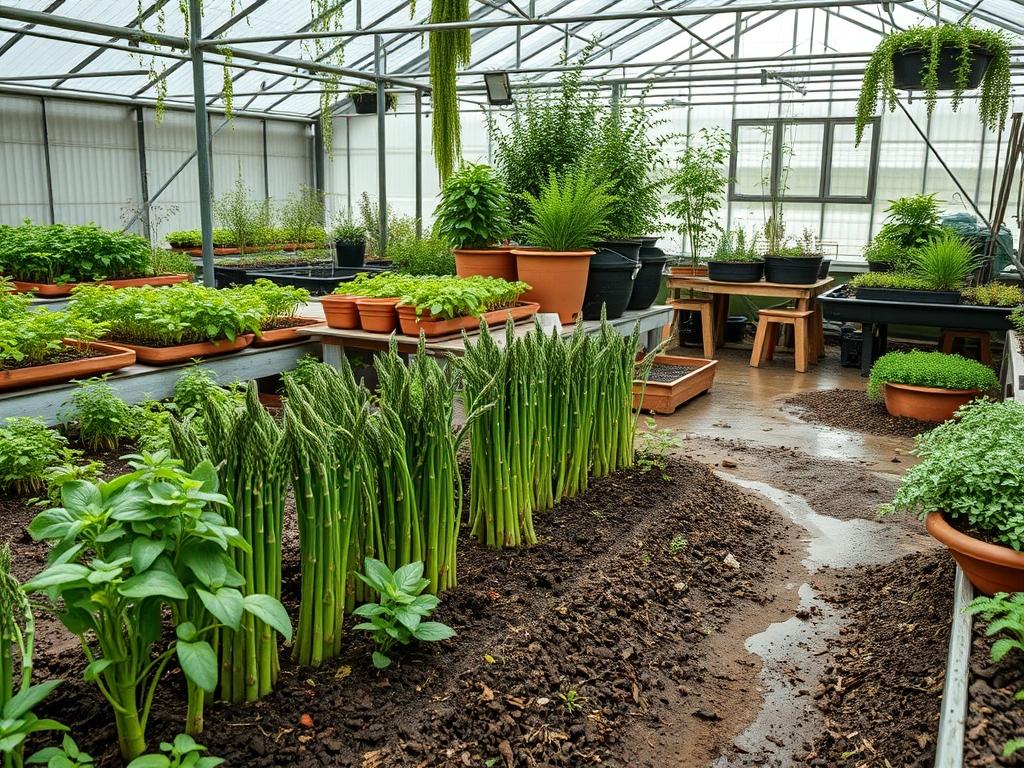
Planning a perennial garden requires a shift in perspective from the seasonal cycles of annuals to the generational timeline of long term landscape architecture. When considering the best soil for asparagus, a professional consultant must treat the site as a permanent installation akin to a stone patio or a retaining wall. Asparagus is a long lived investment that can remain productive for twenty years or more, meaning the initial ground preparation represents the single most important phase of the project. If the foundation is flawed, the entire installation will struggle regardless of subsequent fertilization or irrigation efforts. This crop demands a site that balances aesthetic integration with rigorous geotechnical requirements, ensuring that the fern like foliage contributes to the landscape curb appeal while the root systems thrive in an optimized subterranean environment.
The challenge of establishing this crop lies in its intolerance for poor drainage and acidic environments. In residential landscape design, we often encounter compacted subsoils or heavy clay that stifle root respiration and lead to crown rot. To achieve the best soil for asparagus, one must focus on the texture and composition of the earth well before the first crowns are placed in the ground. A successful installation requires an evaluation of the existing topography to ensure that water does not pool near the root zones. This is not merely a gardening task but a civil engineering necessity. By incorporating raised beds or strategic grading, a landscape architect can create a functional microclimate that supports the heavy nutritional demands of this high value crop.
Landscape Design Principles
Integrating a perennial vegetable into a formal landscape requires an understanding of visual balance and structural layers. Asparagus should be positioned as a backdrop or a mid layer in a garden border rather than a standalone patch in a remote corner. Because the plants grow to a height of 4 feet to 6 feet during the summer, they provide a soft, airy texture that contrasts beautifully with the rigid lines of boxwood hedges or flagstone walkways. This elevation layer allows the architect to create depth within a garden bed, using the asparagus fronds as a living privacy screen or a textural focal point that catches the wind. Symmetry can be achieved by flanking a central pathway with mirrored asparagus rows, turning a functional food source into a grand architectural feature.
The principle of irrigation planning is equally vital when designing the layout. Since asparagus roots can reach depths of 10 feet, the irrigation system must be designed to promote deep watering rather than frequent, shallow sprays. A drip irrigation line buried under a layer of hardwood mulch ensures that moisture reaches the core root zone without encouraging fungal growth on the foliage. Furthermore, the design must account for the expansion of the crowns over time. Proper spacing prevents overcrowding and allows for the necessary airflow to mitigate disease. By treating the asparagus bed as an anchored landscape element, you ensure that it complements the surrounding hardscaping and native plantings throughout the changing seasons.
Plant and Material Selection
Selecting the right materials for the bed construction is just as important as choosing the variety of the plant itself. The table below outlines the ideal specifications for a professional asparagus installation.
| Plant Type | Sun Exposure | Soil Needs | Water Demand | Growth Speed | Maintenance Level |
| :— | :— | :— | :— | :— | :— |
| Jersey Knight | Full Sun | Sandy Loam, pH 6.8 | Moderate / Deep | Moderate | Medium |
| Mary Washington | Full Sun | Well Drained Loam | Moderate | Slow / Est. | High |
| Purple Passion | Full Sun | Rich Organic Silt | Moderate | Moderate | Medium |
| Compost | N/A | High Organic Matter | N/A | N/A | Annual Add |
| Bone Meal | N/A | Phosphorus Rich | N/A | N/A | Planting Phase |
| Rock Phosphate | N/A | Long term mineral | N/A | N/A | Pre-planting |
Implementation Strategy
The process of creating the best soil for asparagus begins with an architectural excavation. Rather than simply tilling the surface, a professional landscape strategy involves the trench method. Dig a series of trenches approximately 12 inches deep and 12 inches wide. This allows for the precise placement of soil amendments exactly where the roots will need them most. The base of the trench should be loosened with a garden fork to prevent a hardpan layer from forming, which could otherwise trap water and cause root asphyxiation.
Once the trenches are prepared, a layer of aged compost or well rotted manure should be mixed with the native soil at the bottom of the trench. This organic matter provides the slow release nutrients required for long term health. Incorporate superphosphate or bone meal at a rate of 2 pounds per 50 feet of row to encourage strong root development. As the crowns are placed on small mounds within the trench, they are covered with only 2 inches of soil initially. As the shoots grow throughout the first season, the trench is gradually filled in with a mixture of sandy loam and organic compost. This technique ensures that the crown is deeply seated, protected from temperature fluctuations, and surrounded by the highest quality growing medium possible.
Finally, the application of mulch is the finishing touch of the implementation strategy. A 2 inch layer of shredded bark or oak leaf mold helps to suppress weeds and maintain consistent moisture levels. From a landscape design perspective, this mulch provides a clean, finished look that ties the garden bed into the surrounding outdoor environment. Edging the bed with steel landscape edging or cobblestone prevents the encroachment of turf grasses, which are the primary competitors for nutrients in an asparagus patch.
Common Landscaping Failures
The most frequent error in establishing an asparagus bed is a failure to address soil pH before planting. Asparagus is highly sensitive to acidic conditions. If the soil pH drops below 6.0, the plants will struggle to uptake essential nutrients, leading to stunted growth and thin spears. A professional soil test is a non negotiable first step. If the soil is too acidic, an application of pelletized lime must be worked deep into the ground. Waiting until after the plants are established to correct pH is often ineffective because the lime moves very slowly through the soil profile.
Another common pitfall is the neglect of drainage requirements. In many suburban landscapes, the construction process involves heavy machinery that leaves the soil severely compacted. Planting asparagus in these “dead” soils leads to immediate waterlogging. Without adequate pore space for air and water movement, the crowns will rot within the first two seasons. Professionals avoid this by utilizing raised planters or by installing subsurface drainage pipes if the site is located at the bottom of a slope. Furthermore, overcrowding is a significant issue. Many homeowners plant crowns too closely, seeking a dense look immediately. However, this restricts airflow and creates a breeding ground for pests like the asparagus beetle. Stick to a spacing of 12 inches to 18 inches between plants to ensure a healthy, long term canopy.
Seasonal Maintenance
Managing an asparagus landscape is a four season commitment that changes as the plants mature. In the spring, the focus is on the harvest and weed suppression. Using a sharp harvest knife, spears should be cut when they reach roughly 8 inches in height. It is crucial to stop harvesting once the diameter of the spears shrinks to the size of a pencil, as this indicates the plant needs to begin storing energy for the following year. During this time, a light application of a balanced 10-10-10 fertilizer can provide the necessary nitrogen boost for the upcoming fern growth.
Summer maintenance involves monitoring the architectural integrity of the ferns. As the foliage grows tall, it may require support from decorative stakes or jute twine to prevent the stalks from snapping in high winds. The ferns are the engine of the plant; they must remain green and healthy throughout the summer to photosynthesize and recharge the crowns. In the autumn, after the first hard frost has turned the foliage brown, the stalks should be cut down to 2 inches above the soil line. This removes potential overwintering sites for pests. Finally, winter care involves applying a fresh layer of compost and straw mulch to insulate the crowns against deep freezes. This cyclical care ensures the soil remains enriched and the plants remain vigorous for decades.
Professional Landscaping FAQ
How do I improve heavy clay soil for asparagus?
Incorporate large volumes of organic compost and coarse sand to a depth of 12 inches. Creating raised beds is the most effective way to ensure the drainage necessary for crown survival in clay dominated regions.
Can I plant asparagus in a decorative garden bed?
Yes, asparagus ferns offer exceptional secondary aesthetic value. Their feathery texture works well in the back of borders, provided the soil is deeply amended and the site receives at least 8 hours of full sun daily.
What is the ideal pH for the best soil for asparagus?
Asparagus thrives in a neutral to slightly alkaline environment. Aim for a pH between 6.5 and 7.0. Use agricultural lime to raise the pH if your soil test indicates acidic conditions prior to planting.
How deep should I bury the asparagus crowns?
Initial planting should occur in a 12 inch deep trench. Place the crown on a mound and cover with 2 inches of soil. Gradually fill the trench as the plant grows until the soil is level with the surrounding grade.
When is the best time to amend the soil?
Amendments should be integrated at least 6 months before planting. This allows the soil chemistry to stabilize and organic materials to begin breaking down, creating a nutrient rich environment for the new crowns in the spring.