
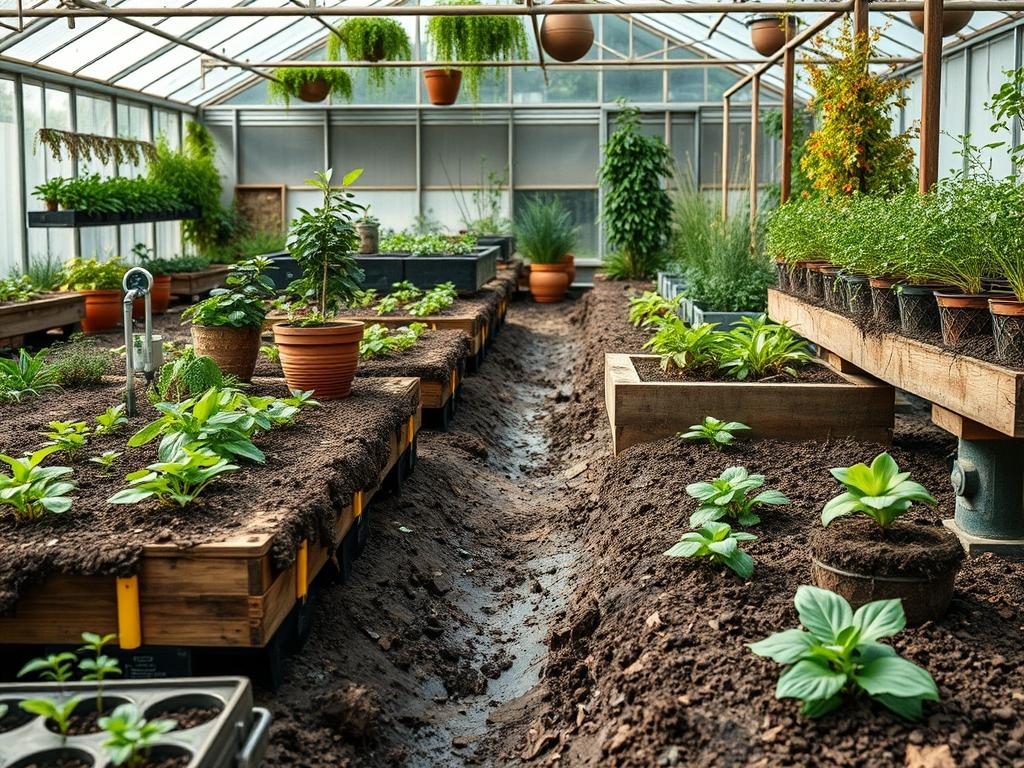
Silty soil presents a unique paradox for the modern landscape architect. While it is often rich in nutrients and remarkably fertile, its mechanical instability makes it one of the most difficult mediums to manage in high-slope or high-rainfall environments. Composed of fine particles that feel like flour when dry and slippery grease when wet, silt lacks the aggregate strength of sand and the cohesive bonding of clay. This makes it highly susceptible to transport by wind and water, leading to unsightly rills, sediment runoff, and compromised structural foundations. Effective Silty Soil Erosion Control requires a strategic blend of hydraulic engineering, soil science, and aesthetic design. Beyond merely stabilizing the earth, a professional consultant must consider how these interventions impact curb appeal and the overall functionality of the outdoor living space.
The primary challenge in managing silty environments is the particle size, typically ranging from 0.002 mm to 0.05 mm, which allows water to easily detach and carry away the topsoil. When a landscape is left untreated, the resulting erosion can undermine retaining walls, clog drainage systems, and destroy expensive turf. From a professional standpoint, the goal is to transform a vulnerable site into a resilient ecosystem that manages water velocity and improves soil structure. This involves transitionary zones that capture runoff, deep-rooting vegetation that anchors the substrate, and the thoughtful application of hardscaping to armor the most vulnerable slopes. By understanding the specific climate and topography of the site, we can design a landscape that remains beautiful and stable throughout the changing seasons.
Landscape Design Principles
Successful design in silty regions begins with the principle of slowing water down and encouraging infiltration. Because silt erodes through sheet and rill erosion, large, flat, unobstructed surfaces are often the first to fail. We utilize elevation layers to break up long slopes. Instead of a single, continuous incline, we design a series of terraces or plateaus. This “stair-step” approach reduces the kinetic energy of falling rainwater, preventing it from gaining the speed necessary to strip away the soil. Symmetry plays a role here as well; balanced planting beds on either side of a central walkway can help distribute irrigation more evenly, preventing the saturation of any single area.
Focal points should be placed on stable ground or atop engineered platforms. If a heavy feature, such as a large granite boulder or a decorative fountain, is placed directly on silty soil without a proper base, it will likely shift or sink over time. We recommend using compacted gravel bases or geotextile fabrics underneath focal points to distribute weight. Irrigation planning must be precise. Over-saturation is a leading cause of slope failure in silty soils. We favor drip irrigation over high-pressure sprayers because it delivers water directly to the root zone at a rate the fine-textured soil can actually absorb without turning into a slurry.
Walkways should also serve a secondary purpose as drainage buffers. Using permeable pavers or flagstone with wide, gravel-filled joints allows water to penetrate the ground rather than shedding off the surface in a concentrated stream. This visual balance between hard and soft surfaces ensures that the landscape feels intentional and structured, rather than a disorganized attempt at damage control. Every design element, from the pitch of a lawn to the placement of a French drain, must serve the dual purpose of aesthetic enhancement and hydraulic management.
Plant and Material Selection
Choosing the right materials is the most critical step in long-term stabilization. The following table highlights species and materials specifically chosen for their ability to thrive in and hold together silty substrates.
| Plant Type | Sun Exposure | Soil Needs | Water Demand | Growth Speed | Maintenance Level |
| :— | :— | :— | :— | :— | :— |
| Switchgrass | Full Sun | Adaptable | Low to Medium | Fast | Low |
| Creeping Juniper | Full Sun | Well-Drained | Low | Moderate | Minimal |
| Red-Osier Dogwood | Sun to Part Shade | Moist/Silty | High | Fast | Moderate |
| River Birch | Full Sun to Part Shade | Wet/Silty | High | Fast | Moderate |
| Blue Star Creeper | Part Shade | Moist | Medium | Moderate | Low |
| Vetiver Grass | Full Sun | Deep Silt | Medium | High | Low |
| Woodland Phlox | Shade | Humus-Rich | Medium | Moderate | Low |
Implementation Strategy
The implementation of a professional erosion control plan follows a strict hierarchy of operations, starting with grading and ending with finish mulching. First, the site must be surveyed to identify natural drainage patterns. Using a laser level, we determine the degree of the slope. Any incline greater than a 3:1 ratio typically requires mechanical stabilization, such as retaining walls or riprap. Grading should always move water away from the home foundation and toward established drainage outlets.
Once the rough grade is established, we install the primary drainage infrastructure. This may include trenching for 4-inch perforated PVC pipes or the creation of a dry creek bed. Dry creek beds are particularly effective for silty soil; by lining a shallow trench with geotextile fabric and filling it with river rock of varying sizes, typically 2 to 6 inches in diameter, we create a beautiful landscape feature that significantly slows down stormwater.
Next, we address edging and soil preparation. Silt is prone to compaction, so it is often necessary to incorporate organic compost or leaf mold into the top 6 inches of the soil to improve its structure and porosity. Wood edging or heavy-duty steel edging helps to define garden beds and prevents the “bleeding” of soil onto walkways. When planting, we prioritize a “staggered” layout rather than straight rows. Staggered plants act as a sieve, catching sediment as it moves downhill.
The final step is the application of mulch. For silty soil, we avoid lightweight mulches that float away during heavy rain. Instead, we use shredded hardwood mulch or pine nuggets. We recommend a depth of 3 to 4 inches, ensuring the mulch is tucked tightly around the base of the plants. For steep banks, a jute mesh or coconut fiber blanket should be pinned over the soil before planting. These biodegradable mats hold the silt in place for two to three years, giving the root systems of your native grasses and shrubs enough time to fully interlock.
Common Landscaping Failures
The most frequent mistake in managing silty soil is improper drainage logic. Many homeowners attempt to block water with solid barriers, only to find that the water eventually undermines the barrier or flows around it with increased force. You cannot stop water; you can only direct it. Another common failure is root overcrowding. While dense planting is good for erosion control, placing plants too close together leads to competition for nutrients and stunted root development. Without deep, expansive roots, the soil remains loose.
Soil compaction is a silent killer in silty landscapes. Excessive foot traffic or the use of heavy machinery during wet conditions collapses the tiny air pockets in the silt. This results in a “concrete” effect when dry, where roots cannot penetrate, and a “runoff” effect when wet, as water cannot soak into the ground. Furthermore, irrigation inefficiencies often lead to “piping.” This occurs when a concentrated stream of water, such as a leaky pipe or a misdirected sprinkler head, carves a subterranean tunnel through the silt, eventually causing the surface above to collapse.
Seasonal Maintenance
Landscape management is a year-round commitment. In the spring, the focus is on inspection and repair. Winter freeze-thaw cycles can heave plants out of the ground and crack hardscaping. We recommend checking all drainage grates for debris and reapplying mulch to areas where the soil has become exposed. This is also the best time for soil testing to ensure the nutrient-rich silt maintains the proper pH for your selected plant species.
During the summer, the priority shifts to irrigation calibration. As silty soil dries out, it can become hydrophobic and repel water. Slow, deep watering is essential to maintain moisture at the root level without causing surface runoff. If you notice cracks forming in the soil, it is a sign that the silt is overly dry and shrinking.
In the autumn, clearing fallen leaves is vital. While some leaf litter is beneficial, a thick mat of wet leaves can smother the groundcovers that are holding your soil in place. This is also the ideal season for overseeding any thin patches in the lawn with tall fescue or perennial ryegrass, which provide a quick green cover and extra root mass for the winter.
Winter maintenance involves protecting the soil from wind erosion and de-icing chemicals. If you live in a region with heavy snow, be mindful of where you pile shoveled snow. As it melts, a large pile can create a concentrated stream of water that can wash away gallons of silty topsoil in a single afternoon. Using windbreaks or burlap wraps for sensitive shrubs can also prevent the drying winds from desicating the plants during their dormant phase.
Professional Landscaping FAQ
What is the fastest way to stop silt erosion?
The fastest method involves installing erosion control blankets made of coconut fiber or jute. Combine these with shredded hardwood mulch and fast-growing annual ryegrass to provide immediate physical stabilization while permanent root systems establish over several months.
Can I use sand to improve silty soil drainage?
Adding sand to silt is generally discouraged unless you add significant volumes. In small amounts, sand and silt can combine to create a substance similar to low-grade concrete, which severely limits root growth and water penetration throughout the garden.
Why does my silty soil turn to mud so quickly?
Silt particles are small and do not clump together like clay. The lack of organic matter and structural pores means the soil saturates almost instantly, losing its load-bearing capacity and turning into a fluid slurry under even moderate rainfall.
Are retaining walls necessary for silty slopes?
If the slope exceeds a 3:1 gradient, a retaining wall is often necessary. Silt has a low “angle of repose,” meaning it naturally wants to flatten out. Walls provide the structural restraint required to prevent large-scale slope failure.
What is the best mulch for silty areas?
Shredded hardwood mulch is superior because the jagged edges of the wood fibers interlock, creating a heavy mat that resists floating. Avoid light materials like straw or cocoa hulls, which easily wash away during standard rain events.