
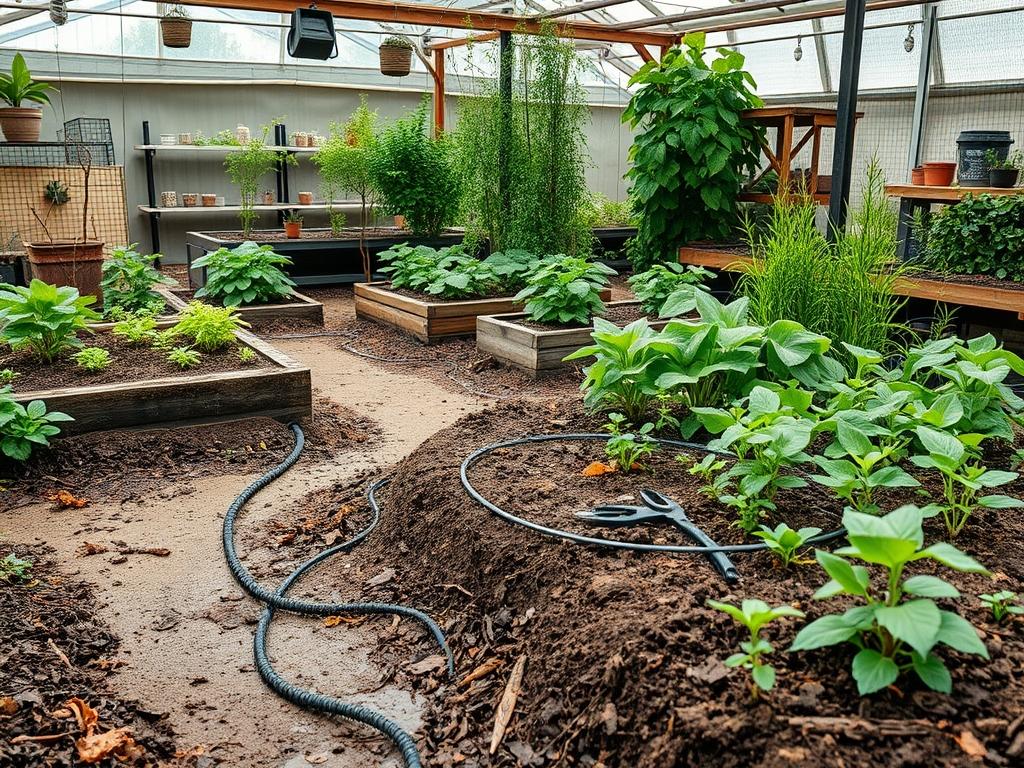
Designing a landscape atop high-percentage sand particles presents a unique set of hydraulic challenges that can frustrate even seasoned property owners. Sandy soil, often referred to as “hungry soil,” lacks the structural complexity needed to trap moisture and nutrients, leading to a rapid leaching effect that leaves root zones parched just hours after irrigation. From a professional landscape architecture perspective, achieving sustainable Sandy Soil Water Retention is not merely about adding more water; it is about re-engineering the soil profile to increase its water-holding capacity while maintaining the drainage benefits that sand naturally provides. A successful garden plan in these conditions must balance aesthetic curb appeal with rugged functionality, ensuring that the outdoor environment remains lush without becoming a drain on local water resources. Through strategic material selection and advanced soil science, we can transform a porous substrate into a thriving, resilient ecosystem.
Landscape Design Principles
Symmetry and visual balance in sandy environments often rely on structural hardscaping to provide the “bones” of the garden when delicate flora might struggle. When planning your layout, consider the use of Retaining Walls and Terracing as a primary design principle. By breaking up a slope into level tiers, you physically slow the movement of water across the surface, giving it more time to penetrate the sandy layers before it disappears into the subsoil. These elevation changes create distinct planting pockets where high-quality amendments can be concentrated.
Focal points should be used to draw the eye toward resilient features, such as large Basalt Boulders or artistic Weathered Steel sculptures, reducing the pressure to maintain a perfectly green lawn in arid conditions. Irrigation planning must be hyper-localized; rather than broad-spectrum spray heads, a professional design utilizes Drip Irrigation systems with pressure-compensating emitters. This ensures water is delivered directly to the root ball at a rate the sand can actually absorb. Furthermore, the use of Walkways made from permeable materials like Decomposed Granite or Flagstone with wide gaps allows rainfall to recharge the groundwater rather than sheeting off the property and causing localized erosion.
Plant and Material Selection
Selecting the right biological and mineral components is the cornerstone of managing Sandy Soil Water Retention. The goal is to introduce materials that bridge the gap between large sand grains.
| Plant Type | Sun Exposure | Soil Needs | Water Demand | Growth Speed | Maintenance Level |
| :— | :— | :— | :— | :— | :— |
| Lavender (Lavandula) | Full Sun | Well-drained/Sandy | Low | Moderate | Low |
| Russian Sage (Salvia yangii) | Full Sun | Poor to Average | Very Low | Fast | Low |
| Blanket Flower (Gaillardia) | Full Sun | Light/Sandy | Low | Fast | Medium |
| Switchgrass (Panicum virgatum) | Full Sun to Part Shade | Thrives in Sandy | Low to Moderate | Moderate | Very Low |
| Yucca (Yucca filamentosa) | Full Sun | Any (Highly porous) | Very Low | Slow | Low |
| Purple Coneflower (Echinacea) | Full Sun | Deep Organics | Moderate | Moderate | Medium |
In addition to plants, the materials used for soil structure are vital. Bentonite Clay acts as a powerful binder, while Biochar provides a permanent, porous housing for moisture and beneficial microbes.
Implementation Strategy
To improve Sandy Soil Water Retention, a systematic approach is required. Here are 15 creative ways to implement this into your backyard or garden layout:
1. Incorporating Finished Compost: Begin by tilling 4 inches of high-quality Compost into the top 8 to 12 inches of the soil. This introduces the organic carbon necessary to bind sand particles together.
2. Bentonite Clay Application: This specific clay expands when wet. Mixing it into sandy beds creates a “magnetic” attraction for water molecules, significantly slowing vertical drainage.
3. Biochar Seeding: Use Biochar that has been “charged” with liquid fertilizer. Its microscopic honeycomb structure holds water like a sponge and never decomposes.
4. Hügelkultur Mounds: Bury large logs and woody debris under your planting beds. As the wood decays over a decade, it acts as an underground reservoir that stores winter rains for summer use.
5. Deep Mulching: Apply a 3 inch layer of Coarse Wood Chips or Arborist Mulch. This prevents surface evaporation and eventually breaks down into moisture-retaining humus.
6. Sheet Mulching (Lasagna Gardening): Layer cardboard, green waste, and brown waste directly over sandy patches. This builds a rich topsoil layer without disturbing the existing soil biology.
7. Green Manures: Plant cover crops like Crimson Clover or Hairy Vetch. Their roots stabilize the sand, and when turned over, they provide a massive boost of organic matter.
8. Trench Composting: Dig deep trenches in garden walkways and fill them with kitchen scraps and straw. This creates localized moisture zones that nearby plant roots will seek out.
9. Hydraulic Lift Gardening: Plant deep-rooted Native Trees like Oak or Hickory. Their taproots draw water from deep aquifers, and at night, they release some of that moisture into the upper sandy layers where smaller plants can reach it.
10. Ollas and Clay Pot Irrigation: Bury unglazed terracotta pots (Ollas) near your most prized plants. Fill them with water; the porous clay will slowly seep moisture into the sand only when the soil is dry.
11. Mycorrhizal Fungi Inoculation: Add beneficial fungi to the root zone during planting. These organisms extend the reach of a plant’s root system by up to 100 times, allowing them to scan a larger volume of sandy soil for water.
12. Silt and Loam Integration: If the budget allows, importing a small percentage of Silt or Loam to mix into the top layer can change the soil texture class entirely, moving it from “Sand” to “Loamy Sand.”
13. Vermicompost and Earthworm Casting: Use Worm Castings as a top dressing. The mucus-coated aggregates produced by worms are incredibly stable and hold water much better than raw sand.
14. Bio-swales and Rain Gardens: Design shallow depressions lined with moisture-loving native grasses. These catch runoff from roofs and driveways, forcing the water to sit and soak into the sandy substrate.
15. Liquid Seaweed and Kelp Treatments: Regular applications of Liquid Kelp help plants develop thicker cell walls, making them more resistant to the drought stress inherent in sandy plots.
Common Landscaping Failures
The most frequent mistake in sandy soil management is the “over-irrigation trap.” Property owners often see dry surface sand and set their timers to run daily for short bursts. This actually encourages shallow root growth and leads to rapid salt buildup. Instead, irrigation should be deep and infrequent to pull roots down into the cooler, moister depths.
Another failure is the use of plastic weed barriers. In sandy soil, these barriers prevent the natural integration of organic mulch into the soil profile and can cause the sand beneath to become hydrophobic. Furthermore, improper grading can lead to “channeling,” where water carves a path through the soft sand and exits the property before it can be absorbed. Soil compaction is also a hidden danger; even though sand is porous, heavy foot traffic can crush the small amount of organic structure present, creating a concrete-like surface that repels water. Finally, neglecting pH Balancing is a common pitfall. Sandy soils are often acidic; if the pH is off, plants cannot uptake the water and nutrients provided, leading to a “ghost drought” where moisture is present but inaccessible.
Seasonal Maintenance
Spring: This is the season for amendment. As the ground warms, integrate new Compost and check the integrity of your Drip Irrigation lines. Apply a fresh layer of Mulch before the summer heat intensifies to lock in spring rains.
Summer: Focus on moisture monitoring. Use a Soil Moisture Meter to check depths of 6 inches or more. If the sand feels bone-dry at that depth, increase the duration of your watering cycles but not the frequency. Avoid heavy pruning, as this stresses plants that are already struggling with low water retention.
Autumn: Plant your Cover Crops. This is also the ideal time for “top-dressing” with Worm Castings or Leaf Mold. The cooling temperatures reduce evaporation, making it the perfect window for the biological components of your soil to knit together.
Winter: In colder climates, sandy soil can undergo rapid freeze-thaw cycles that heave young plants out of the ground. Apply a heavy layer of Straw or Evergreen Boughs to insulate the root zones and maintain consistent soil temperatures.
Professional Landscaping FAQ
How often should I water a sandy garden?
Rather than daily light misting, aim for deep watering twice a week. Ensure moisture penetrates at least 8 inches deep. This encourages roots to dive deep, accessing water that has not yet evaporated from the surface layers.
Can I just add clay from a local construction site?
Avoid using raw, unidentified clay. It can contain contaminants or high salt levels. Instead, use specific amendments like Bentonite or Zeolite, which are processed to maximize surface area and water cation exchange without ruining soil structure.
Why does my mulch disappear so fast in sand?
Sandy soil is highly oxygenated, which accelerates the decomposition of organic matter by aerobic bacteria. This is actually a sign of a healthy biological cycle. Simply replenish the Wood Chips annually to maintain a consistent protective barrier.
Is a lawn possible on sandy soil?
It is possible but requires high maintenance. If you must have turf, choose Fescue or Zoysia varieties known for deep root systems. Prioritize high-percentage organic top-dressing every spring and autumn to improve the sand’s water-holding capacity.
What is the best tool for sandy soil?
A Broadfork is ideal. It allows you to aerate and integrate amendments deeply into the sand without flipping the soil layers, which can destroy the delicate fungal networks necessary for moisture transport and plant health in arid conditions.