
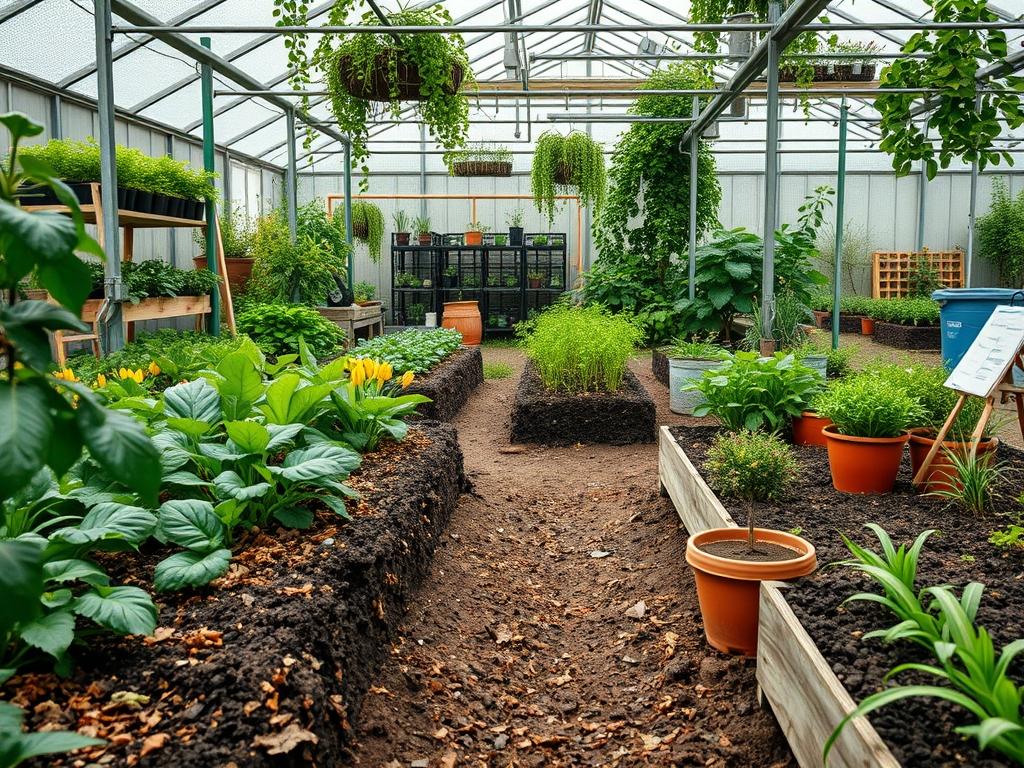
The seasonal transition between winter dormancy and spring vitality represents the most critical window for any professional landscape endeavor. As an outdoor environment consultant, I frequently encounter homeowners who are eager to stimulate plant growth the moment the first thaw occurs; however, the primary constraint is rarely the ambient air temperature. Instead, it is the latent cold held within the soil profile. Soil acts as a massive thermal heat sink, retaining the frigid temperatures of winter long after the sun has begun to warm the surface. This thermal inertia can delay the metabolic processes of root systems, leading to stunted growth or even root rot in early season plantings. To overcome this, we must employ specific strategies to manipulate the microclimate of the garden bed. By warming the soil prematurely, we effectively extend the growing season by three to four weeks, allowing for higher yields in edible gardens and more robust displays in ornamental landscapes. This approach not only enhances the curb appeal of a property by ensuring lush, early greenery, but it also optimizes the functionality of outdoor living spaces by providing a more vibrant environment during the first temperate days of the year.
Landscape Design Principles
Successful garden planning requires a sophisticated understanding of spatial dynamics and environmental physics. When architecting a landscape with early planting in mind, we must prioritize elevation and orientation. Symmetry often dictates the initial layout, providing a sense of order that guides the eye toward focal points such as ornamental trees or architectural water features. However, visual balance must coexist with thermal efficiency. We utilize elevation layers to facilitate both drainage and heat absorption. By creating mounded garden beds or tiered retaining walls, we expose a greater surface area of the soil to the sun’s rays, which accelerates the warming process through increased solar radiation absorption.
Irrigation planning is another pillar of professional design that directly impacts soil temperature. We must ensure that walkways and hardscape elements do not impede the natural flow of water or create shadows that keep soil temperatures depressed. Linear pathways made of dark materials, such as Basalt or Dark Slate, serve as heat collectors that radiate warmth into adjacent planting zones. Focal points, like a South-facing brick wall, can serve as a massive thermal battery, absorbing energy during the day and releasing it slowly through the night. This strategic placement of elements ensures that the landscape is not just a static collection of plants, but a dynamic system designed to mitigate the harshness of the early spring climate.
Plant and Material Selection
Selecting the right biological and physical components is essential for a high-performance spring landscape. The following table outlines specific selections that thrive when used in conjunction with soil warming techniques.
| Plant Type | Sun Exposure | Soil Needs | Water Demand | Growth Speed | Maintenance Level |
| :— | :— | :— | :— | :— | :— |
| English Peas | Full Sun | Well-drained | Medium | Fast | Moderate |
| Lacinato Kale | Partial Sun | Nitrogen-rich | High | Moderate | Low |
| Giant Pansies | Full Sun | Humus-rich | Medium | Moderate | Low |
| Red Tulips | Full Sun | Sandy Loam | Low | Fast | Low |
| Snapdragons | Full Sun | Loamy | Medium | Moderate | Moderate |
In addition to plant material, the choice of Geotextiles and Mulches is paramount. While wood chips are standard for summer, they can be counterproductive in the early spring as they insulate the cold soil from the sun. Therefore, we often recommend temporary applications of 6-mil Black Polyethylene or Infrared Transmitting (IRT) Plastic to trap heat before the final layer of organic mulch is applied.
Implementation Strategy
The process of preparing a backyard for early planting begins with precise grading and drainage management. If the site is flat, we must create a slight grade to ensure that cold spring rains do not saturate the soil; saturated soil requires significantly more energy to warm than well-drained soil. Once the grading is established, we implement the first of our ten hacks: the installation of Raised Garden Beds. Elevating the soil even 12 inches above the grade allows the earth to warm much faster than the surrounding ground.
Second, we utilize Black Plastic Mulching as a temporary ground cover. This material absorbs solar energy and transfers it directly to the soil surface. Third, for high-value specimens, we install Wall-o-Water protectors, which use the latent heat of water to insulate young plants. Fourth, we suggest the use of Glass Cloches for individual focal plants, creating a miniature greenhouse effect. Fifth, for larger areas, Floating Row Covers made of spun-bonded polyester provide a few degrees of frost protection while allowing light to penetrate.
Sixth, we can implement the “Hotbed” method by burying 6 inches of fresh, uncomposted manure at a depth of 18 inches. As the manure decomposes, it generates thermogenic heat, warming the root zone from below. Seventh, we utilize Thermal Mass Rocks, such as large Granite Boulders, placed on the north side of plants to reflect light and radiate heat. Eighth, temporary Clear Plastic Tents can be erected over entire beds to trap heat. Ninth, we recommend Soil Aeration using a Broadfork to break the surface tension, allowing warm air to penetrate deeper into the soil profile. Finally, the tenth hack involves the use of Sub-surface Irrigation with slightly tempered water to gently raise the internal temperature of the garden beds.
Common Landscaping Failures
One of the most frequent mistakes in early spring gardening is the improper application of mulch. While a thick layer of Cedar Mulch is excellent for moisture retention in July, applying it too early in the spring acts as a thermal barrier, trapping the winter frost in the ground. Professional landscapers wait until the soil has reached a consistent 55 degrees Fahrenheit at a depth of 4 inches before applying organic covers. Another common failure is neglected drainage. Without a proper exit for meltwater, such as a French Drain or a Gravel Sump, plants suffer from root overcrowding and anaerobic conditions caused by soil compaction.
Improper spacing is a recurring issue when gardeners fail to account for the mature width of early-season perennials. Crowded plants compete for sunlight and air circulation, increasing the risk of fungal infections in the damp spring air. Furthermore, many amateurs ignore the importance of irrigation efficiency. In the spring, over-watering is more dangerous than under-watering. Cold, wet soil is a primary vector for Pythium and other root-rot pathogens. Ensuring that the landscape has a properly calibrated Drip Irrigation System with a rain sensor can prevent these costly errors.
Seasonal Maintenance
Landscape management is a year-round commitment that requires a proactive approach. In the spring, the focus is on soil preparation, warming, and the removal of winter debris. This is the time to check the structural integrity of Retaining Walls and clean out Drainage Grates. As we transition into summer, the priority shifts to moisture conservation and pest management. Mulch depth should be increased to 3 inches to protect the root systems from extreme heat.
In the autumn, the goal is preparation for the coming dormancy. This involves planting Spring-flowering Bulbs and applying a late-season fertilizer to boost root health before the ground freezes. Finally, winter maintenance involves protecting sensitive woody ornamentals from desiccation. Using Burlap Wraps or Anti-transpirant Sprays can prevent winter burn. By maintaining a strict schedule, the landscape remains a functional and beautiful asset throughout every season, providing a high return on investment for the property owner.
Professional Landscaping FAQ
How do I accurately check my soil temperature?
Use a dedicated Soil Thermometer inserted to a depth of 4 inches in several locations. Take readings in the early morning for the most accurate baseline, as this represents the daily minimum temperature before solar heating begins.
Can I use clear plastic instead of black plastic?
Yes; clear plastic actually warms the soil faster because it allows solar radiation to pass through and trap heat via the greenhouse effect. However, black plastic is often preferred by professionals because it also effectively suppresses early-season weed growth.
When is it safe to remove soil-warming covers?
Covers should generally remain in place until the ambient nighttime temperatures consistently stay above 45 degrees Fahrenheit. For warm-season crops like Tomatoes, wait until the soil itself has reached a stable 60 degrees Fahrenheit before removing all protection.
Do raised beds really warm up faster than the ground?
Absolutely. Because they are elevated, they have more surface area exposed to the air and sun. They also drain much better than level ground, and dry soil warms significantly faster than water-logged soil due to lower specific heat capacity.
Should I till my soil to help it warm up?
While light aeration with a Broadfork is beneficial, heavy power tilling can destroy soil structure and kill beneficial organisms. It is better to use localized warming techniques rather than disturbing the entire biological profile of the garden bed.