
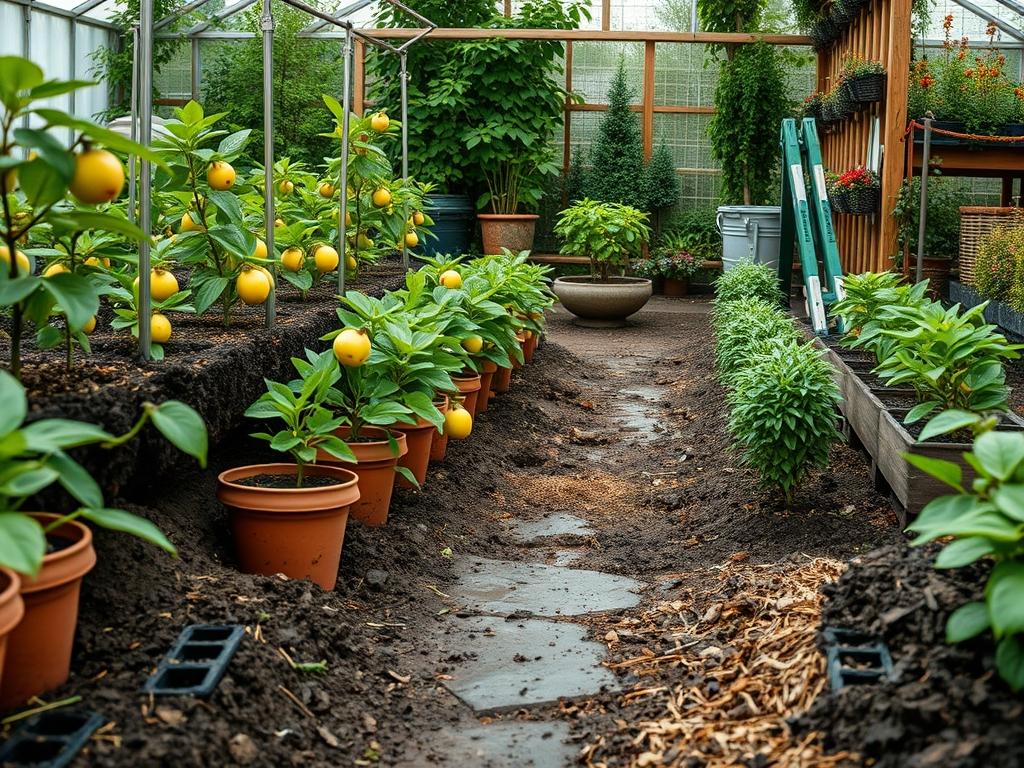
Integrating the common quince, or Cydonia oblonga, into a modern landscape requires more than a simple hole in the turf. This species acts as a bridge between the traditional orchard and the sophisticated ornamental border. As a landscape architect, I view the quince as a dual-purpose asset. It provides architectural interest through its twisted, sculptural branching and yields large, aromatic fruit that transitions from lime green to brilliant gold. The challenge often lies in the balance between aesthetic placement and the biological demands of the tree. Quince is notoriously sensitive to soil quality and drainage. Selecting a site requires an understanding of microclimates within the property. Cold air pockets can damage early blossoms, while excessive wind may bruise the developing fruit. Most owners prioritize curb appeal, but the functionality of the tree depends entirely on the subsurface environment. If the soil is not prepared to professional standards, the tree may survive as a shrub without ever achieving its structural potential or providing a high-quality harvest.
Successful landscape integration begins with the site’s topography. Quince prefers a sunny, sheltered position. The tree is often used as a specimen plant because of its unique silhouette. However, its tendency toward fire blight and leaf spot means air circulation is paramount. We must avoid placing them in stagnant corners. Proper Quince Soil Preparation starts months before the tree arrives. It involves deep mechanical aeration and the integration of substantial organic matter. To maximize fruit quality, we look for a soil profile that mimics the silty, rich banks of its native Caucasian origins. When these environmental factors align, the quince becomes a cornerstone of the garden, offering a reliable harvest and a striking visual anchor that changes through the four seasons.
Landscape Design Principles
Incorporating fruit trees into a residential or commercial landscape requires a commitment to structural symmetry and focal point management. A quince tree should never be tucked away in a neglected corner. Instead, treat it as a primary focal point. Its large, pale pink blossoms in spring provide a soft texture that contrasts beautifully against traditional hardscaping like Blue Stone or Concrete Pavers. To achieve visual balance, consider the elevation layers of your planting bed. The quince serves as the overstory or mid-story depending on the cultivar. Underneath, low-growing perennials or groundcovers should be selected to complement the tree without competing for its high water requirements.
Irrigation planning is perhaps the most critical design element for fruit quality. We often design “zoned” irrigation systems where the quince receives deeply channeled water, separate from the shallow-rooted turfgrass. This ensures the tree develops a resilient root system capable of supporting heavy fruit loads. Walkways should be designed with enough offset to account for the tree’s mature canopy spread, which can reach 15 feet. Placing a stone path too close can lead to soil compaction, which is the primary enemy of orchard health. Use visual lines to lead the eye toward the tree. For instance, a linear path of Decomposed Granite can terminate at a circular stone border surrounding the tree, creating an intentional, polished look that elevates the entire backyard design.
Plant and Material Selection
| Plant Type | Sun Exposure | Soil Needs | Water Demand | Growth Speed | Maintenance Level |
| :— | :— | :— | :— | :— | :— |
| Cydonia oblonga (Quince) | Full Sun | Rich, Well-Drained | High | Moderate | Medium |
| Lavandula angustifolia | Full Sun | Gritty, Alkaline | Low | Fast | Low |
| Rosmarinus officinalis | Full Sun | Sandy, Dry | Low | Moderate | Low |
| Compost (Organic) | N/A | High Nutrient | N/A | N/A | High |
| Hardwood Mulch | N/A | Moisture Retaining | N/A | N/A | Low |
| Mycorrhizal Fungi | N/A | Root Catalyst | N/A | N/A | N/A |
Implementation Strategy
The process begins with professional site grading. Before the first shovel hits the ground, we must ensure the landscape slopes away from the tree at a 2 percent grade. This prevents water from pooling at the collar, which is a common cause of rot. For Quince Soil Preparation, we recommend excavating a hole at least 3 feet wide and 24 inches deep. This is significantly larger than the root ball. The goal is to create a “reservoir” of loose, nutrient-dense soil that the young roots can easily penetrate. If the native soil is heavy clay, we incorporate Expanded Shale or Coarse Sand to break the molecular bonds of the clay particles.
Once the hole is prepared, mix the backfill soil with 4 inches of aged Compost and a handful of Bone Meal to encourage phosphorus uptake. We avoid synthetic high-nitrogen fertilizers during the initial planting phase, as this can lead to weak, leggy growth that is susceptible to pests. After the tree is set at the correct depth—ensuring the graft union is 2 inches above the final soil line—we install a professional-grade edging. A Steel Edging or Brick Header helps keep the mulch contained and prevents turfgrass from encroaching. Finish with a 3-inch layer of Shredded Hardwood Mulch, keeping it clear of the trunk to prevent fungal intrusion.
Common Landscaping Failures
The most frequent error in quince management is ignoring drainage. In many residential developments, the soil is heavily compacted by construction machinery. If you plant a quince in a “clay bowl” without proper remediation, the roots will eventually suffocate. This lack of oxygen leads to poor fruit set and bitter, woody pulp. Another failure involves improper spacing. While a young quince looks modest in a 5-gallon pot, it will eventually occupy a large volume of space. Crowding it against a Retaining Wall or a house foundation limits sunlight and restricts the airflow necessary to prevent foliar diseases.
Irrigation inefficiencies also plague many amateur landscapes. Drip irrigation is the gold standard for fruit trees. Overhead sprayers should be avoided because they wet the foliage, which invites fungal spores. Furthermore, owners often fail to adjust their watering schedules as the tree matures. A sapling needs frequent, shallow watering, but a mature tree requires deep, infrequent soaking to reach the lower root zones. Finally, neglecting the soil pH can be fatal for fruit quality. Quince thrives in a range of 6.0 to 7.0. If the soil becomes too alkaline, the tree will suffer from iron chlorosis, characterized by yellowing leaves with green veins, which drastically reduces the sugar content of the fruit.
Seasonal Maintenance
Spring is the season of intervention. This is when we perform structural pruning to open the center of the canopy. Removing “water sprouts” and crossing branches ensures sunlight reaches the interior fruit clusters. It is also the time to apply a slow-release organic fertilizer. As summer arrives, the focus shifts to moisture management. During heat waves, the tree may require an extra 10 gallons of water per week. We monitor the fruit for signs of thinning. If the tree produces too many quinces, we manually remove some to ensure the remaining ones reach a diameter of at least 3 to 4 inches.
In autumn, the harvest is the priority. Quince fruit should be picked when the skin turns completely yellow and the fuzzy “down” can be easily rubbed off. After the harvest, clear all fallen fruit and leaves from the base of the tree. This sanitation step is vital for preventing the overwintering of pests. Winter is the time for dormant oil sprays and structural assessment. With the leaves gone, you can see the true architecture of the tree. Check for any signs of canker or bark damage. Replenishing the mulch layer by 2 inches during the winter protects the root zone from extreme freeze-thaw cycles, ensuring the tree emerges vigorous in the spring.
Professional Landscaping FAQ
How does soil texture affect quince fruit flavor?
Heavy clay soils often produce fruit with a more astringent taste. Quince Soil Preparation that includes Silt and Organic Matter allows for better nutrient transport. This results in a higher sugar-to-acid ratio and a more aromatic, floral harvest.
Can I grow quince in a large raised planter?
Yes, but the planter must be at least 48 inches wide and 36 inches deep. You must use a high-quality Potting Mix blended with Topsoil to provide the necessary weight and mineral content for fruit production.
What is the best way to fix poor drainage in an existing site?
Install a French Drain or a subterranean Dry Well near the tree. These systems divert excess groundwater away from the root zone. Amending the surface with Gypsum can also help improve the structure of sodic clay soils.
How much sun does a quince tree really need for fruit?
For the best fruit quality, a minimum of 8 hours of direct sunlight is required. While the tree can grow in partial shade, the fruit will be smaller, less colorful, and significantly more prone to fungal infections and rot.
What type of mulch is best for quince trees?
Use Hardwood Bark Mulch or Arborist Chips. These materials break down slowly, adding long-term organic matter to the soil. Avoid rocks or decorative gravel, as they reflect heat and can stress the tree’s shallow feeder roots during summer.