Developing a high-end landscape requires more than just a keen eye for aesthetics; it demands a deep understanding of the sub-surface environment and its chemical composition. For many homeowners and landscape developers, the crabapple tree serves as the ultimate structural centerpiece, offering a dramatic seasonal shift from delicate spring blossoms to a rigid, architectural winter form. Achieving this visual impact depends entirely on the substrate. Finding and creating the best soil for crabapples is the most critical step in ensuring these ornamental assets do not merely survive but thrive. A specimen tree that lacks the proper nutrient foundation will often exhibit leaf scorch, stunted fruit production, or susceptibility to apple scab and fire blight. When we design for curb appeal and long-term outdoor functionality, we must treat the soil as a living engine that powers the vertical beauty of the garden.
Climate considerations also play a pivotal role in how we amend the native earth. Crabapples are generally hardy, yet their performance varies significantly based on regional moisture levels and temperature fluctuations. In heavy clay regions, the primary challenge is preventing root rot through aggressive drainage modifications. Conversely, in sandy coastal environments, the focus shifts to moisture retention and nutrient stabilization. By optimizing the soil profile early in the design phase, a landscape architect ensures that the investment in nursery stock results in a mature, flourishing canopy that increases property value and provides a meaningful focal point for the residence.
Landscape Design Principles
In the realm of professional landscape architecture, the crabapple is often utilized to establish symmetry and define focal points within a formal or informal garden. To achieve a balanced look, we often place these trees in pairs to frame a primary entryway or as a singular specimen at the end of a long visual axis. Symmetry does not always mean identical placement; it can also be achieved through massing and the use of elevation layers. By planting crabapples on slightly raised mounds or integrating them into tiered retaining walls, we create a sense of dominance and importance. This elevation serves a dual purpose: it improves the visual profile of the tree and naturally facilitates the drainage that these species require.
Irrigation planning is another pillar of high-quality design. A common mistake is treating the entire landscape with a uniform watering schedule. Crabapples prefer deep, infrequent watering rather than the constant misting often used for turf. We design irrigation zones that separate woody ornamentals from lawn areas, allowing for targeted moisture delivery to the root zone. Furthermore, the integration of walkways and hardscaping around these trees must account for future root expansion. By using permeable pavers or wide-set flagstones, we allow oxygen to reach the soil while providing a functional path for human traffic. This balance between hard and soft elements creates an outdoor space that feels intentional, structured, and biologically sound.
Plant and Material Selection
| Plant Type | Sun Exposure | Soil Needs | Water Demand | Growth Speed | Maintenance Level |
| :— | :— | :— | :— | :— | :— |
| Crabapple (Malus) | Full Sun | Well-drained Loam | Moderate | Medium | Moderate |
| Sweet Cherry | Full Sun | Deep Sandy Loam | High | Fast | High |
| Peach Tree | Full Sun | Acidic / Sandy | Moderate | Fast | High |
| Blueberries | Full Sun / Part | High Acidity Peat | High | Slow | Medium |
| Anjou Pear | Full Sun | Heavy Loam | Moderate | Medium | Low |
Implementation Strategy
The process of installing a productive fruit and ornamental garden begins with grading and site preparation. Before any shovel touches the ground, a professional must assess the pitch of the land to ensure water moves away from the structural foundations and toward designated drainage areas. If the natural soil is dense and lacks pore space, we recommend an excavation of at least 3 feet in diameter for each tree, even if the root ball is much smaller. This allows for the integration of the best soil for crabapples, which typically consists of a blend of 40 percent silt, 40 percent sand, and 20 percent clay. This specific ratio, often referred to as a high-quality loam, provides the structural integrity needed to support the tree while allowing roots to penetrate easily.
Once the hole is prepared, the transition between the native soil and the amended soil must be gradual to prevent “potting,” where the roots refuse to leave the soft, amended area. We mix organic compost and aged leaf mold into the backfill to boost the Cation Exchange Capacity of the earth. Edging is then established using steel edging or tumbled stone to create a clean break between the dormant garden beds and the active turf. This prevents grass from competing with the tree for nitrogen. A layer of 3 inches of hardwood mulch is applied to the surface, making sure to keep the mulch away from the direct contact of the tree trunk to prevent fungal infections. Finally, we install sub-surface drainage lines or French drains in areas where water tends to pool, ensuring the root system never sits in stagnant water.
Common Landscaping Failures
One of the most frequent errors in residential landscaping is improper drainage management. It is a misconception that all trees love water; while they need it to survive, excess water is a silent killer for fruit trees. When a crabapple is planted in a low-spot without a drainage exit, the soil becomes anaerobic. The roots literally suffocate, leading to a rapid decline in the health of the canopy. Another major failure is root overcrowding. Designing with the “instant landscape” mindset often leads to planting trees too close together. Within five years, the canopies overlap, air circulation drops, and the trees begin to compete for the same limited nutrient pool in the soil.
Soil compaction is another silent enemy, particularly in new construction. Heavy machinery often packs the earth so tightly that it becomes as dense as concrete. If the best soil for crabapples is simply dumped on top of compacted sub-soil, the tree will fail as soon as the roots hit that impenetrable layer. We also see many irrigation inefficiencies, such as sprinkler heads that spray directly onto the foliage of the tree. This constant moisture on the leaves is an invitation for mildew and rust. A professional installation always prioritizes ground-level soaking through drip emitters or soaker hoses to keep the foliage dry and the roots hydrated.
Seasonal Maintenance
Proper management of the landscape follows a rhythmic seasonal cycle. In the Spring, the focus is on growth and prevention. This is the ideal time to apply a balanced, slow-release 10-10-10 fertilizer to the base of the tree. As the buds begin to swell, a master gardener will also apply a dormant oil spray to smother any overwintering pests like aphids or scale. This proactive approach reduces the need for heavy chemical intervention later in the summer. Once the blossoms have faded, a light pruning of any crossing or diseased branches can be performed to maintain the architectural shape of the tree.
During the Summer, moisture management is the priority. As temperatures rise, we use a soil probe to check the moisture levels at a depth of 6 inches. If the soil feels dry and crumbly, a deep soaking is required. In the Autumn, we transition to cleanup and protection. Falling fruit and leaves should be removed promptly to prevent the spread of pathogens that might overwinter in the debris. This is also the best time to refresh the mulch layer, providing a thermal blanket for the roots as the ground begins to freeze. In the Winter, the landscape architect focuses on structural pruning. With the leaves gone, the “skeleton” of the crabapple is visible, allowing for precise cuts that will define the tree’s profile for the following year.
Professional Landscaping FAQ
What is the ideal pH for crabapple soil?
Crabapples prefer a slightly acidic to neutral range, ideally between 6.0 and 7.0. If your soil is too alkaline, you can lower the pH by incorporating sulfur or peat moss into the planting site during initial preparation.
How do I fix heavy clay soil for fruit trees?
Do not just add sand, as this can create a concrete-like consistency. Instead, incorporate large amounts of organic matter, such as compost or well-rotted manure. Utilizing gypsum can also help break up the heavy clay bonds and improve drainage.
Does mulch really matter for tree health?
Yes, a 3-inch layer of organic mulch regulates soil temperature, suppresses weeds, and retains moisture. It also breaks down over time, adding vital nutrients back into the soil, which mimics the natural forest floor environment essential for tree longevity.
Can I grow crabapples in large pots?
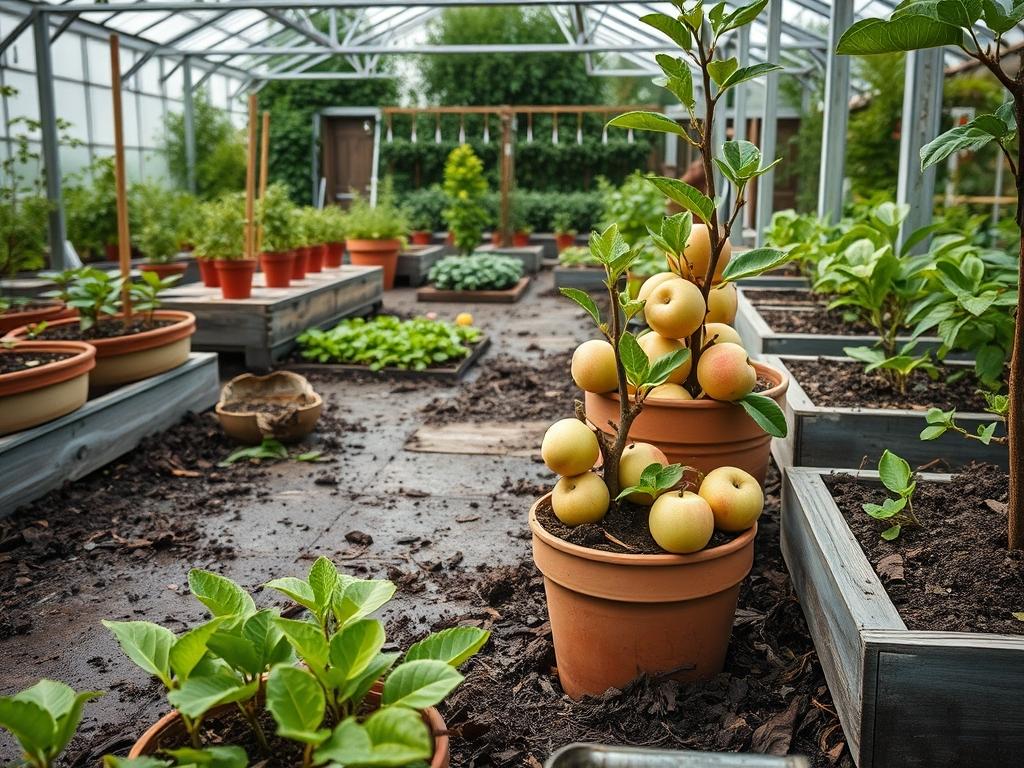
While possible with dwarf varieties, it is challenging. You must use a high-quality potting mix amended with perlite for drainage. Because pots dry out quickly, daily monitoring and a consistent liquid fertilization schedule are necessary for the tree to produce fruit.
How can I tell if my tree has poor drainage?
Test the area by digging a hole 12 inches deep and filling it with water. If the water does not drain completely within 24 hours, the location has poor drainage. You should either choose a different spot or install drain tiles.