
Landscape architecture is a disciplined exercise in balancing aesthetics with ecological function, where every element of the property must contribute to a cohesive whole. From a professional perspective, the integration of onsite organic waste management is often overlooked during the initial design phase, yet it remains one of the most critical factors for long term soil health and maintenance efficiency. When we discuss Composting Bread and Grains, we are addressing a specific subset of material management that requires a high degree of technical precision. If handled incorrectly, these high carbohydrate materials can disrupt the delicate balance of the soil microbiome, attract unwanted vermin, and generate odors that significantly diminish the outdoor living experience. For a landscape architect, the goal is to create a closed loop system where nutrients are returned to the earth without compromising the curb appeal or the structural integrity of the site.
Effective site planning treats the waste management area as a functional zone, much like a gourmet outdoor kitchen or a fire pit lounge. For many residential projects, the choice of where to place a compost bin or a tumbler is dictated by the proximity to the primary residence for convenience. However, when the volume of kitchen scraps includes significant amounts of bakeries or grain products, designers must account for intensified microbial activity. The high nitrogen and caloric density of these items means that the decomposition process can quickly turn anaerobic if the pile is not properly aerated. This results in methane production and a sludge-like consistency that can leach into the surrounding topsoil, potentially affecting the root systems of expensive ornamental specimens. Therefore, the architectural challenge is to design a site that accommodates these biological realities through superior drainage, strategic screening, and robust material selection.
Landscape Design Principles
Symmetry and focal points are the hallmarks of a well designed garden, but the utilitarian aspects of the property require a different set of rules. When incorporating a composting system into a high end landscape, the principle of screening is paramount. We often utilize retaining walls or lattice fencing to create a visual barrier between the manicured lawns and the functional utility zones. These structures should be constructed from durable materials such as cedar, pressure-treated lumber, or stacked stone to ensure longevity. The layout must allow for a 36-inch wide path of travel to ensure that wheelbarrows or heavy garden carts can maneuver without damaging the surrounding Boxwoods or turf.
Elevation and layering play a vital role in managing the runoff associated with compost piles. We recommend placing the composting zone on a slight elevation, or incorporating a perforated drainage pipe beneath the site to prevent water from pooling at the base. This is particularly important when Composting Bread and Grains, as these materials hold significant moisture and can create a nutrient-rich leachate that might oversaturate the local ecosystem. By using a layered approach, designers can place taller native plants like Switchgrass or Joe Pye Weed in the background to provide a biological filter for any runoff, while lower growing ground covers like Creeping Thyme soften the edges of the hardscaping.
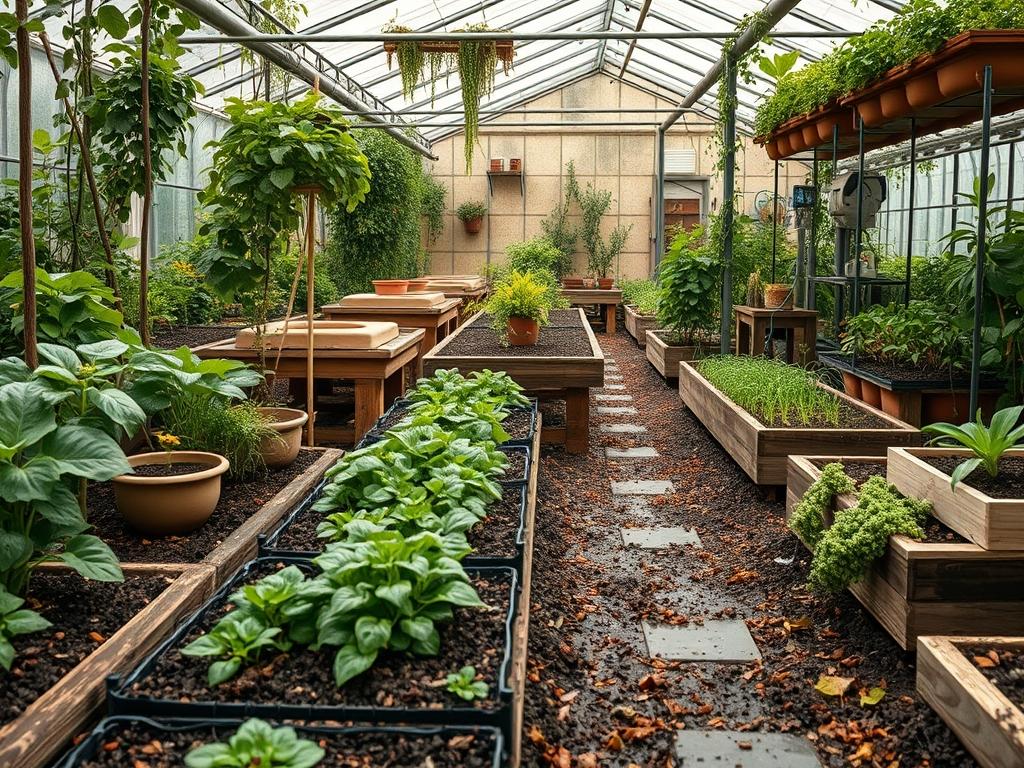
Visual balance is achieved when the functional zones do not feel like an afterthought. An integrated approach might involve a series of raised masonry beds where the central unit is dedicated to a closed-vessel composting system. This ensures that the high-calorie grains are kept within a pest-proof environment while remaining aesthetically consistent with the rest of the masonry. Irrigation planning must also be adjusted; the area immediately around the compost should be on a separate zone or equipped with a manual shut-off to prevent the pile from becoming waterlogged during the rainy season.
Plant and Material Selection
| Plant Type | Sun Exposure | Soil Needs | Water Demand | Growth Speed | Maintenance Level |
| :— | :— | :— | :— | :— | :— |
| Japanese Maple | Partial Shade | Well-Drained | Moderate | Slow | Medium |
| Purple Coneflower | Full Sun | Lean to Average | Low | Medium | Low |
| Boxwood Shrub | Full to Part Sun | Rich Loam | Moderate | Slow | High |
| Switchgrass | Full Sun | Most Types | Low | Fast | Low |
| Oakleaf Hydrangea | Shade to Sun | Moist, Acidic | Moderate | Medium | Medium |
| Creeping Phlox | Full Sun | Gritty/Sandy | Low | Medium | Low |
For the construction materials themselves, we prioritize longevity and resistance to decay. Pea gravel or crushed slate are excellent choices for the flooring of a compost utility area because they provide excellent drainage and are easy to clean. If a permanent structure is desired, poured concrete pads with a integrated slope towards a dry well offer the cleanest and most professional look.
Implementation Strategy
The process begins with a comprehensive site survey to identify the low spots and high points of the property. Once the topography is understood, we establish the grading plan. For a backyard that will host a robust composting system, a 2 percent slope away from the primary residence is the industry standard. This ensures that any heavy rains do not carry odors or debris back towards the patio areas. After the grading is complete, we install steel edging or heavy-duty plastic edging to define the boundaries between the mulch beds and the gravel pathways.
The next step is the installation of the hardscaping elements. If the design calls for a retaining wall, we typically use 4-inch by 6-inch timber ties or interlocking masonry blocks. These provide the necessary structural support for the soil and create a level platform for the composting equipment. Once the structures are in place, a 3-inch layer of hardwood mulch or pine bark is spread throughout the planting beds to regulate soil temperature and suppress weeds.
When the site is ready for the biological components, the introduction of Composting Bread and Grains must be done in stages. We recommend using a carbon-to-nitrogen ratio of approximately 30 to 1. Since bread is highly nitrogenous, it must be buried deep within a pile of “browns” such as dried leaves, shredded cardboard, or straw. A pitchfork or compost turner should be used weekly to introduce oxygen into the center of the pile. This prevents the clumping common with grains and ensures that the material breaks down into a crumbly, dark humus that can eventually be used as an amendment for the ornamental grasses.
Common Landscaping Failures
The most frequent error in residential landscaping is the failure to account for subterranean drainage. When a compost pile is placed in a topographic depression, it becomes a literal swamp. This environment kills the aerobic bacteria needed for healthy decomposition and attracts flies and rodents. Furthermore, excessive moisture causes the bread and grains to ferment rather than rot, producing a sour, vinegary smell that can drift across the entire property.
Another common failure involves the overcrowding of root systems. Many homeowners make the mistake of planting high-value trees, such as a Japanese Maple, too close to a nutrient-dense compost zone. The roots will aggressively seek out the nitrogen-rich area, leadings to “root wrapping” around the compost bin or, in some cases, the roots can actually lift the paving stones of nearby walkways. Proper spacing is non-negotiable; maintain at least a 5-foot buffer between the composting unit and any significant woody plants.
Soil compaction is a third silent killer of landscape beauty. The foot traffic required to manage a compost system can compress the soil, destroying the pore space that oxygen and water need to reach plant roots. To mitigate this, we always design permanent walkways using stepping stones or permeable pavers. This directs the weight of the gardener onto a stable surface, protecting the integrity of the surrounding topsoil.
Seasonal Maintenance
In the spring, the focus is on reactivation. After the winter thaw, the compost pile should be turned thoroughly with a garden fork to restart the microbial engines. This is the ideal time to incorporate any leftover grains from the winter pantry. Check the irrigation nozzles to ensure they are not spraying directly into the pile, as spring rains already provide sufficient moisture.
Summer maintenance is about moisture management. In high heat, a compost pile can dry out, halting the decomposition of bread products and leaving them as hard, unmanageable chunks. Use a fine-mist sprayer to keep the pile the consistency of a wrung-out sponge. Apply a fresh 2-inch layer of mulch to the garden beds to protect the soil from the intense sun.
Autumn is the season of abundance for “brown” materials. Collect dry leaves and store them in burlap sacks near the compost bin. These will be essential for balancing the “green” kitchen scraps you collect throughout the winter. Clean the drainage grates to ensure that fallen leaves do not clog the system before the first frost.
Winter requires a shift toward insulation. In colder climates, microbial activity slows significantly. To keep your Composting Bread and Grains active, you may need to wrap your tumbler in insulating blankets or pile straw bales around the perimeter of the bin. Avoid adding large quantities of moist scraps during extreme freezes, as this can turn the entire mass into a block of ice that will take weeks to thaw in the spring.
Professional Landscaping FAQ
Can I put moldy bread directly into the garden beds?
No, moldy bread should be processed in an enclosed compost bin first. Direct application can attract rodents and create uneven nutrient spikes that may burn the delicate roots of annual flowers or young shrubs.
How do I prevent my compost from smelling like sour grain?
Ensure a high ratio of carbon based materials such as wood chips or sawdust. Aeration is the key; use a compost aerator tool to break up clumps of bread and provide the oxygen required for aerobic decomposition.
Will grain-based compost affect the pH of my soil?
Large amounts of grains can temporarily acidify a compost pile during the initial breakdown phase. However, once fully cured into humus, the final product is generally near neutral and safe for most native plants and perennials.
What is the best way to hide a large compost system?
Utilize a combination of hardscaping and softscaping. A stone wall provides a permanent barrier, while a screen of Evergreen Hollies or Columnar Junipers offers year-round visual density and softens the industrial look of the bins.
Can bread in the compost attract pests to my lawn?
Bread is a high-calorie attractant for squirrels and rats. To mitigate this, use a rat-proof, locking lid and always bury the grains at least 6 inches deep within the center of the compost pile to mask the scent.