Success in professional landscaping often hinges on a factor that remains invisible to the naked eye. While property owners often look to the calendar or the first bloom of a neighbor’s tree to signal the start of the season, experienced architects know that the ground beneath our feet dictates the true timeline. Measuring Soil Temperature provides the only reliable metric for predicting root development and seedling survival. Relying on air temperature alone is a gamble that often leads to stunting, root rot, or complete plant failure. When a landscape is installed at the correct thermal threshold, the specimens establish themselves with vigor; this ensures the long-term curb appeal and functionality of the outdoor living space. A high-end environment is not merely about aesthetic arrangement; it is about biological timing. Without the proper soil heat, even the most expensive Nursery-Grade Stock will struggle to thrive in its new environment.
Landscape Design Principles
In the realm of landscape architecture, we prioritize harmony between the built environment and the natural ecology. Symmetry and focal points provide the visual structure, but the health of that structure depends on the thermal readiness of the site. Elevation layers play a critical role here. South-facing slopes or areas near Concrete Retaining Walls often have higher soil temperatures due to thermal mass and solar gain. Conversely, low-lying areas or shaded northern exposures can lag by several weeks. When planning a site, I examine the topography to identify these microclimates. A design that places heat-loving species in a “frost pocket” is destined for failure.
To achieve visual balance, we must also consider the irrigation planning phase. Water acts as a thermal regulator. Saturated soil takes longer to warm up in the spring because water has a higher heat capacity than air or mineral solids. Therefore, proper drainage is a fundamental design principle that precedes any planting. We use French Drains or Grading to ensure that excess moisture does not keep the soil temperatures too low during critical growing windows. Furthermore, walkways and hardscaped paths should be strategically placed to avoid compacting the soil in planting beds. Compaction reduces the pore space between soil particles, which limits the flow of oxygen and slows down the warming process in the spring.
Plant and Material Selection
Selecting the right materials involves more than just picking a color palette. We must match the physiological needs of the plant to the thermal realities of the site. Measuring Soil Temperature allows us to determine the precise moment when these species can transition from the container to the ground without undergoing transplant shock.
| Plant Type | Sun Exposure | Soil Needs | Water Demand | Growth Speed | Maintenance Level |
| :— | :— | :— | :— | :— | :— |
| Boxwood | Full Sun to Part Shade | Well-drained, Loamy | Moderate | Slow | Medium |
| Coneflower | Full Sun | Sandy or Clay | Low | Moderate | Low |
| Lavender | Full Sun | Gritty, Alkaline | Very Low | Moderate | High (Pruning) |
| Hydrangea | Part Shade | High Organic Matter | High | Fast | Medium |
| Feather Reed Grass | Full Sun | Varied | Moderate | Fast | Low |
| Japanese Maple | Filtered Sun | Slightly Acidic | Moderate | Slow | Medium |
Implementation Strategy
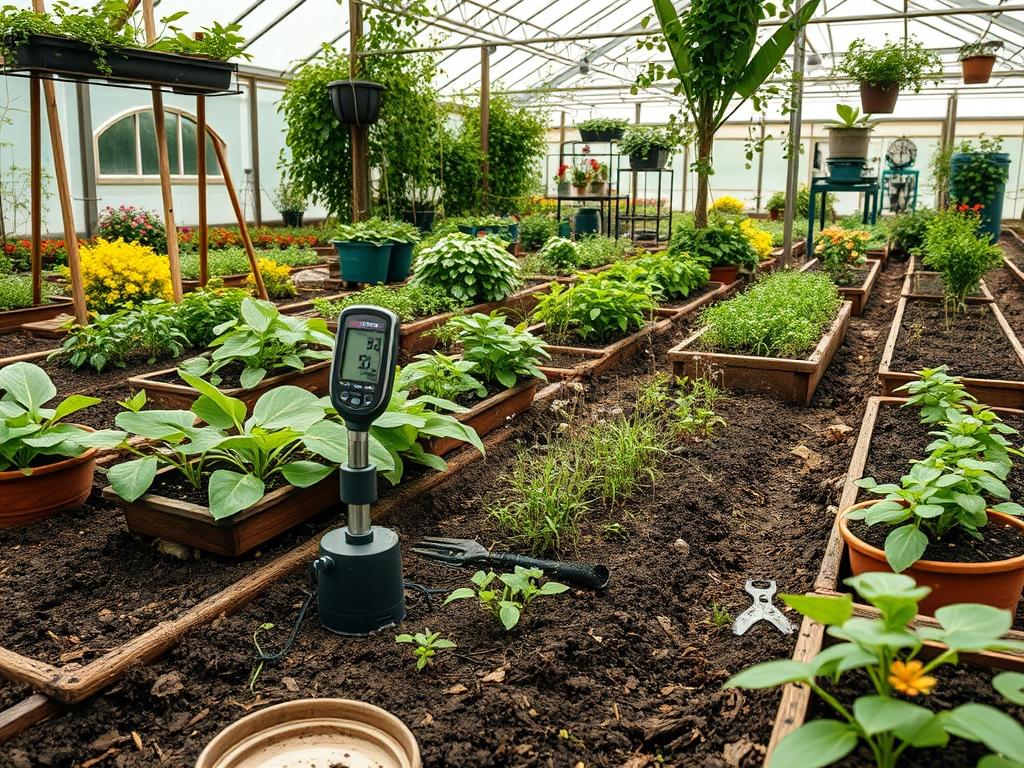
The transition from a design on paper to a physical landscape requires a disciplined approach. The first step in any implementation is site preparation, which begins with Measuring Soil Temperature at a depth of 4 inches. This is the standard depth for assessing the root zone environment for most ornamental shrubs and perennials. For larger trees, a probe depth of 6 inches to 8 inches may be necessary. I recommend using a high-quality Stainless Steel Soil Thermometer to get an accurate digital reading.
Once the temperature reaches a consistent 55 degrees Fahrenheit for three consecutive days, the ground is generally safe for cool-season plantings. If you are installing tropicals or heat-loving annuals, you should wait for a consistent 65 degrees Fahrenheit. While waiting for these thresholds, we focus on the hardscaping and infrastructure. This includes the installation of Steel Edging, the laying of Stone Pavers, and the construction of Raised Beds. Raised beds are a professional secret for early-season success because they sit above the surrounding grade and warm up significantly faster than the native earth.
After the plants are in the ground, the application of Organic Mulch is the final step. However, the timing of mulching is often misunderstood. Applying a thick layer of Hardwood Mulch too early in the spring can actually trap the cold in the ground and delay root growth. It is often better to wait until the soil has reached the desired temperature before applying a 3-inch layer of mulch. This layer then serves to insulate the soil and prevent the rapid evaporation of moisture during the heat of the summer.
Common Landscaping Failures
One of the most frequent mistakes I see in residential landscaping is the “Mother’s Day Myth.” Many people assume that once the risk of air frost has passed, everything can go into the ground. However, if the soil is still sitting at 45 degrees Fahrenheit, a warm-season plant like a Gardenia or certain varieties of Hydrangea will simply sit dormant while its roots begin to rot in the cold moisture. This lack of growth creates an opening for opportunistic pathogens and pests.
Another significant failure is improper spacing and root overcrowding. When plants are squeezed too tightly together, they compete for the limited thermal energy in the soil. Soil compaction is a secondary killer. When heavy equipment or excessive foot traffic compresses the soil, it increases the density and decreases the ability of the sun to warm the earth. Furthermore, irrigation inefficiencies often lead to “cold spotting.” If an irrigation system is poorly designed and over-waters a specific zone, that area will remain several degrees cooler than the rest of the garden, leading to uneven growth and a patchy aesthetic that ruins the visual balance of the focal points.
Seasonal Maintenance
Landscape management is a year-round commitment that shifts with the soil’s thermal cycle. In the spring, the primary focus is monitoring the rise of temperatures to time the application of pre-emergent herbicides and the planting of new stock. Once the ground hits 55 degrees, weed seeds begin to germinate; this is your window for intervention.
During the summer, the goal shifts to cooling the root zone. High soil temperatures can be just as damaging as low ones. When the ground exceeds 85 degrees, many plants enter a state of semi-dormancy to conserve water. We use Drip Irrigation and maintain a consistent Mulch Depth to keep the roots cool and hydrated.
In the autumn, Measuring Soil Temperature is vital for timing the planting of bulbs like Tulips and Daffodils. These require a “chilling period” but should not be planted until the soil has cooled to approximately 60 degrees. If planted too early in the warm soil, they may sprout prematurely and die off during the first hard freeze. Finally, winter maintenance involves protecting the thermal mass of the soil. We avoid tilling or disturbing the ground during the winter, as this allows the cold air to penetrate deeper into the profile and can damage the root systems of established perennials.
Professional Landscaping FAQ
How deep should I measure the soil temperature for new shrubs?
You should insert your Soil Thermometer to a depth of at least 4 inches. This represents the primary root zone where the most critical biological activity occurs during the initial establishment phase of the landscape project.
What is the best time of day to take a temperature reading?
For the most accurate results, take your measurements in the early morning around 8:00 AM. This provides a baseline reading of the soil’s heat retention after the cooling effects of the night, avoiding midday solar spikes.
Does mulch really affect the ground temperature significantly?
Yes, a 3-inch layer of mulch acts as a thermal regulator. It slows down the warming process in the early spring but provides essential insulation that keeps roots cool during the extreme heat of the summer months.
Can I plant if the air is warm but the soil is cold?
It is highly discouraged. Cold soil inhibits the roots’ ability to uptake water and nutrients. Even if the air is warm, the plant may wilt or die because its root system is effectively “asleep” and cannot support the foliage.
What is the minimum temperature for planting most native perennials?
Most native species require a consistent soil temperature of at least 50 degrees Fahrenheit. Planting below this threshold risks root dormancy and increases the likelihood of fungal infections caused by damp, cold conditions in the root zone.