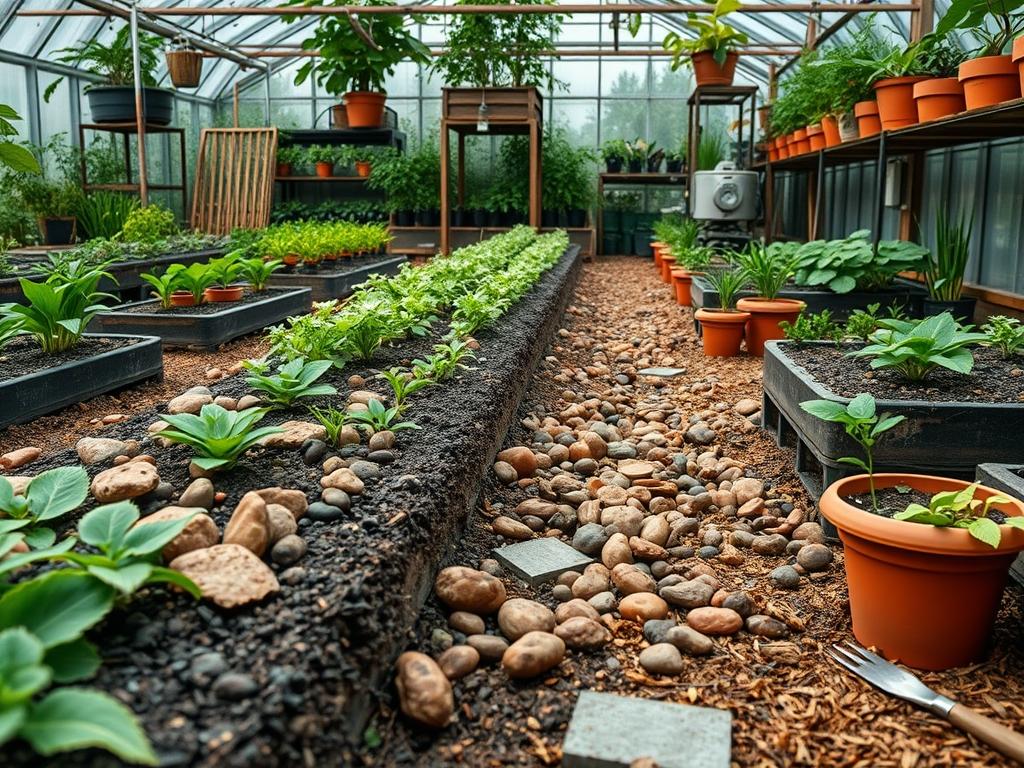
Heavy, compacted clay soil represents one of the most significant obstacles to achieving a high performing landscape. These soils often lack the necessary pore space for oxygen exchange, which leads to suffocated root systems and poor drainage after heavy rainfall. To address this, professional landscape architects increasingly turn to expanded clay pebbles as a permanent soil amendment. Unlike organic matter that decomposes and disappears over time, these kiln fired ceramic spheres provide lasting structural integrity to the root zone. By integrating these lightweight aggregates into your garden planning, you can transform a waterlogged site into a thriving environment that supports a wider variety of plant life and enhances the overall curb appeal of the property. The goal of using these materials is to achieve a balance between water retention and drainage, ensuring that your outdoor living space remains functional and aesthetic throughout the changing seasons.
Landscape Design Principles
When designing a landscape with heavy soil, you must prioritize subterranean functionality before aesthetic layers. Symmetry and focal points are easier to maintain when the foundation is stable. One of the primary principles in modern landscaping is the use of elevation layers to create visual interest. For properties with clay issues, this often means creating berms or raised planting beds. By mixing expanded clay pebbles into these elevated sections, you ensure that the core of the mound remains aerated. This prevents the “bathtub effect” where water collects in a hole and cannot escape through the surrounding heavy clay. Utilizing these pebbles in the substrate allows for sharper, more defined elevation changes that do not sag or compact under the weight of heavy rains.
Another critical principle involves irrigation planning and its relationship to walkways. In a typical landscape, water moves across the surface toward lower points. If your walkways are bordered by heavy clay, they often become muddy or begin to shift. Incorporating a layer of expanded clay pebbles beneath the base material of a path can act as a reservoir and drainage channel. This improves the structural stability of the hardscaping. Furthermore, visual balance is achieved when plants of similar water needs are grouped together. By using these aggregates to modify specific “micro-climates” in your yard, you can place moisture-loving native plants near drainage outlets while using highly aerated amended soil for drought tolerant species in more visible, higher traffic areas.
Plant and Material Selection
Selecting the right nursery stock is essential for success in heavy soil, even when using high quality amendments. The following table provides a guide for species that respond exceptionally well to soil modified with expanded clay pebbles.
| Plant Type | Sun Exposure | Soil Needs | Water Demand | Growth Speed | Maintenance Level |
| :— | :— | :— | :— | :— | :— |
| Purple Coneflower | Full Sun | Well Drained | Moderate | Medium | Low |
| Oakleaf Hydrangea | Part Shade | Rich, Aerated | High | Medium | Moderate |
| Little Bluestem | Full Sun | Lean, Gritty | Low | Fast | Low |
| Hosta | Shade | Moist, Loamy | Moderate | Medium | Low |
| Siberian Iris | Full Sun/Part Shade | Heavy, Wet | High | Fast | Moderate |
| Common Juniper | Full Sun | Very Well Drained | Low | Slow | Low |
| Winterberry | Full Sun/Part Shade | Consistent Moisture | High | Medium | Moderate |
Implementation Strategy
To implement a successful landscape design using expanded clay pebbles, start with a detailed site analysis. Use a laser level to determine the natural grading of the land. If the site is flat and holds water, you will need to plan for a 2 percent minimum slope away from any residential structures. For the actual soil amendment process, begin by clearing the area of unwanted vegetation. Use a heavy duty tiller to break up the existing clay to a depth of 12 inches. Once the clay is broken into smaller clumps, spread a layer of expanded clay pebbles approximately 3 inches thick across the surface. At this stage, you may also add organic compost to help jumpstart the microbial activity in the soil.
Mix the pebbles into the soil thoroughly. The porous nature of the 8-16mm pebbles creates permanent macropores that allow roots to breathe. For specialized areas like retaining walls, use the pebbles as backfill. Their lightweight nature reduces the lateral pressure on the wall compared to traditional gravel, which can prevent wall failure or bulging over time. After the soil is prepared and the plants are in the ground, install edging made of steel or stone to keep the amended soil separate from your turf areas. Finally, apply a 3 inch layer of shredded hardwood mulch to regulate soil temperature and prevent the pebbles from migrating to the surface during heavy cycles of freezing and thawing.
Common Landscaping Failures
The most common failure in clay heavy landscapes is the improper management of drainage. Many homeowners believe that adding sand to clay will improve drainage, but this often creates a substance similar to concrete. Using expanded clay pebbles avoids this chemical trap because the pebbles are large enough to physically separate the clay particles. Another mistake is root overcrowding. When a plant is placed in a small hole filled with good soil but surrounded by dense clay, the roots will often circle the hole rather than penetrate the surrounding ground. To fix this, you must amend a much larger area than the planting hole itself, ensuring that the expanded clay pebbles provide a transition zone for the roots to expand.
Improper spacing is another frequent oversight. In heavy soil, plants may grow slower at first as they establish themselves, leading gardeners to plant them too close together. As the soil structure improves, growth speeds up, resulting in a crowded, diseased landscape. Additionally, irrigation inefficiencies occur when water is applied faster than the clay can absorb it. Even with amendments, heavy soil requires slow, deep watering. If you use a high pressure spray, the water will simply run off the surface, wasting resources and leaving the root zone dry. Ensure your irrigation system is calibrated for a “soak and cycle” method to maximize the benefits of the porous clay aggregates.
Seasonal Maintenance
Landscape management is a year round commitment that changes with the weather patterns. In the spring, your primary focus should be on checking the drainage outlets. Ensure that the areas amended with expanded clay pebbles are not clogged with silt or debris washed in from unamended parts of the yard. This is also the time to refresh the mulch layers before the summer heat arrives. During the summer, monitor the moisture levels at a depth of 6 inches using a soil moisture meter. Because the pebbles hold some internal moisture while draining the excess, you may find you need to water less frequently than in untreated clay, but the duration of each watering should remain significant.
In the autumn, focus on managing leaf litter. If leaves are allowed to mat down on top of clay soil, they can create an anaerobic barrier that undoes the aeration work of your amendments. Shred the leaves or remove them to the compost pile. This is also an excellent time to add another thin layer of expanded clay pebbles to any areas where the soil has settled. Winter maintenance involves protecting the soil from heavy salt use if the garden is near a driveway or sidewalk. The porous structure of the pebbles can trap salts, which may harm sensitive native plants in the spring. Finally, avoid walking on amended beds during the winter thaw, as the high moisture content makes the soil particularly vulnerable to soil compaction from foot traffic.
Professional Landscaping FAQ
Can I just pour expanded clay pebbles on top of the soil?
Surface application acts primarily as a decorative mulch. For structural soil improvement, you must incorporate the expanded clay pebbles into the top 8 to 12 inches of the clay to create necessary air pockets for root health.
How much of the soil volume should be clay pebbles?
For extreme clay conditions, a ratio of 20 percent to 30 percent pebbles is recommended. This volume provides enough separation between silt particles to prevent the soil from collapsing into a solid, anaerobic mass after irrigation or heavy rain.
Will these pebbles float away during a heavy storm?
While lightweight, expanded clay pebbles generally stay in place once incorporated into the soil matrix. Using a thick layer of organic mulch or a border of retaining walls further secures the media and prevents migration during significant weather events.
Do expanded clay pebbles change the soil pH?
These pebbles are generally pH neutral because they are made from fired clay. This makes them safer than limestone based aggregates, which can raise pH levels and cause nutrient deficiencies in acid loving native plants and shrubs.
How long do expanded clay pebbles last in the garden?
Because they are ceramic materials fired at high temperatures, they do not decompose or compress. They provide a permanent solution for soil compaction, unlike perlite or organic matter which breaks down and requires frequent reapplication to maintain drainage.