
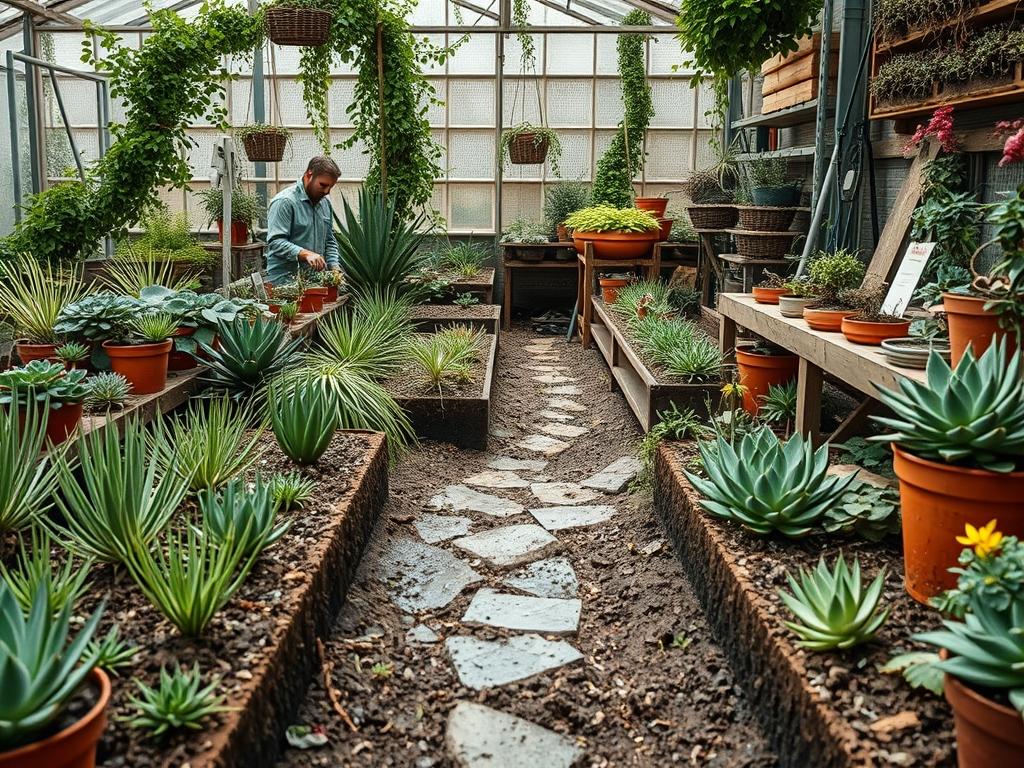
Designing a sustainable outdoor environment requires a fundamental shift in how we perceive soil health, particularly when integrating xeriscaping or arid-climate plant palettes into a modern landscape. While most amateur gardeners prioritize nutrient-rich compost and heavy fertilizers, the experienced landscape architect understands that Succulent Soil Porosity is the single most critical factor in long term plant survival and aesthetic success. In high-end residential landscaping, the goal is to create a functional, high-impact space that maintains its curb appeal with minimal intervention. Achieving this objective depends entirely on the physics of the subterranean environment. Succulents have evolved to thrive in mineral-heavy, lean environments where water moves quickly away from the root zone. When we attempt to “feed” these plants with rich, organic-heavy soil, we often inadvertently create a moisture trap that leads to anaerobic conditions and root rot.
The architectural challenge of a succulent-heavy landscape involves managing the intersection of drainage, irrigation, and elevation. In many coastal or desert regions, the native soil is either too compacted with clay or too fine to allow for the gas exchange necessary for succulent roots. Without high porosity, even the most expensive drip irrigation system will fail, as the water pools around the crown of the plant. Strategic garden planning must therefore prioritize the creation of a “fast” soil profile. This approach ensures that the outdoor space remains functional even after heavy rainfall, preventing muddy patches and preserving the structural integrity of walkways and retaining walls. By focusing on the structural components of the medium, such as Pumice, Perlite, and Decomposed Granite, we provide the root system with the oxygen it craves. This structural focus is what allows a landscape to maintain its visual balance and lush, turgid appearance throughout the year.
Landscape Design Principles
Effective landscape design for succulents begins with a rigorous assessment of the site’s topography. Creating visual interest through elevation layers is a standard practice that serves a dual purpose. By mounding soil or building raised planters, we gain control over the drainage capacity of the environment. Symmetry and focal points are established by placing larger specimens like Agave americana or Dracaena draco in positions where their architectural form can be appreciated from multiple angles. These focal points are then anchored by lower-lying groundcovers that provide a sense of visual continuity.
Every design must account for the way light moves across the property during the day. Succulents require specific light exposures to maintain their vibrant colors; however, their health is still tethered to the soil. If a plant is in a shaded area, the Succulent Soil Porosity must be even higher to account for the slower evaporation rates. Walkways should be designed to frame the planting beds, using materials like flagstone or pavers that complement the natural textures of the plants. By integrating boulders and cobblestone, we create a sense of scale and permanence, ensuring that the garden feels established even in its early stages.
Plant and Material Selection
The following table outlines the specific requirements for common landscape succulents and the materials used to enhance soil structure. Selecting the right combination is essential for achieving the desired growth speed and maintenance level.
| Plant or Material Type | Sun Exposure | Soil Needs | Water Demand | Growth Speed | Maintenance Level |
| :— | :— | :— | :— | :— | :— |
| Agave | Full Sun | High Porosity | Very Low | Slow | Low |
| Echeveria | Partial Sun | 50% Inorganic | Low | Moderate | Medium |
| Sedum | Full/Part Sun | Gritty Mix | Low | Fast | Low |
| Aloe | Full Sun | Well-Drained | Low | Moderate | Low |
| Pumice (Material) | N/A | 3/8 inch size | N/A | N/A | N/A |
| Coarse Sand | N/A | Horticultural Grade | N/A | N/A | N/A |
| Crushed Lava Rock | N/A | High Surface Area | N/A | N/A | N/A |
Implementation Strategy
The transition from a design concept to a physical landscape requires a structured implementation strategy. The first step involves grading the site to ensure that water flows away from the home’s foundation and into designated drainage areas. A 2 percent slope is typically the minimum required to move surface water effectively. Once the grade is established, the “sub-grade” must be addressed. If the existing earth is heavy clay, it is often necessary to excavate at least 12 inches of material and replace it with a custom-engineered succulent mix.
After the soil is prepared, the layout of the hardscaping elements begins. Edging materials, such as steel headers or concrete curbing, are installed to define the boundaries between planting zones and transition areas. This prevents the migration of different soil types and keeps the landscape looking sharp. When placing the plants, we ensure that the top of the root ball is slightly elevated above the surrounding soil level. This prevents water from settling around the stem. Once the plants are in place, a layer of top dressing is applied. We recommend using pebbles, decomposed granite, or crushed stone at a depth of 2 inches. This mulch layer serves to suppress weeds, regulate soil temperature, and provide a professional finish that enhances the overall curb appeal.
Common Landscaping Failures
One of the most frequent errors in professional landscaping is the over-reliance on organic matter in succulent beds. Many contractors default to standard “garden soil” which is rich in peat moss or forest products. Over time, these organic components break down and compact, filling the air pockets between soil particles. This results in soil compaction, which is the leading cause of succulent mortality. When the soil loses its porosity, the roots cannot breathe, and the plant essentially drowns in its own environment.
Another common failure involves the misuse of irrigation systems. Succulents do not respond well to frequent, shallow watering. The “set it and forget it” mentality with automated timers often leads to perpetually damp soil, especially if the Succulent Soil Porosity is insufficient. Furthermore, improper spacing during the initial planting phase leads to root overcrowding. While a densely planted garden looks great on day one, succulents need room to expand. Crowding limits airflow between the plants, creating a microclimate that is ripe for fungal infections and pests like mealybugs. Finally, neglect of the drainage exit points, such as blocked French drains or clogged PVC pipes, can turn a well-designed garden into a swamp during the rainy season.
Seasonal Maintenance
Landscape management is a year-round commitment that changes with the seasons. In the spring, the focus is on growth and revitalization. This is the time to check the irrigation system for leaks and adjust emitters to account for the warming weather. A very light application of a low-nitrogen, water-soluble fertilizer may be used, but only if the soil structure is intact. Summer maintenance involves monitoring for heat stress. While succulents are heat-tolerant, plants in containers or near reflective surfaces like metal fences may need temporary shading or a slight increase in watering frequency during extreme heat waves.
Autumn is the season for assessment and preparation. This is the ideal time to prune back any overgrown specimens and harvest “pups” or offsets for propagation. It is also the time to ensure that the mulch depth is consistent across the beds. As we transition into winter, the primary goal is moisture management. Succulents are most vulnerable to cold when their roots are wet. If the landscape is located in a region that experiences frost, the high porosity of the soil becomes a life-saving feature, as it prevents ice crystals from forming as easily around the root structure. During the dormant winter months, irrigation should be scaled back significantly or turned off entirely if natural rainfall provides sufficient moisture.
Professional Landscaping FAQ
How do I test the porosity of my existing soil?
Dig a hole 12 inches deep and fill it with water. If it takes more than two hours to drain completely, your soil porosity is too low for succulents and requires the addition of Pumice or coarse grit.
Can I use playground sand to increase drainage?
No, playground sand is too fine and can actually worsen compaction by filling the gaps between larger soil particles. Always use horticultural-grade coarse sand or crushed granite to ensure the soil remains open and aerated.
Why are my succulents turning yellow despite regular watering?
Yellowing is often a sign of over-saturation and root rot caused by poor soil structure. If the soil lacks Succulent Soil Porosity, the roots die, and the plant cannot transport nutrients, leading to a yellowed, sickly appearance.
How often should I refresh the top dressing?
Check your top dressing every two years. Because inorganic materials like pebbles do not decompose, you only need to add more if the material has settled into the soil or shifted due to wind and rain.
Is organic compost ever acceptable in a succulent garden?
In moderation, yes. A ratio of 20 percent organic matter to 80 percent inorganic materials provides enough nutrients without sacrificing the drainage and aeration that succulents require for long term health and structural stability.