
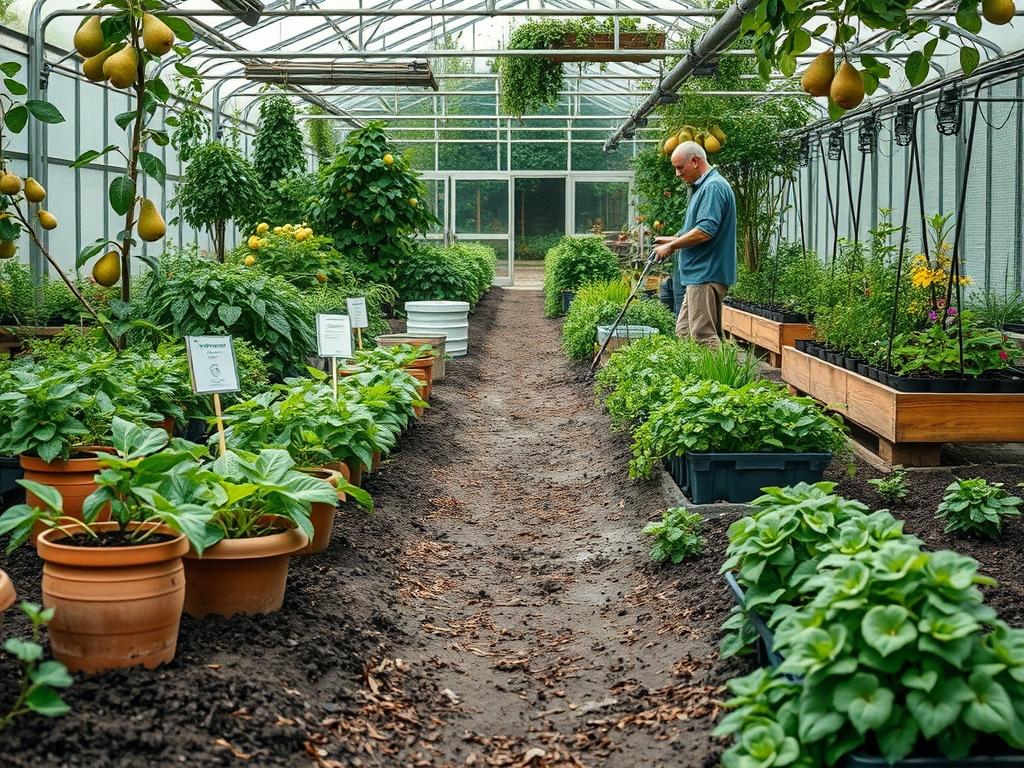
Successful orchard integration within a professional landscape requires a shift in perspective from mere planting to comprehensive site engineering. Creating a high yield pear orchard is not simply a matter of digging a hole and placing a sapling; it is an exercise in soil science and architectural planning. The primary challenge for any homeowner or consultant is reconciling the desire for aesthetic curb appeal with the rigid physiological demands of the Pyrus genus. A healthy pear tree serves as a structural focal point, offering seasonal interest through spring blossoms, summer canopy density, and autumn foliage. However, the success of this visual asset hinges entirely on Pear Tree Soil Prep, which dictates whether the tree will thrive as a centerpiece or struggle as a stunted liability. By treating the ground as a foundation similar to a building site, we ensure that the outdoor environment remains both functional and productive for decades.
Landscape Design Principles
When incorporating fruit trees into a luxury or functional landscape, we prioritize symmetry and focal points. A singular Pear Tree can act as a specimen plant at the end of a visual axis, while a row of Espaliered Pears creates a living fence that divides garden rooms without the harshness of a brick wall. Elevation layers must be considered; we often place pear trees on slight mounds or gentle slopes to facilitate natural water runoff. This prevents moisture from pooling at the root collar, a common site of fungal infection.
Irrigation planning must be invisible yet highly effective. In professional designs, we utilize Subsurface Drip Irrigation to deliver moisture directly to the root zone, avoiding the leaf spotting common with overhead sprayers. Walkways should be positioned at least five feet away from the trunk to prevent soil compaction from foot traffic, which can suffocate the delicate feeder roots. Visual balance is achieved by underplanting with low-profile, salt-tolerant perennials that do not compete for the same nutrient strata as the pear tree.
Plant and Material Selection
| Plant Type | Sun Exposure | Soil Needs | Water Demand | Growth Speed | Maintenance Level |
| :— | :— | :— | :— | :— | :— |
| European Pear | Full Sun | Deep, Well-Drained | Moderate | Medium | Moderate |
| Asian Pear | Full Sun | Rich, Acidic Loam | High | Fast | High |
| Dwarf Bartlett | Full Sun | Nutrient-Dense | Low | Slow | Low |
| Bosc Pear | Full Sun | Heavy Silt/Clay | Moderate | Medium | Moderate |
| Compost/Humus | N/A | Organic Matter | N/A | N/A | Low |
Implementation Strategy
The preparation of the site begins with rigorous grading. We must ensure the land slopes away from the residence and the tree’s primary root zone. For effective Pear Tree Soil Prep, begin by excavating a site that is three times the width of the root ball and exactly the same depth. This wide, shallow approach encourages lateral root expansion, which provides better stability against high winds.
Once the area is cleared, test the soil pH using a Professional Grade pH Meter. Pears prefer a slightly acidic to neutral range, ideally between 6.0 and 7.0. If the soil is too alkaline, incorporate Elemental Sulfur; if it is too acidic, apply Dolomitic Lime. Drainage is the next priority. In areas with high clay content, we recommend installing a Perforated Drain Pipe surrounded by Gravel at the bottom of a trench to move water away from the orchard.
Soil texture is modified by blending the native earth with 40 percent Organic Compost and a small amount of Coarse Sand to improve porosity. Avoid adding high-nitrogen fertilizers during the initial planting phase, as this can burn young roots. Instead, focus on Bone Meal or Rock Phosphate to encourage skeletal growth. After the tree is set, apply a three inch layer of Hardwood Mulch in a wide circle around the base, keeping the material at least six inches away from the trunk to prevent bark rot.
Common Landscaping Failures
The most frequent mistake in residential orchards is improper drainage management. When a pear tree is planted in a “teacup” hole carved out of heavy clay, the hole acts as a reservoir, drowning the roots during heavy rains. Always ensure the planting site has been fractured well beyond the immediate root ball to allow water to escape.
Another failure involves root overcrowding. Landscape architects often see trees planted too close to Retaining Walls or Foundation Slabs. Pear trees require at least 15 to 20 feet of clearance from major structures to reach their full canopy potential. Soil compaction is a silent killer; parking vehicles or heavy equipment near the drip line of a tree crushes the air pockets in the soil, preventing oxygen exchange. Finally, irrigation inefficiency often stems from short, frequent watering cycles. This encourages shallow rooting. We advocate for deep, infrequent soakings that force roots to penetrate deeper into the cool, moist subsoil.
Seasonal Maintenance
Spring is the season of action for the pear orchard. This is when we apply a Slow-Release 10-10-10 Fertilizer just as the buds begin to swell. Pruning should be completed before the sap flows heavily. Focus on removing “water sprouts” and any branches that cross through the center of the tree to maintain an open, airy canopy that allows sunlight to reach the inner fruit.
Summer maintenance involves monitoring moisture levels and topping off Mulch as it decomposes. This is also the time for “thinning” the fruit. If the tree is over-laden, remove every third fruit to ensure the remaining pears reach a marketable size and the branches do not snap under the weight.
Autumn focuses on hygiene. We insist on the removal of all fallen fruit and leaves to prevent the overwintering of pests like the Codling Moth. A final application of Potassium-rich Fertilizer in late fall can help the tree develop winter hardiness.
In Winter, the landscape consultant looks for structural integrity. Apply a Dormant Oil Spray to the bark to kill scale insects and mite eggs. This is also the ideal time to plan for any hardscaping changes, such as adding Stone Edging or Flagstone Walkways around the orchard, as the dormant trees are less susceptible to the stress of nearby construction.
Professional Landscaping FAQ
How do I fix heavy clay soil for pears?
Incorporate significant amounts of Organic Humus and Coarse Sand into the entire planting area, not just the hole. Utilize raised mounds or Berms to elevate the root system above the saturated clay line for better aeration.
When is the best time to test my soil?
Perform soil tests in late autumn or early spring. This allows sufficient time to incorporate Amended Materials like Lime or Sulfur, which can take several months to chemically alter the soil pH levels before planting begins.
Can I grow pears in a small urban backyard?
Yes. Use Dwarf Rootstocks or Espalier techniques against fences. These methods require minimal horizontal space while providing the same yield potential. Ensure the soil is deeply amended with Perlite to prevent compaction in confined urban spaces.
Why are my pear tree leaves turning yellow?
Chlorosis, or yellowing leaves, often indicates a pH imbalance or poor drainage. Check the Soil pH first. If it is within the correct range, examine the site for Standing Water, which prevents the roots from absorbing necessary iron and magnesium.
How deep should my irrigation go?
Aim for a saturation depth of 12 to 18 inches. This is achieved through long, slow watering cycles once or twice a week. Deep watering promotes a resilient, drought-tolerant root system that can survive extreme summer heat and high winds.