
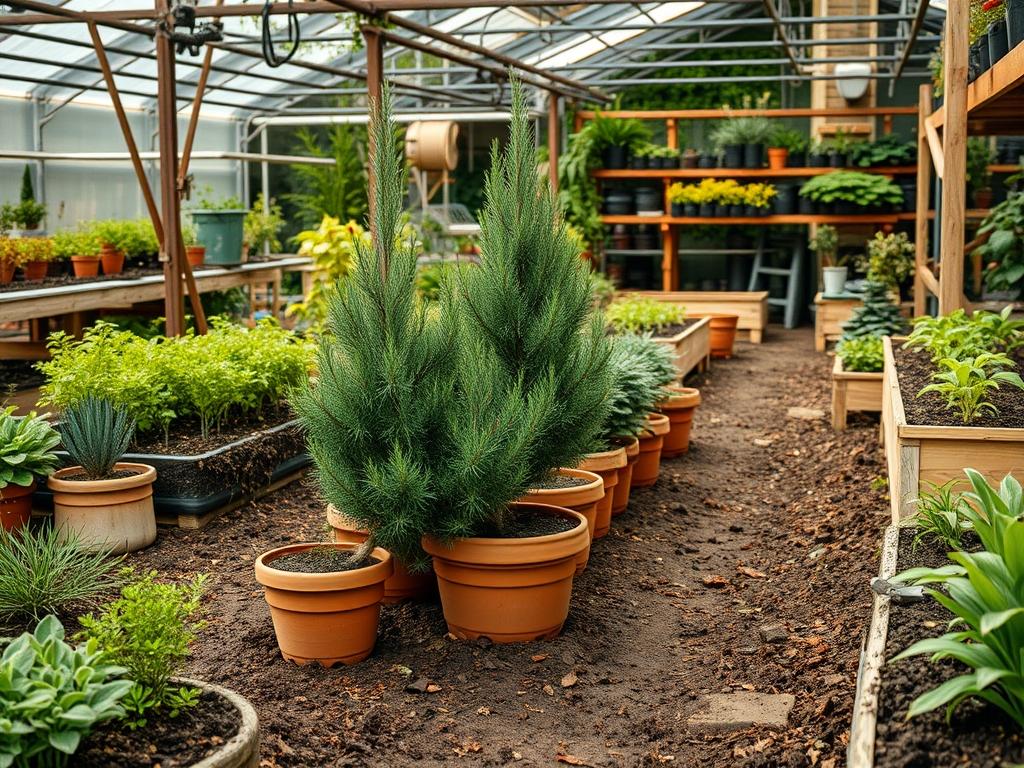
Selecting the right evergreen specimens for a property often serves as the cornerstone of a functional landscape design, providing year round privacy and architectural structure. Among the most popular choices, cedar trees stand out for their density and resilience, yet many homeowners face significant losses during the colder months due to physiological stress. The primary culprit is rarely the cold itself, but rather the interaction between dormant root systems and saturated ground. Understanding the best soil for cedar trees is the most critical step in preventing root rot, especially during the winter when transpiration slows and water tends to pool in the root zone. A professional landscape requires a proactive approach to soil science, ensuring that even during the wettest months, the trees remain in a medium that mimics their natural, well drained environments.
Landscape Design Principles
Effective landscape design relies on a balance between aesthetic appeal and biological necessity. When integrating cedars into a property, designers must consider the focal points of the yard. A row of Thuja occidentalis can serve as a majestic living wall, but its placement must be symmetrical to avoid visual discord. If one side of a property has a higher elevation than the other, the drainage patterns will change. This necessitates a custom soil approach for each section of the hedge. Elevation layers are equally important. Planting cedars on a slight berm, roughly 6 to 10 inches above the surrounding grade, ensures that excess water flows away from the sensitive root flare.
Visual balance is achieved when the scale of the trees matches the surrounding architecture. A massive Western Red Cedar might overwhelm a single story ranch home, while a dwarf variety would fail to provide the intended privacy. Beyond aesthetics, the placement of walkways and permanent structures influences how the soil compacts over time. We often recommend a buffer zone of at least 3 feet between a concrete walkway and the center of a cedar trunk. This prevents the heat from the concrete from drying out the soil in summer and protects the roots from the restricted oxygen levels common under paved surfaces. Irrigation planning must also be integrated at this phase, using pressure compensating emitters to deliver water directly to the root zone without saturating the surrounding turf.
Plant and Material Selection
Selecting the correct species and pairing them with the appropriate site conditions is the foundation of longevity. The following table outlines standard selections for modern temperate landscapes.
| Plant Type | Sun Exposure | Soil Needs | Water Demand | Growth Speed | Maintenance Level |
| :— | :— | :— | :— | :— | :— |
| Emerald Green Cedar | Full Sun to Partial Shade | Well-drained, Sandy Loam | Moderate | Medium | Low |
| Western Red Cedar | Full Sun to Partial Shade | Rich, Organic Matter | High | Fast | Moderate |
| Eastern Red Cedar | Full Sun | Alkaline, Well-drained | Low | Medium | Low |
| Excelsa Cedar | Full Sun | Loamy, Moist | Moderate | Fast | Moderate |
| Japanese Cedar | Partial Shade | Acidic, Rich | Moderate | Medium | Medium |
Implementation Strategy
The successful installation of a cedar screen begins with a comprehensive site analysis. Before a single hole is dug, the grading must be verified. If the site is naturally low lying, we install subsurface drainage such as a French drain or a catch basin to move water away from the planting trench. The best soil for cedar trees is not a single product sold in a bag, but rather a curated blend. For most cedar varieties, the ideal mixture consists of 60 percent native soil, 20 percent coarse builder’s sand, and 20 percent aged compost. This combination provides the structural integrity of the native earth while the sand creates macropores for drainage and the compost feeds beneficial microbes.
When excavating the planting area, the hole should be twice as wide as the root ball but no deeper than the height of the root mass. This prevents the tree from settling too deep over time, which is a leading cause of bark decay and subsequent fungal infections. Once the tree is positioned, the hole is backfilled with the amended soil blend. We recommend tamping the soil lightly with your hands rather than your feet to avoid over compaction. A layer of 3 inches of doubled shredded bark mulch should be applied in a wide circle around the base, keeping the mulch 2 inches away from the trunk itself. This mulch layer acts as a thermal blanket in winter and retains essential moisture in the summer.
Common Landscaping Failures
The most frequent error in cedar management is the “teacup effect,” where a planting hole is dug into heavy clay and filled with lightweight potting mix. During the winter, this hole acts as a reservoir, trapping water against the roots and depriving them of oxygen. This leads to anaerobic conditions where root rot thrives. Another common failure is improper spacing. Planting Emerald Green Cedars too closely, such as less than 24 inches on center, restricts airflow. Poor air circulation creates a humid microclimate that encourages needle blight and spider mite infestations.
Soil compaction is often overlooked until the damage is visible. Heavy machinery used during construction can compress the soil so tightly that roots cannot penetrate it and water cannot drain. If the soil feels like concrete, a mechanical aerator or a broadfork should be used to fracture the subsoil before planting. Irrigation inefficiencies also take a toll. Many homeowners leave their automatic sprinklers on the same schedule year round. In winter, when the trees are dormant, this excess water combined with natural rainfall leads to saturated roots. System sensors or smart controllers should be utilized to adjust for seasonal precipitation shifts.
Seasonal Maintenance
Landscape management is a year round commitment that changes with the light and temperature. In the spring, the focus is on growth. This is the time to apply a balanced, slow release fertilizer such as a 10-10-10 formula. We also inspect for winter desiccation, pruning out any brown or brittle tips. Summer maintenance is primarily about moisture management. Deep, infrequent watering is superior to light daily misting. A soaker hose run for two hours once a week is usually sufficient for established trees.
In the autumn, the goal shifts to preparation. This is the best time to replenish the mulch layer and ensure the soil is hydrated before the ground freezes. Evergreens continue to lose moisture through their needles even in winter, a process called winter burn. Providing a deep watering in late November helps the tree build a reservoir for the cold months. Winter maintenance involves monitoring for snow load. Heavy, wet snow should be gently brushed off the branches with a broom, moving in an upward motion to prevent limb breakage. Avoid using de-icing salts near the root zone of your cedars, as the salt pull moisture away from the roots, effectively “burning” them from the bottom up.
The longevity of your cedar trees is directly tied to the environment you create beneath the surface. By prioritizing drainage and selecting the best soil for cedar trees, you ensure that your landscape remains a vibrant, green sanctuary regardless of the season. High quality materials, strategic grading, and disciplined maintenance are the hallmarks of a professional outdoor environment that increases property value and provides lasting beauty.
Professional Landscaping FAQ
What is the best soil for cedar trees in heavy clay areas?
In clay heavy environments, the best soil for cedar trees is a blend of native soil, coarse sand, and organic compost. Focus on creating a raised mound or berm to ensure that gravity helps pull excess water away from the root system.
How can I tell if my cedar has root rot?
Symptoms include yellowing or browning of the inner needles that eventually spreads outward. The foliage may feel limp or brittle. If you dig near the base, the roots will appear slimy, dark brown, or black, rather than reaching a healthy white.
Do cedars need fertilizer every year?
Generally, a slow release evergreen fertilizer applied in early spring is beneficial for young trees. Established cedars in rich, organic soil may only need feeding every two to three years. Always perform a soil test before applying high nitrogen amendments to avoid runoff.
Why are the bottoms of my cedars turning brown in winter?
Lower browning is often a sign of salt damage from nearby roads or poor drainage at the base. It can also result from a lack of sunlight if shorter shrubs are blocking the lower foliage. Ensure the soil remains well drained to prevent winter rot.
How much water do new cedars need?
Newly planted cedars require approximately one inch of water per week. This should be delivered through deep soaking sessions rather than frequent light watering. This encourages the roots to grow deeper into the ground, providing better stability and drought resistance over time.